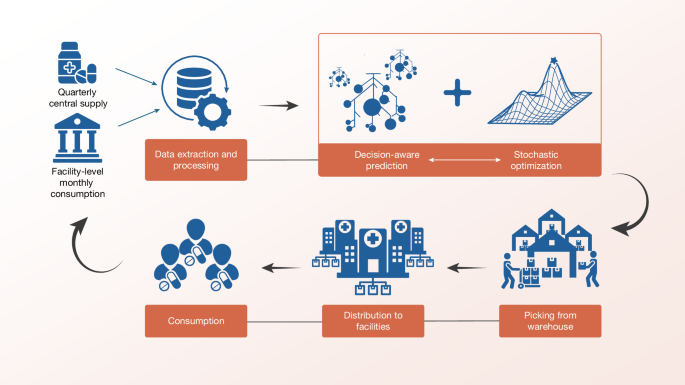
In a significant effort to enhance health systems in developing nations, recent studies have highlighted the critical issues surrounding the availability and affordability of essential medicines. The health product supply chains in countries such as Zambia and various African nations face substantial operational challenges, according to a range of research published in reputable journals. Notably, a study by Yadav et al. diagnosed root causes of underperformance in health product supply chains, stressing the need for systematic reform to improve efficiency and accessibility.
UNICEF’s “State of the World’s Children 2015” report further emphasizes the dire circumstances surrounding health commodities, particularly affecting women and children. The report indicates that poor availability of essential medicines dramatically undermines efforts to achieve Sustainable Development Goal 3, which aims to ensure healthy lives and promote well-being for all. This complex landscape presents an urgent call for actionable strategies in supply chain management.
Recent research conducted in Zambia outlines innovative inventory policies designed to improve pharmaceutical distribution, addressing disparities in availability and access to essential medicines. The work of Gallien, Leung, and Yadav points to a framework that could serve as a model for similar initiatives across the African continent. Their analysis underscores the importance of local context, highlighting the critical role of demand forecasting in optimizing supply chains.
In light of the challenges posed by inadequate supply chains, several studies have explored the application of machine learning and big data analytics to enhance healthcare delivery. Esteva et al. provided a comprehensive guide on employing deep learning techniques in healthcare settings, while Ngiam and Khor discussed the potential of these technologies to transform patient care. The intersection of technology and healthcare is increasingly relevant as organizations seek to streamline operations and improve patient outcomes.
Amidst these advancements, the COVID-19 pandemic has underscored the urgent need for robust healthcare infrastructure. Research by Bastani et al. highlighted the use of reinforcement learning for efficient border testing during the pandemic, showcasing how technology can mitigate public health risks. Similar approaches may be necessary as countries continue to navigate and recover from the pandemic’s aftereffects.
Demand forecasting has emerged as a focal point in the discussion surrounding supply chain effectiveness. Studies such as those by Merkuryeva et al. and Zhu et al. have demonstrated the value of predictive analytics in anticipating medicine needs, which is essential for minimizing stockouts and ensuring that healthcare facilities can meet patient demand. These insights are particularly crucial in regions where access to essential medicines is sporadic and often unreliable.
Furthermore, a scoping review by Yenet et al. on the challenges faced in African countries reveals systemic issues that contribute to the scarcity of essential medicines. The review recommends a multi-faceted approach to reforming supply chains, emphasizing collaboration among stakeholders, including governments, NGOs, and private sector partners. The potential for public-private partnerships to address these challenges is underscored by various initiatives aimed at improving healthcare delivery.
The World Health Organization’s Service Availability and Readiness Assessment (SARA) provides a framework for monitoring service delivery, yet many countries still face significant hurdles in implementing effective systems. The data collected through such assessments can inform policy decisions and operational strategies, yet the continuous challenges in healthcare supply chains demand immediate and sustained action.
As countries work towards enhancing their healthcare systems, the necessity for well-functioning supply chains becomes increasingly apparent. Collaborative efforts that leverage data analytics, innovative inventory management, and technology integration will be pivotal in addressing the pressing need for essential medicines. The outcomes of these initiatives could reshape the future of healthcare accessibility, particularly in developing nations where the stakes are highest.
Looking ahead, the integration of advanced technologies within healthcare supply chains presents a promising avenue for improving the availability and delivery of essential medicines. Continued research and investment in this area are critical to achieving health equity, ensuring that vulnerable populations receive the care they need.
See also Mistral AI Launches Workflows for Seamless Enterprise AI Automation in Production
 X Launches Overhauled AI-Powered Ad Platform to Boost Declining Revenues
 IBM and Ferrari Launch AI-Powered Scuderia App Features to Enhance Fan Engagement
 Top 7 Productivity Apps for 2026: Boost Efficiency with AI-Driven Tools
 Zebra Technologies Invests in Apera AI to Enhance Automation and Workflow Integration