






















































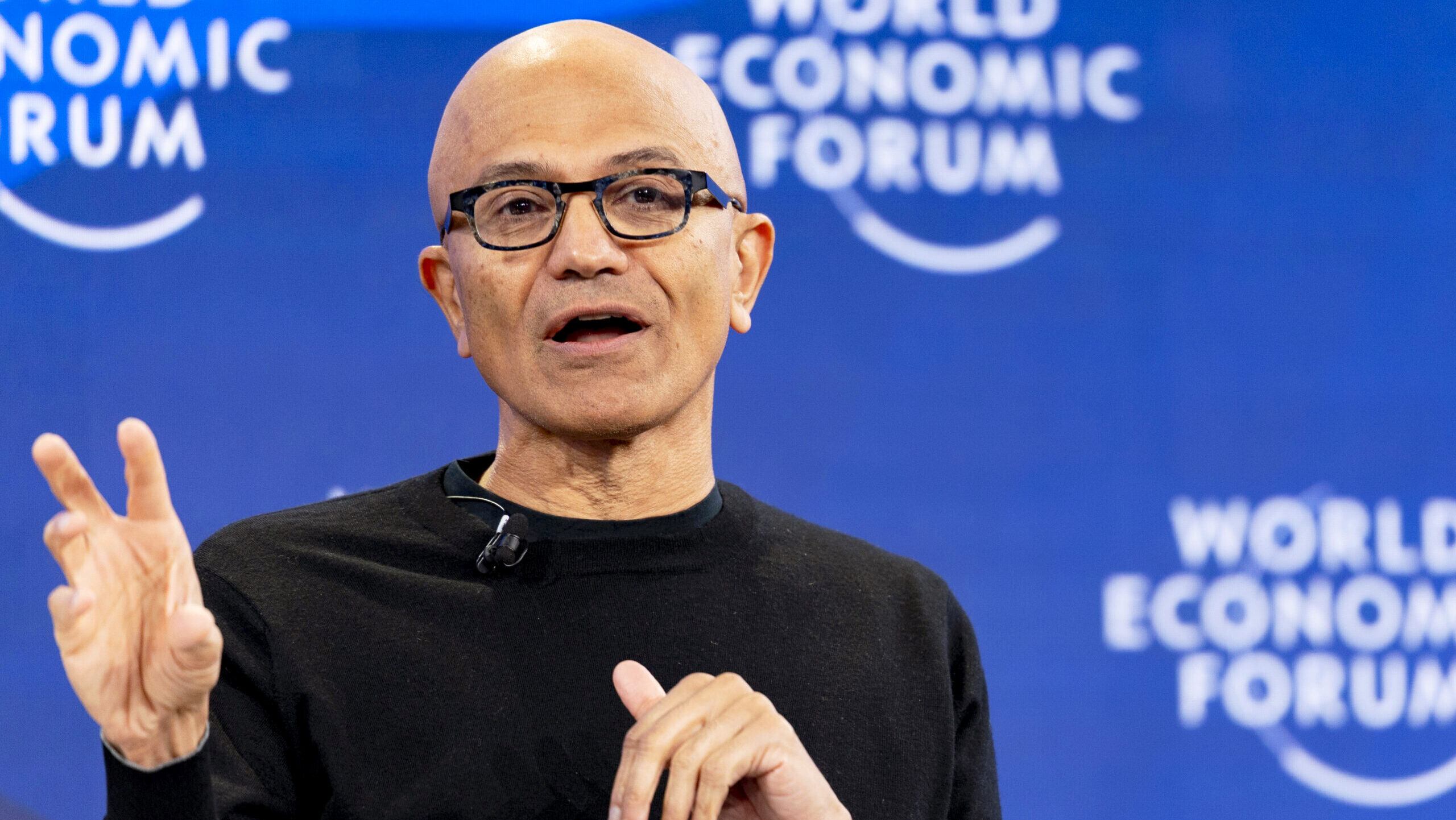
At the World Economic Forum in Davos, Switzerland, Microsoft CEO Satya Nadella acknowledged the growing conversation around the possibility of an AI bubble. While he stopped short of labeling the current situation as such, he emphasized that the future of artificial intelligence depends largely on its adoption rates across various sectors. “For this not to be a bubble by definition, it requires that the benefits of this are much more evenly spread,” Nadella stated. The early signs suggest the technology sector faces significant challenges in achieving this goal.
In line with Nadella’s remarks, the findings of PwC’s 29th Global CEO Survey presented a sobering picture of AI’s current efficacy. Released this week, the survey revealed that only 12% of CEOs reported that AI has delivered both cost and revenue benefits for their organizations. Over half, or 56%, indicated they had not seen any significant financial advantage from AI initiatives. These results echo an MIT report published last summer, which found that 95% of companies reported zero returns on their own AI pilot programs.
Despite these challenges, PwC’s report provided insights into what could drive successful AI deployment. It observed that CEOs who reported both cost improvements and revenue gains from AI were approximately 2.5 times more likely to claim that their organizations had fully integrated AI across their operational processes, ranging from strategic decision-making to product and service offerings. Furthermore, companies that established “strong AI foundations” were found to be three times more likely to report meaningful financial gains, suggesting that the level of investment in AI correlates directly with the returns.
“AI moves so fast … that people forgot that the adoption of technology, you have to go to the basics,” remarked Mohamed Kande, PwC’s global chairman, in an interview with Fortune. His comments underscore the need for organizations to focus on foundational elements in order to harness the full potential of AI technologies.
As companies strive to broaden the financial benefits of AI, firms within the AI market are grappling with their own monetary concerns. Recently, OpenAI announced plans to begin testing advertisements in the U.S. for its free and low-cost Go tier globally, a move that highlights the urgency for revenue generation within the sector. In contrast, Google DeepMind‘s CEO Demis Hassabis stated at Davos that the company has “no plan” to implement ads in its Gemini product, remarking on OpenAI’s early initiative as an interesting choice. “Maybe they feel they need to make more revenue,” he noted, suggesting that financial pressures are mounting across the industry.
The scrutiny surrounding AI’s economic viability raises questions regarding its broader implications. With significant portions of the business community still awaiting the promised returns from AI technology, the pressure is on both tech firms and enterprises to deliver tangible results. If the adoption rates do not improve and the benefits remain concentrated within a few tech companies, the narrative surrounding AI could shift, potentially leading to skepticism about its long-term value.
As discussions continue at international forums like the World Economic Forum, the key takeaway remains clear: for AI to avoid being categorized as a bubble, it must demonstrate widespread utility and profitability across diverse sectors. The next steps taken by both tech leaders and businesses will be crucial in shaping the future landscape of artificial intelligence and its role in the global economy.
See also OpenAI’s Stargate AI Project to Fund $500B Energy Upgrades, Commit to Local Sustainability
 Gates Foundation and OpenAI Launch $50M AI Health Initiative for Africa’s Clinics
 Global AI’s Agentic AI Platform Transforms Compliance Workflows for Leading European Insurer, Reducing Costs and Risks
 AI Surpasses Average Human Creativity in Groundbreaking Study, Yet Top Talent Prevails














