Fei-Fei Li: Pioneering AI Through ImageNet and Beyond
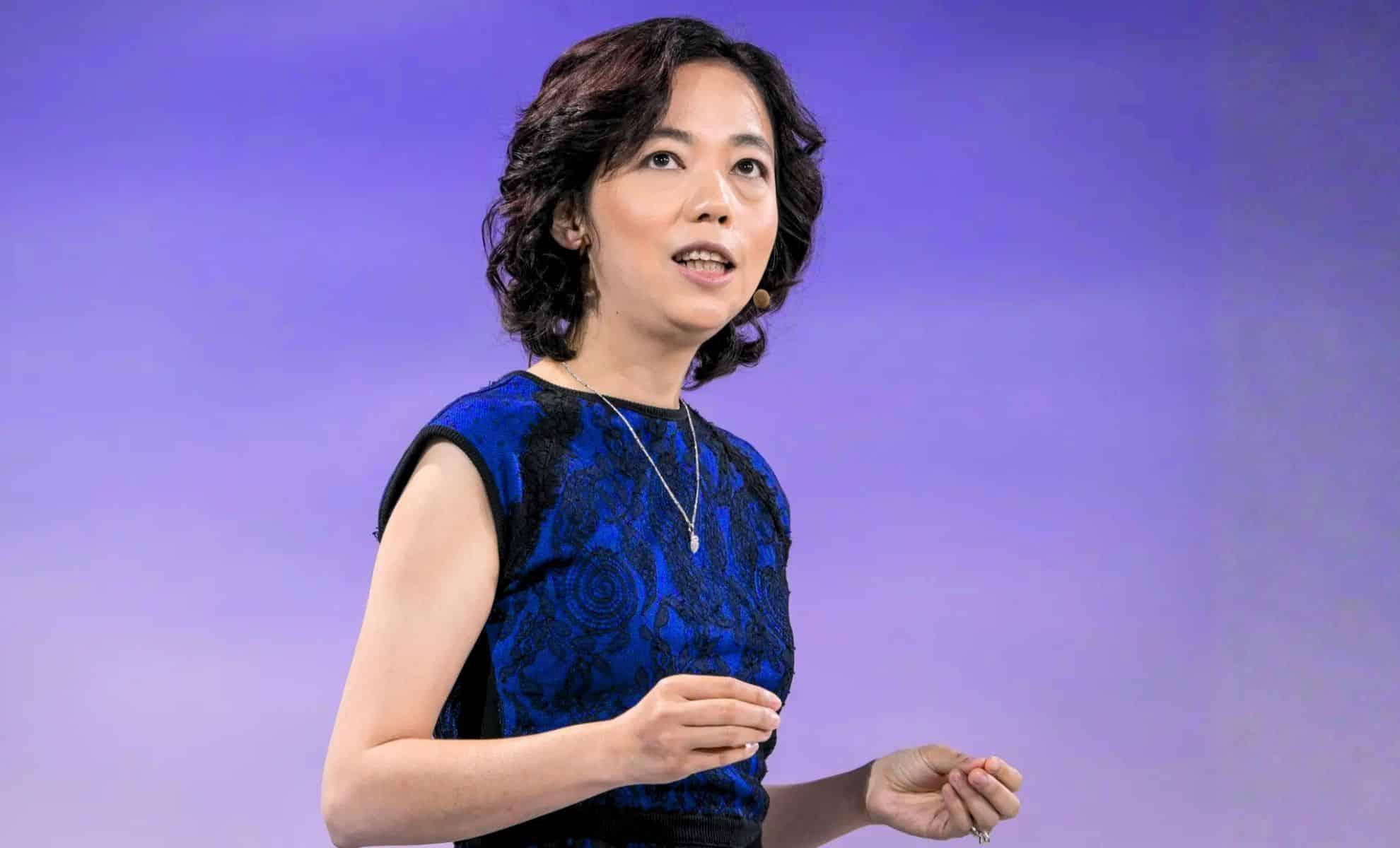
In 2007, Fei-Fei Li embarked on an ambitious project that would reshape the landscape of artificial intelligence (AI). While most machine learning research at the time focused on algorithms, Li argued that a foundational element was missing: extensive visual experience. Her belief led to the creation of ImageNet, a comprehensive database of labeled images, which would later serve as the backbone for AI systems used in facial recognition, autonomous vehicles, and large multimodal models.
Despite facing technical and financial hurdles, Li was undeterred. In its nascent years, ImageNet struggled for recognition even among academics. However, in 2012, everything changed when a deep neural network named AlexNet, trained on ImageNet, dramatically outperformed competitors in a global image classification challenge. This milestone is widely considered the beginning of the deep learning revolution.
Li, who immigrated to the United States at the age of 15, brought a unique perspective to her work. Arriving in Parsippany, New Jersey, she helped manage her family’s dry-cleaning business while completing her physics coursework at Princeton University. She continued to juggle work and academics while pursuing her Ph.D. at Caltech. This experience instilled in her the resilience and determination necessary to challenge conventional thinking in AI.
At that time, AI researchers typically utilized small datasets—often comprising just hundreds of images—to train their models. Li recognized a critical misalignment: while humans learn from millions of visual examples, machines were expected to perform well with far less. Inspired by WordNet, a lexical database, she set out to create ImageNet, initially categorizing over 15 million images across 22,000 object categories. To efficiently label images at scale, she enlisted the help of Amazon Mechanical Turk, a move that was unconventional in academic circles.
Despite warnings that she was “leaping too far ahead” of the field, Li persisted in her vision. ImageNet’s initial release in 2009 went largely unnoticed, but that all changed in 2012 when the ImageNet Large Scale Visual Recognition Challenge (ILSVRC) crowned AlexNet the surprise winner. Developed by Geoffrey Hinton’s team at the University of Toronto, AlexNet achieved a top-5 error rate nearly 10 percentage points lower than any previous model, showcasing the power of deep learning when combined with extensive labeled datasets.
The success of AlexNet not only validated Li’s vision but also marked a seismic shift in AI research. Utilizing GPU acceleration via Nvidia’s CUDA platform and implementing breakthroughs like the ReLU activation function, the model demonstrated that scalable computing power could vastly improve AI performance. This realization spurred a global race in AI development, quickly leading to the acquisition of Hinton’s team by Google and establishing ImageNet as the benchmark for computer vision for years to come.
Li’s journey has since evolved. Now a professor at Stanford University, she has co-founded World Labs, a startup focused on spatial intelligence—an area that aims to enable AI systems to comprehend and interact with the physical world. The startup’s first product, Marble, allows users to create downloadable 3D environments using natural language prompts, achieving a valuation of $1 billion within four months. This innovation represents the next frontier in AI, emphasizing spatial reasoning capabilities.
In addition to her entrepreneurial endeavors, Li is actively involved in shaping the global governance of AI, focusing on ethical considerations and accountability. In 2023, she joined the United Nations Scientific Advisory Board, advocating for responsible technology development and engaging with policymakers on the societal impacts of large-scale AI adoption. While she has expressed discomfort with titles like “godmother of AI,” she acknowledges the importance of representation and diversity in the field.
Li’s work underscores the transformative potential of AI when fueled by innovative ideas and extensive data. With her focus now extending beyond mere image classification to spatial reasoning, she is poised to influence the next wave of AI advancements, heralding a new era in human-computer interaction.
See also Meta Platforms Surges 8% on Strong AI Investments, Targeting $841.42 Fair Value
 Minitap Secures $4.1M to Accelerate Mobile Development 10x with AI Innovations
 Guinea Accelerates Digital Transformation with AI Strategy and UNDP-Backed BSD Partnerships
 AI Revolutionizes Filmmaking: Tallinn Panel Outlines Ethical Integration and Efficiency Gains
 Meta Stock Rises 2.26% Amid $150B AI Infrastructure Spending Concerns