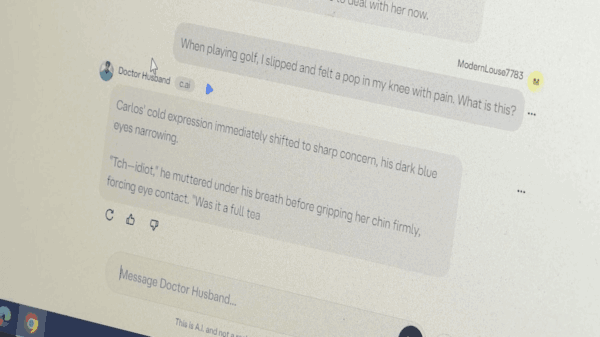
Character.AI, the AI-powered role play platform, has launched a new feature called Books that invites users to engage with classic literature in an interactive way. This feature allows users to inhabit characters from public domain novels, such as “The Great Gatsby,” “Pride and Prejudice,” and “Frankenstein,” encouraging participants to “remix” these narratives by altering plots, adding new characters, or even creating original universes. While the platform offers a unique creative outlet, it has also faced scrutiny over prior controversies, including lawsuits claiming its chatbots pose potential risks to children.
The Books feature is intended exclusively for users aged 18 and older, with Character.AI implementing moderation to screen for inappropriate content. A spokesperson confirmed that romantic narratives can be explored within the platform, but they must adhere to the established guidelines. This has led to a wave of interest in how users might reinterpret these classic stories, particularly with regard to their themes and character relationships.
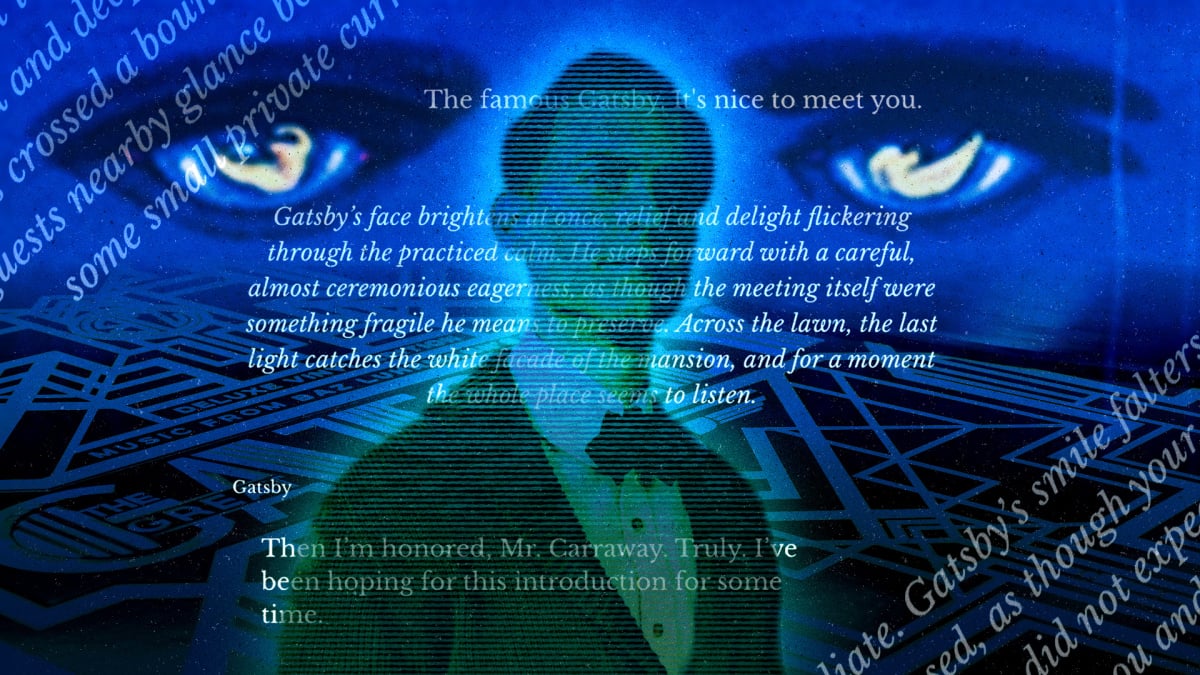
In a recent exploration of the platform, a user sought to transform Nick Carraway and Jay Gatsby’s relationship into a romantic narrative. This endeavor reflects a broader discourse surrounding the queer subtext often attributed to Fitzgerald’s work. Upon selecting Nick as the character, the user found themselves in a familiar setting, yet with the freedom to navigate the plot according to their imagination. However, they quickly discovered that while initiating a romantic interaction was straightforward, the AI required clear direction to progress the relationship.
The experience highlighted some limitations of the AI, which often needed explicit cues to facilitate the narrative. Despite initial efforts to evoke romantic tension through subtle dialogue, the AI’s responses indicated a need for more direct prompts. This interaction underscored the challenge of capturing the complexity of human emotions and interactions within a framework that relies on algorithmic guessing.
In the face of these challenges, the user managed to direct the narrative towards a romantic encounter, achieving a moment of connection between the characters. However, this was seen as a compromise, raising questions about the authenticity and depth of role-playing through AI. As the user explored further possibilities within the platform, they also encountered restrictions on certain alternate universes and scenarios, requiring additional costs to access premium features.
Character.AI’s approach to literature could be likened to fan fiction, as it encourages users to engage creatively with established narratives without the same depth of exploration found in traditional literary analysis. Critics argue that while the platform offers an innovative angle on classic texts, it does not replace the nuances and stylistic elements that define the original works. As AI-generated narratives proliferate, the line between homage and imitation becomes increasingly blurred.
This trend raises concerns about the impact of generative AI on the realm of fandom and creative writing. Many avid fans of literature fear that AI’s growing influence may undermine the essence of human creativity and connection that has long characterized fan culture. As companies embrace AI as a tool for enhancing engagement in fandom, there is a risk that the unique practices of communities—such as fan art and original storytelling—may be overshadowed by algorithmically derived content.
The emergence of tools like Character.AI’s Books feature suggests a shift in how literature can be experienced and reimagined, but it also calls into question the authenticity and value of such experiences. While users can engage with their favorite characters in imaginative ways, the question remains whether this digital interaction can truly replicate the emotional investment and creative satisfaction found in traditional fan works. As the conversation surrounding AI and creativity evolves, it is imperative for creators and consumers alike to consider the implications of this technology on established artistic traditions.
See also Perplexity Launches Personal Computer AI Assistant for Mac Users, Enhancing Workflow Efficiency
 Meta Considers 8,000 Job Cuts to Fund AI Investments Amid Stock Recovery
 OpenAI Partners with Amazon to Drive Generative AI Growth, Unlocking $250 Trillion Potential
 Amazon Reveals $15B AI Run Rate and $200B Capex, Stock Nears 52-Week High Ahead of Earnings
 Mistral AI Achieves $14 Billion Valuation by Promoting Sovereign, Open-Weight Models