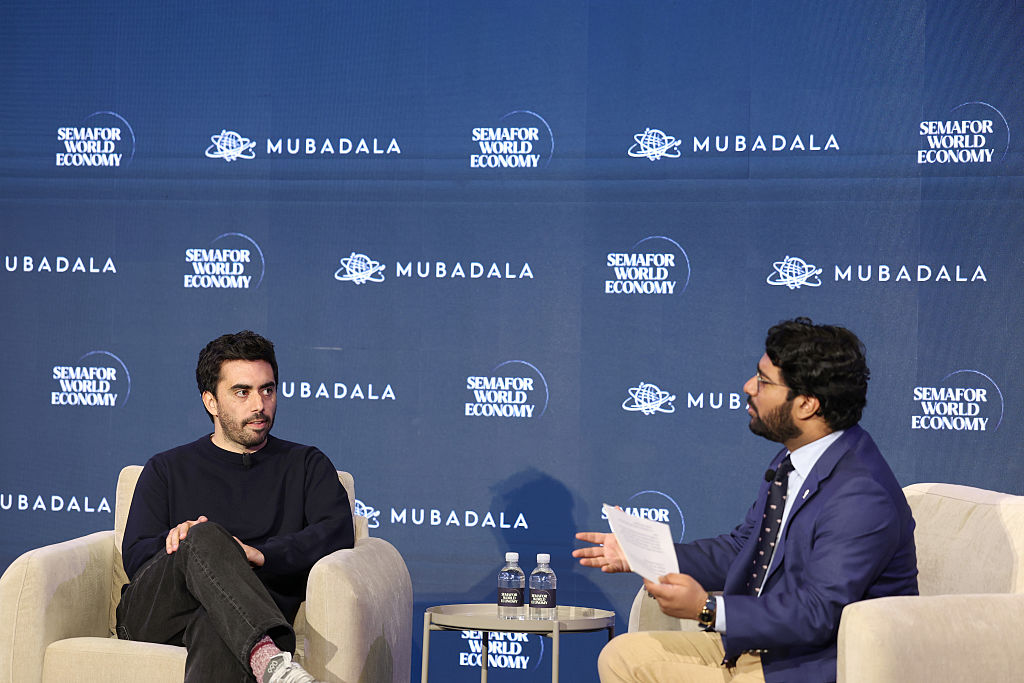
Cristóbal Valenzuela, co-founder and CEO of AI video-generation startup Runway, recently stirred debate within Hollywood regarding the role of artificial intelligence (AI) in film production. With a valuation exceeding $5 billion, Valenzuela proposed an unconventional approach to filmmaking at the Semafor World Economy conference, advocating for studios to allocate their resources differently.
Valenzuela suggested that instead of spending $100 million on a single feature film, studios could create up to 50 films at the same cost, thereby increasing both their output and the likelihood of producing a hit. “If you’re spending a hundred million dollars on making one feature film, which is 90 minutes, imagine taking a hundred million dollars and spending it on, like, 50 movies,” he stated, emphasizing the potential for producing more content with the same level of visual quality.
This perspective challenges the traditional view that a film is a significant artistic investment, implying that the industry could be reduced to a numbers game where the quantity of produced content enhances the chances of success. In Valenzuela’s view, with AI as a tool, the movie industry can pivot toward higher volumes of creative output.
Despite acknowledging the controversy surrounding AI’s introduction into creative fields like film and television, Valenzuela believes that the skepticism is waning as understanding of AI’s capabilities grows. “Things are changing fast,” he remarked, noting that many now recognize how these powerful tools can aid the creative process.
Runway’s technology has already begun to make an impact, according to Valenzuela. He claims that the company’s AI models help studios streamline production costs, which is critical given the competitive nature of the industry. This shift can be seen in projects like the upcoming $70 million film, “Bitcoin: Killing Satoshi,” touted as the first studio-quality AI feature film. Its production costs were reduced significantly from an estimated $300 million thanks to AI integration.
Major studios are already embracing these technologies to cut costs in various aspects of production. For instance, Amazon and studios in India are leveraging AI, while Sony Pictures has announced plans to incorporate these tools as well. Notably, even prominent filmmakers like James Cameron have endorsed AI, viewing it as a means to sustain blockbuster production without resulting in layoffs.
When asked about the areas where AI is reducing costs, Valenzuela noted its widespread deployment across pre-production, scripting, planning, execution, and visual effects. However, the industry remains divided on whether increased content output will inherently lead to higher artistic quality, with critics questioning the tech industry’s optimistic outlook on the matter.
Valenzuela contended that the film industry is grappling with a “crisis of creativity,” driven by the economic models governing content production. He drew a parallel to the publishing industry, citing the immense volume of books produced annually as indicative of a more vibrant creative landscape, even if not all works achieve literary acclaim. “Of course, I don’t read 25 million books…but the world is in a much better place because there’s more people who manage to tell a story or say something to the world,” he argued.
While Valenzuela’s figure of 25 million books may be inflated—data from UNESCO indicates approximately 2.2 million new titles are published yearly—his overarching message remains clear: the goal is to saturate the market with content, hoping that some will resonate with audiences. He believes that the best films have yet to be made, as many voices remain unheard due to lack of access to current technologies.
“We have this internal saying at Runway that the best movies are yet to be made because we haven’t heard from probably, like, the billions of people who haven’t had access to this technology,” Valenzuela said, signaling a belief that AI has the potential to democratize creativity in the film industry.
See also OpenAI Revamps Codex with Background Operation, New Features to Compete with Anthropic
 DeepMind’s Demis Hassabis Aims to Unlock AGI, But Faces New Challenges from Google
 Amazon Signs Solar-Plus-Storage PPAs in Australia, Expands $14B Data Center Investment
 Anthropic Launches Redesigned Claude Code App for Enhanced AI Coding Workflows
 Midjourney 8.1 Launches with 3x Faster HD Mode and Key Enhancements for Image Quality