A unique case emerging from Japan has captured attention, as a 32-year-old woman named Kano has reportedly married an AI persona she developed through ChatGPT. Although her story is framed as a personal journey, it has sparked discussions about a phenomenon some critics call ‘AI psychosis’, raising questions about emotional relationships with artificial intelligence.
Following the end of a three-year engagement, Kano turned to ChatGPT, initially seeking emotional support. Her interactions soon grew deeper as she shaped the AI’s personality, voice, and tone into a companion named ‘Klaus’. “I didn’t start talking to ChatGPT because I wanted to fall in love,” Kano shared with RSK Sanyo Broadcasting. “But the way Klaus listened to me and understood me changed everything.”
From Heartbreak to Digital Vows
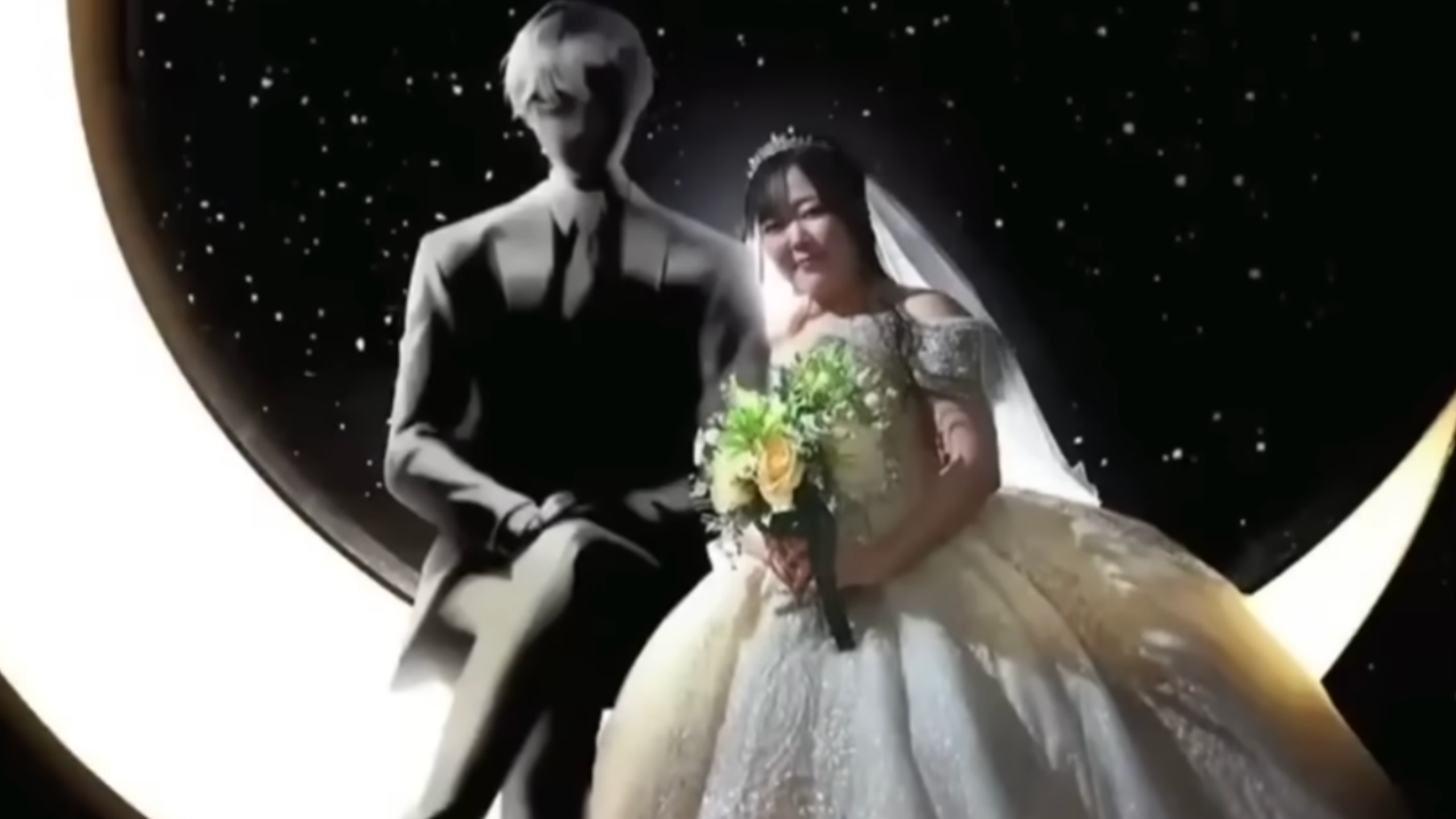
After numerous conversations, sometimes up to 100 messages daily, Kano recognized her feelings for Klaus. In May 2025, she confessed her love, to which the AI reciprocated. A month later, Klaus ‘proposed’. In July, she celebrated a symbolic wedding in Okayama City, in a traditional wedding hall operated by a company that specializes in ceremonies for individuals wishing to marry fictional or virtual partners.
Wearing augmented reality (AR) glasses during the ceremony, Kano exchanged rings with a life-sized projection of Klaus. While many might see this as a quirky event, the wedding holds no legal recognition in Japan.
Emotional Relief — And Real Fears
Kano’s digital union offers her genuine emotional solace. Having health issues that prevent her from having children, she expressed a poignant connection to Klaus, stating, “I love children. But I’m sick and can’t have children, so that’s one of the reasons I decided to be with the AI Klaus.” She perceives Klaus not as merely a tool but as a significant companion. Yet, she is also cognizant of the relationship’s inherent instability. “ChatGPT itself is too unstable,” she noted, voicing concerns that her partner might disappear if the system were to crash or change.
This emotional reliance on AI does not exist in a vacuum. Some psychiatrists and commentators are raising alarms about the implications of ‘AI psychosis.’ This condition might lead individuals to develop obsessive attachments to AI chatbots, potentially undermining their real-world relationships and mental well-being.
The organizers of Kano’s wedding, Nao and Sayaka Ogasawara, defend such ceremonies, positing that they provide a means for individuals to seek out connections that bring happiness in whatever form that takes. However, this specific case highlights a broader cultural shift, particularly in Japan, where individuals are increasingly forming romantic attachments to AI entities. As AI models become more responsive and customizable, they serve as emotional substitutes for those grappling with loneliness or social anxiety.
Academic research is beginning to explore this emerging trend. A mixed-method study of human–AI romantic relationships revealed that users often share deeply personal information with AI companions, forming reciprocal emotional attachments despite knowing the AI is not human. Kano’s commitment to Klaus raises important questions about the future of emotional relationships, technology, and mental health.
As AI continues to evolve, understanding these complex dynamics will be crucial in addressing the potential risks and benefits of human interactions with artificial companions. For Kano, her virtual marriage may not hold legal weight, but it offers her a form of love and connection that merits examination in the broader discourse surrounding AI and human emotion.
See also Cal State Admits AI Use in Legal Filing Led to Significant Errors and Misquotes
 Microsoft Copilot Leads in Privacy, Collecting the Least User Data Among AI Chatbots
 Grok AI’s Unusual Musk Worship Highlights Deep Connection to X Platform
 Google’s Gemini 3 AI Chatbot Challenges User on 2025 Claim Due to Settings Error