






















































Michael Burry, renowned for predicting the subprime mortgage crisis that led to the Great Recession, is once again making headlines by turning his attention to the artificial intelligence (AI) sector. His hedge fund, Scion Asset Management, has recently filed regulatory documents indicating the establishment of short positions against two major players in the AI landscape: Nvidia and Palantir Technologies.
During the third quarter, Burry acquired put options on both companies, effectively betting that the stocks will decline in value. This move raises eyebrows and questions across the financial community: Is Burry signaling that the AI sector is on the brink of a significant correction?
Burry’s Concerns About Palantir
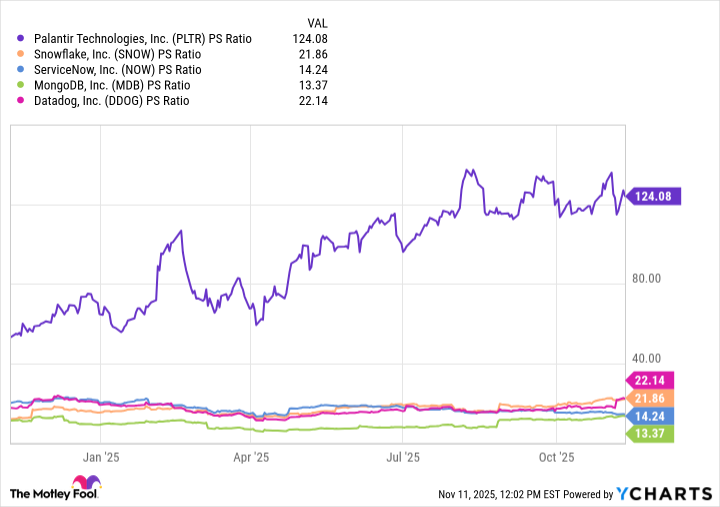
Palantir has been a standout performer in the stock market, with its shares soaring by an astonishing 224% over the last year. However, Burry’s skepticism may stem from the company’s current valuation, which appears inflated relative to its peers. Palantir’s price-to-sales (P/S) ratio is a staggering 124, significantly higher than the ratios seen in companies during the dot-com boom.
For context, during the late 1990s, leading tech companies such as Microsoft and Amazon had peak P/S ratios ranging from 30 to 50. Burry might be drawing parallels between the current AI enthusiasm and the hype surrounding internet stocks back then. Given that Palantir’s valuation is in a league of its own, it’s understandable that Burry would think the stock is on a precarious trajectory.
Why Nvidia is on Burry’s Radar
Nvidia, the dominant force in high-performance chips, has benefitted immensely from the AI boom. The company has reported record revenues, driven by soaring demand for its graphics processing units (GPUs) as companies invest heavily in generative AI technologies. Recently, Nvidia’s P/S ratio hovered around 29, which, while lower than its peak, still raises concerns for Burry.
As competition heats up from companies like Advanced Micro Devices and Broadcom, which are gaining ground with their own GPU offerings, Burry’s apprehensions may take on added weight. He appears to believe that Nvidia’s current valuation suggests limited upward potential, reminiscent of past market bubbles.
Market Indicators Favoring Burry’s Position
Indicators such as the S&P 500 Shiller CAPE ratio and the Fear & Greed Index lend credibility to Burry’s cautious stance. Currently, the Fear & Greed Index reads 29, reflecting heightened levels of market fear, while the Shiller CAPE ratio stands around 40, nearing its highest point in two decades. Historically, such elevated CAPE ratios have preceded significant market corrections.
Burry’s insights seem particularly relevant given that history has shown that markets often correct sharply following sustained periods of inflated valuations. His analysis suggests that the excitement surrounding AI could be producing a bubble similar to those witnessed in previous market cycles.
A New AI Era: Could Burry Be Wrong?
While Burry’s insights are compelling, it’s crucial to consider the ongoing enthusiasm for AI technologies. Major companies are committing substantial resources to AI infrastructure. For instance, Meta Platforms is set to double its AI investments, and Microsoft has entered into multibillion-dollar contracts for AI infrastructure that leverage Nvidia’s products.
Furthermore, investor confidence appears robust, with AI spending on the rise. While Palantir might be due for a short-term pullback, its long-term prospects remain bright as it continues to secure significant business in multiple sectors.
Ultimately, while Burry’s positions on Nvidia and Palantir may yield short-term gains, they do not necessarily reflect the long-term trajectory of these companies in the evolving AI landscape. As such, both Nvidia and Palantir still present promising opportunities for investors focusing on sustained growth in the AI sector.
 Attendees at AI Conference Identify Perplexity and OpenAI as Startups to Bet Against
 Pathologist Dr. Matose Reveals Ethical Challenges of AI in Healthcare at AMP 2025
 Leaked Documents Reveal OpenAI Paid Microsoft $493.8M in 2024, Spending Surges to $8.65B
 AI-Created Song “Walk My Walk” Tops Billboard Country Chart, Sparking Industry Debate
 Vine Reboots as DiVine, Banning AI-Generated Content and Reviving 100.000 Clips














