






















































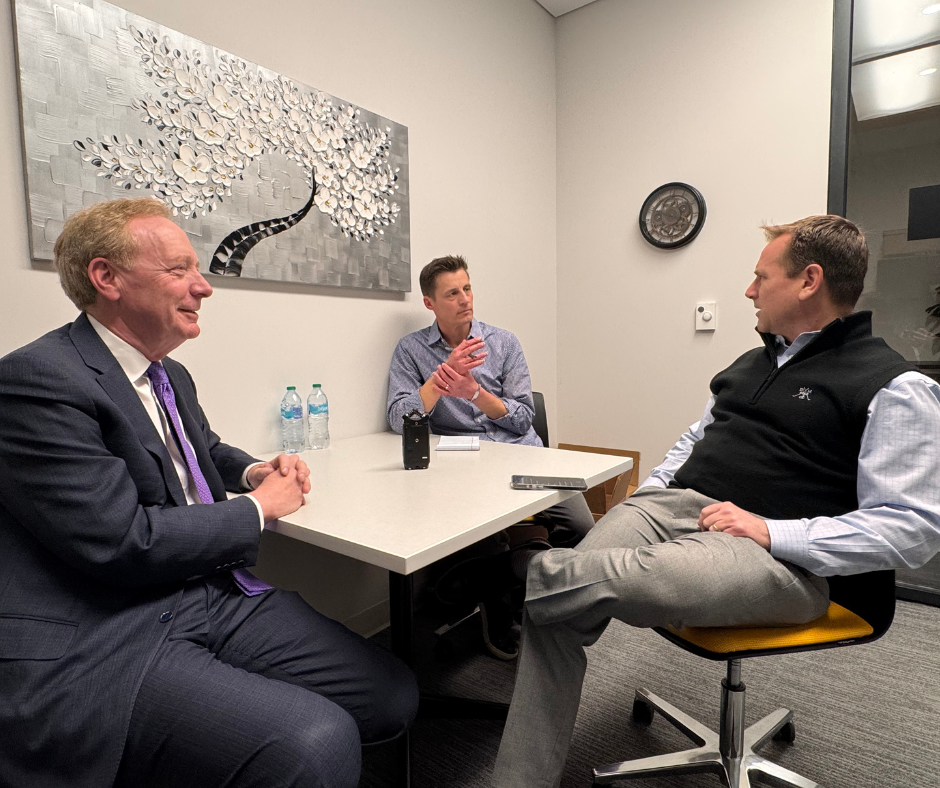
Microsoft President Brad Smith recently spoke with the WTMJ’s Wisconsin Morning News about the company’s ongoing commitments to the state, particularly regarding its data centers and the future of artificial intelligence (AI). Smith was in Wisconsin to accept the WTMJ Standout of the Year award, emphasizing the importance of addressing community concerns surrounding these developments.
During the conversation, Smith highlighted five key commitments Microsoft is making to communities where it builds data centers, including in southeastern Wisconsin. These commitments focus on critical issues such as electricity, water, jobs, taxes, and skills. He underscored the importance of ensuring that Microsoft’s operations do not lead to increased electricity costs for consumers. “We will pay our fair share so that our data center does not increase the electricity costs for consumers,” he stated. This pledge is part of a broader effort to set a high standard for corporate responsibility in the state.
When questioned about possible external pressures to adopt these commitments, Smith clarified that Microsoft was not compelled by governmental pressure but rather proactively engaging with stakeholders. “We’ve had a broad dialogue with folks across this administration, as we did with the last administration,” he noted. He expressed confidence that aligning with public needs is not only beneficial for Microsoft but also essential for long-term infrastructure success in the AI sector.
Addressing job creation, Smith explained that data centers require a diverse range of skills during both the construction and operational phases. He mentioned partnerships with local community colleges and labor unions to facilitate training programs, underlining that data centers will create opportunities for electricians, pipe fitters, and IT specialists. “I think everybody who lives there should ask the question, is this an opportunity for my kids or for me or my family or my neighbors? And the answer is yes,” he asserted, encouraging local residents to engage with these educational opportunities.
Smith, a Wisconsin native, elaborated on why the state has become a focal point for data center development. He attributed Microsoft’s interest in Wisconsin to the groundwork laid by past investments, specifically referencing the Foxconn project. “The access to electricity, the zoning and the like” were key factors in attracting Microsoft to the state. Following Microsoft’s entry, other tech companies started to explore similar opportunities in Wisconsin, drawn by its favorable environment and cooperative local governance.
Concerns about obsolescence in data center technology were also addressed. Smith explained that while some components, like graphical processing units (GPUs), may need replacing every five years, careful planning can mitigate risks. He mentioned a strategy of rotating 20% of chips annually to ensure that technology remains up to date.
While discussing local opposition to data center expansions, Smith acknowledged the challenges of transparency and community trust. He reflected on the recent vote in Caledonia and the necessity for companies to be more open from the outset of their projects. “We need to change, and we are,” he asserted, stressing that the conversation around data centers needs to involve the community from the beginning.
Looking ahead, Smith emphasized the importance of legislative measures in Wisconsin that could set a standard for data centers across the country. He highlighted a rare alignment between political parties on issues such as consumer protection and responsible resource use. “This is a common cause. This is a great opportunity for the state of Wisconsin to show the nation that it can build a better future by bringing people together,” he stated.
As concerns about AI continue to evolve, Smith remains optimistic about the technology’s potential. He dismissed fears of AI spiraling out of control, suggesting that it should be viewed as a tool under human management. “AI is a powerful tool. But it’s a tool that still is a subset of what a human being can do,” he remarked, advocating for a responsible approach to the technology’s development.
Smith’s visit encapsulates a pivotal moment for Microsoft in Wisconsin, as the state navigates the complexities of emerging technologies and their implications for local communities. With the promise of job creation and responsible investment in infrastructure, the future of AI in Wisconsin is poised for significant growth.
See also Hot Springs Festival Challenges Audience: Define Humanity in AI Theater Experience
 DeepSeek Launches Sparse AI Models, Redefining Efficiency with $6M Training Costs
 AI’s Employment Impact: Key Insights on Worker Displacement and Adaptation Strategies
 Global AI Regulation Enforced in 2026: EU’s AI Act Transforms Tech Landscape, Stricter Compliance Required
 Google Launches Gemini’s Personal Intelligence, Enhancing AI with User Data Integration














