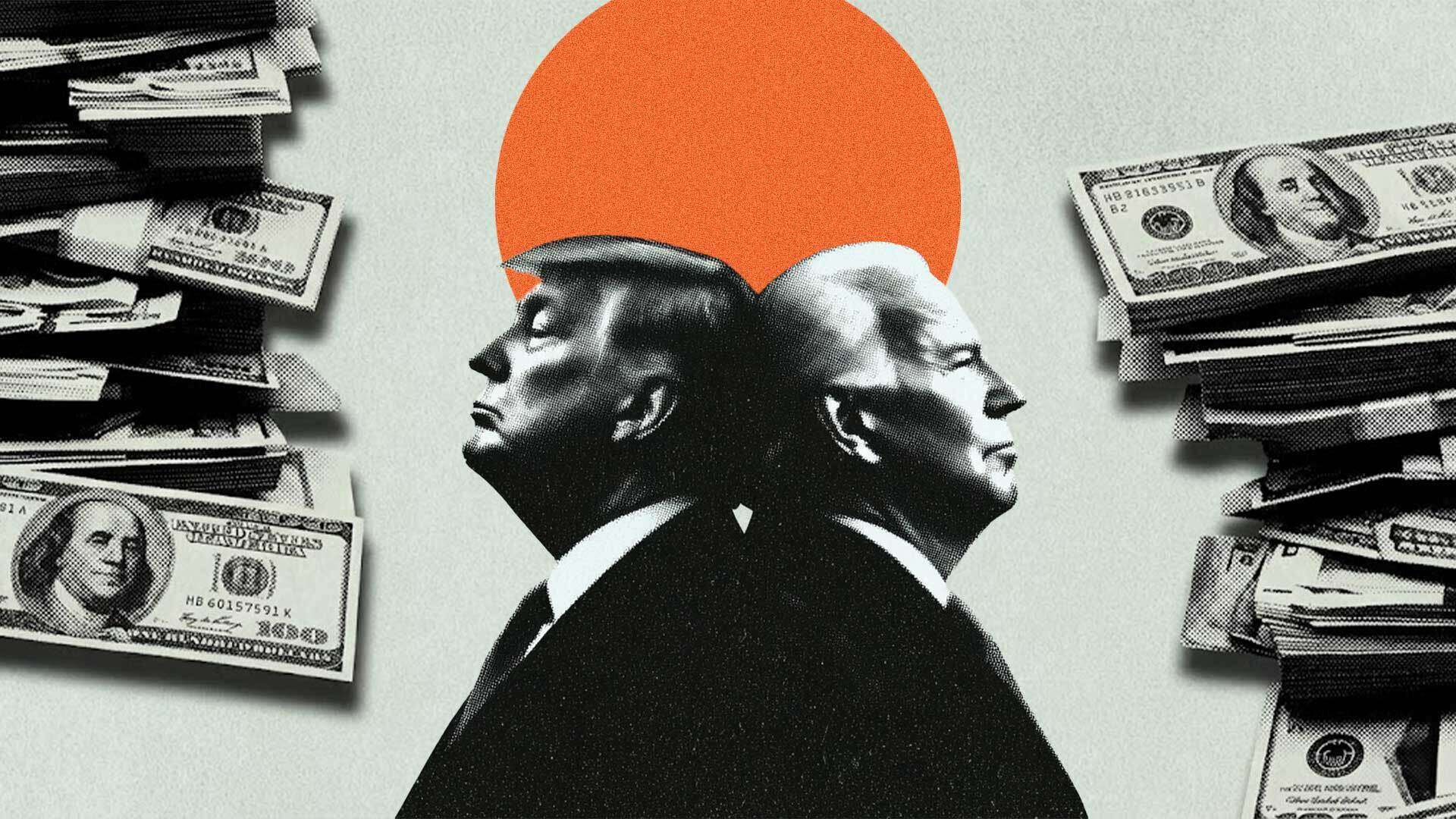
The 2020s have emerged as a complex landscape where policymakers have often disregarded fundamental economic principles, leading to significant repercussions. From the onset of the COVID-19 pandemic to rising inflation under the Biden administration and the tumultuous trade policies of the Trump era, each administration has made critical errors by assuming that economics could be sidelined in favor of political motives.
The COVID-19 pandemic stands as a defining narrative of this decade, with initial lockdown measures driven largely by public health advisors rather than economic considerations. Early in 2020, the Trump administration implemented stringent lockdowns based on the premise of “15 days to slow the spread.” As Jon Allsop articulated in the Columbia Journalism Review, the prevailing belief was that there was “no choice to be made between public health and a healthy economy.” This all-or-nothing mindset illustrated a glaring oversight of the economic tradeoffs involved in such drastic measures.
Economist Ryan Bourne from the Cato Institute noted that many public health decisions failed to acknowledge the economic principles that guide effective policymaking. He argued that these decisions exacerbated both public health and economic conditions during the pandemic. “There are no solutions; only tradeoffs,” as economist Thomas Sowell famously stated, highlights the critical errors made in the early months of COVID-19 when policymakers oversold solutions and neglected the complexities of economic realities.
As the pandemic began to wane, the Biden administration adopted a similar approach. Shortly after assuming office, President Joe Biden advocated for a “run it hot” economic strategy, downplaying concerns about inflation. The resulting American Rescue Plan, a $1.9 trillion spending initiative that included direct payments of $1,400 to households with joint incomes up to $160,000, was viewed by many economists as a potential catalyst for inflation. Harvard economist Larry Summers cautioned that the plan would “set off inflationary pressures of a kind we have not seen in a generation,” a warning that went largely unheeded.
The consequences of ignoring these economic warnings were stark. By June 2022, inflation surged to an annualized rate of 9.1 percent, marking a level not seen in decades. While the current inflation rate has moderated to 2.7 percent, it remains elevated compared to the first two decades of the 21st century, fueling public discontent over rising costs.
Economic miscalculations have not been limited to the pandemic. The Trump administration’s implementation of tariffs also reflects a fundamental misunderstanding of economic principles. Despite significant pushback from economists, the administration proceeded with tariffs intended to bolster American manufacturing. Vice President J.D. Vance’s assertion that “the economics profession doesn’t fully understand tariffs” overlooks the reality that tariffs function as a substantial tax increase—with adverse effects on productivity and consumer prices.
The Tax Foundation labeled these tariffs as the largest tax increase in over three decades, with predictable outcomes: increased government revenue, but diminished private sector productivity. Contrary to promises of a “golden age” for American manufacturing, economists warned that tariffs would negatively impact domestic firms, as many imports consist of raw materials and intermediate goods essential for production. By 2025, the manufacturing sector entered a recession, shedding jobs while the trade deficit continued to expand.
In the policymaking arena, economists often face resistance from political leaders seeking swift solutions. Their emphasis on tradeoffs can be seen as a challenge to the idealistic plans of elected officials, resulting in a tendency to exclude them from discussions. However, dismissing economic realities has not yielded favorable outcomes. Six years of neglecting economic principles have failed to create the utopia many hoped for.
As the United States approaches 2026, there is a pressing need for policymakers to reevaluate their relationship with economic expertise. A renewed commitment to engaging with economists could steer the nation toward more sustainable and effective policy decisions, ultimately leading to better outcomes for the economy and society at large.
See also OpenAI’s CLIP Achieves 81.8% Zero-Shot Accuracy, Surpassing Previous Models
 Survey Reveals AI Knowledge Gaps Among Medical Students at Top Tertiary Care Center
 DeepSeek Unveils mHC Architecture for Enhanced Large-Model Training Efficiency