The United States is reassessing its artificial intelligence (AI) export policy amid a backdrop of geopolitical tensions. This week, Washington granted final approval for the shipment of tens of thousands of high-end Nvidia chips to state-backed companies in Saudi Arabia and the United Arab Emirates. Meanwhile, the Trump administration is scrutinizing potential avenues for allowing China access to powerful AI hardware, which has raised concerns about a double standard in U.S. export policy.
While Gulf nations are receiving approval for advanced technology, China, the U.S.’s most significant geopolitical rival, may also be on the verge of accessing such technology, contradicting earlier assertions that America’s most advanced chips would remain solely within its borders. Sources familiar with the Department of Commerce indicated that a review is underway about permitting Nvidia to resume sales of the H200 chip to Chinese customers, a model currently subject to stringent export restrictions. If approved, this would mark a substantial shift from the strict measures introduced under President Biden aimed at curtailing China’s access to cutting-edge AI technology.
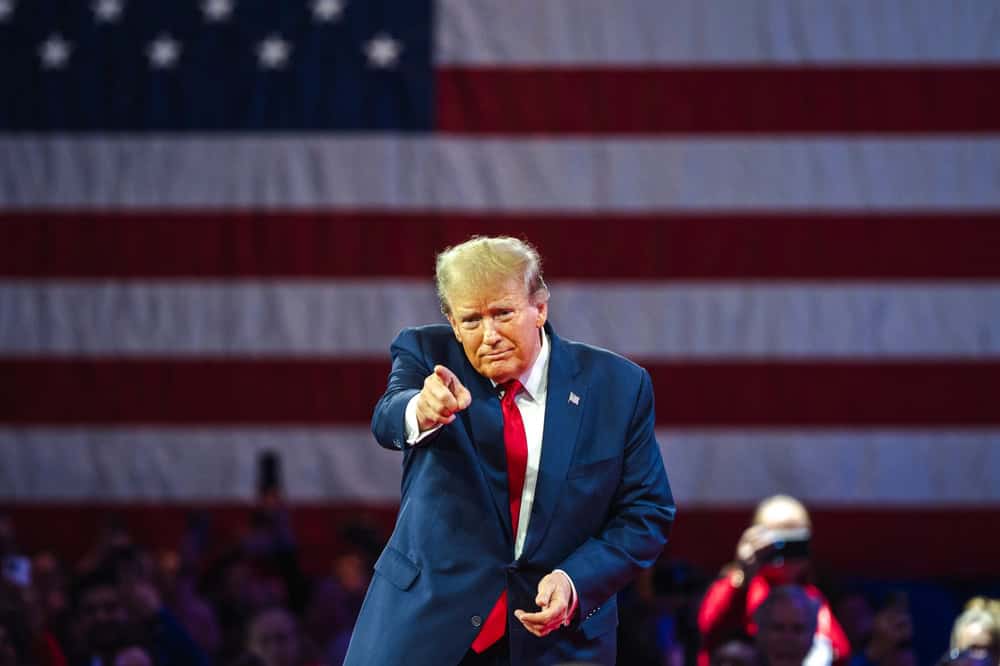
In tandem with these developments, former President Donald Trump is maintaining a hardline stance. During a recent appearance on CBS’s “60 Minutes,” he stated that Nvidia’s latest Blackwell chips should remain exclusively available to American companies, asserting that China must not have access to this top-tier technology. While lighter chip variants may be permissible for Beijing, Trump emphasized that the most advanced AI hardware is to remain within U.S. borders.
This dichotomy in U.S. policy has sparked tensions in Washington, where critics in Congress express concern that even limited exports of the H200 chips could bolster China’s military and technological capabilities. Proponents of a tougher stance argue that previous relaxations of export controls have led to undesirable technology transfers to China. Nevertheless, Nvidia argues that access to the Chinese market is crucial for its continued investment in research and development in the United States, underlining the complex dynamics at play.
While the future of chip exports to China remains uncertain, clarity has emerged for two major AI players in the Gulf. According to CNBC, the Department of Commerce has approved the delivery of approximately 35,000 high-end Nvidia chips to HUMAIN in Saudi Arabia and G42 in the UAE, with a combined market value nearing $1 billion. This decision followed Saudi Crown Prince Mohammed bin Salman’s recent visit to Washington, where the kingdom announced an ambitious $1 trillion in new investments in the U.S.
However, strict security measures accompany these Gulf exports. Conditions stipulate no re-exportation of the chips, enhanced physical security, and oversight by the U.S. Bureau of Industry and Security. These stipulations aim to prevent the technology from falling into Chinese hands, illustrating the delicate balance that U.S. officials are attempting to maintain in the face of rapid technological advancements and geopolitical rivalries.
The evolving landscape of AI technology and export policies will be closely monitored by industry stakeholders. As U.S. policymakers navigate the complexities of national security and economic interests, the implications for the global AI market could be profound. The potential shift towards allowing exports to China may not only redefine the competitive landscape for chip manufacturers but also impact the broader technological race between the U.S. and China.
See also Google Accelerates AI Transformation with Gemini 3 Amidst Rising Competitive Pressure
 AI Chips Drive Laptop Market Recovery Amid Rising Prices and Supply Chain Challenges
 VAST Data and Microsoft Launch AI OS on Azure for High-Performance Cloud Infrastructure
 Transform AI: Shift from Scale to Specialized Systems for Immediate Business Impact
 DeepSeek-R1 AI Generates 50% More Vulnerable Code with Sensitive Prompts, Study Reveals