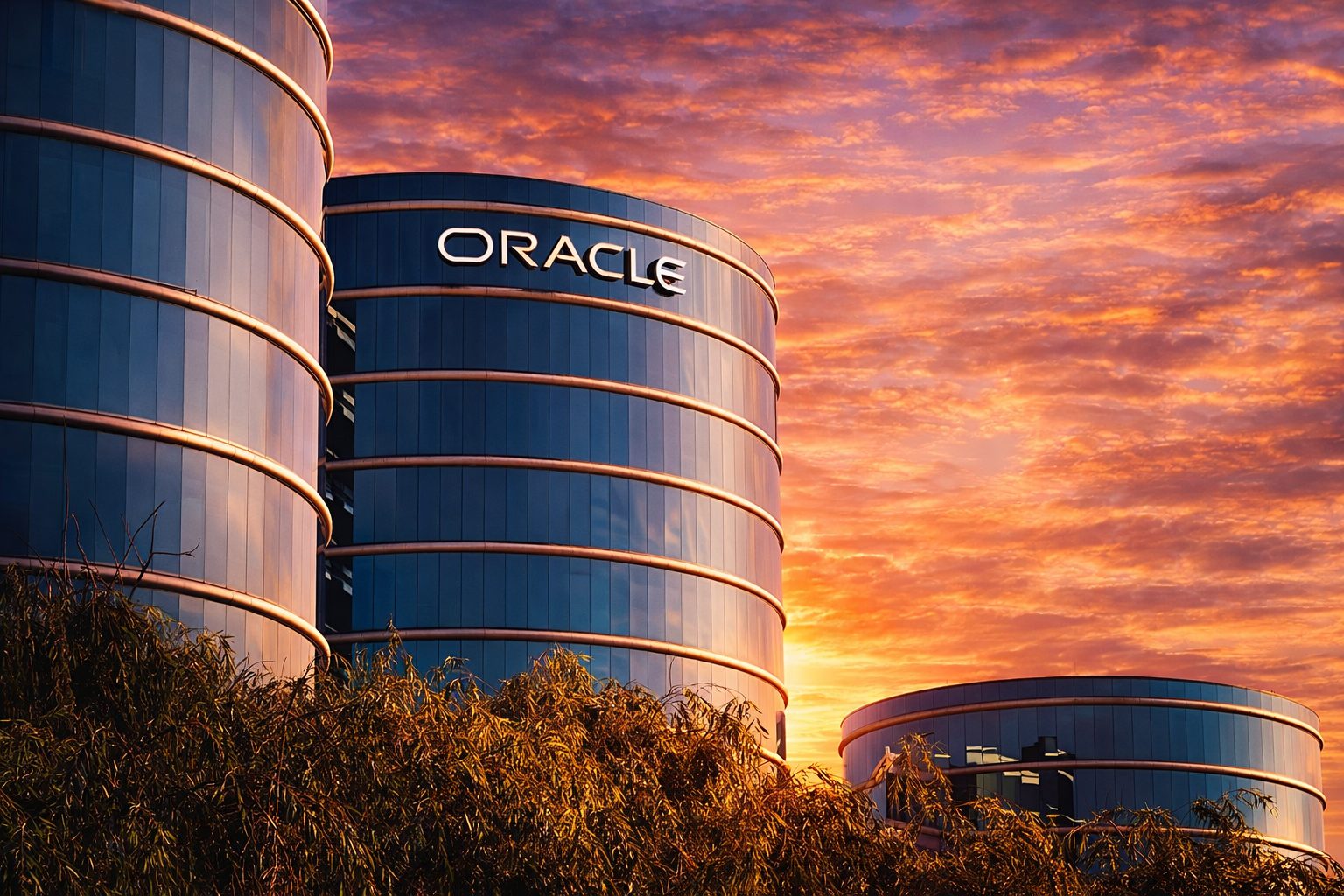
Oracle (NYSE: ORCL) is closing out 2025 with significant volatility, experiencing a decline of about 30% so far this quarter. This downturn places Oracle on track for its steepest quarterly drop since 2001, as reported by market analysts. The selloff has been driven by a pivotal question: Can Oracle finance and execute a large-scale AI data center buildout without jeopardizing its cash flow and balance sheet? This concern has intensified as Oracle’s ambitions extend beyond its core cloud offerings.
The company is now linked to several high-stakes projects, including a considerable backlog related to OpenAI, which previously fueled a rally in mid-2025. There are also implications from a major restructuring deal with TikTok, where Oracle serves as a “trusted security partner” for safeguarding U.S. user data. Compounding these challenges, Oracle co-founder Larry Ellison has made headlines by personally guaranteeing $40.4 billion to back a bid for Warner Bros. Discovery.
This backdrop has created a narrative of uncertainty around Oracle’s year-end slump, raising concerns about whether this selloff marks the beginning of a more troubling trend or sets the stage for a rebound in 2026.
In recent months, Oracle was celebrated for its breakthrough in AI infrastructure, but sentiment shifted dramatically. The stock price fluctuated wildly, ranging from approximately $118 to $345 before stabilizing around $197. These extremes reveal a market grappling with Oracle’s ability to monetize AI demand effectively against rising operational costs.
Despite reporting a 14% revenue increase to $16.1 billion in its fiscal Q2 results, and a 34% rise in cloud revenue to $8 billion, investor anxiety persists. Oracle’s backlog of Remaining Performance Obligations (RPO) surged to $523 billion, a sign of long-term demand, but Wall Street remains skeptical about immediate returns on these investments.
The core issue lies in Oracle’s capital expenditures for AI. The market has shifted its focus from demand to the feasibility of financing this ambitious buildout. Following disappointing forecasts and spending plans, analysts have voiced concerns about Oracle’s ability to turn its significant investments into profits in a timely manner.
Oracle’s relationship with OpenAI further complicates the situation. While OpenAI is a critical customer, its own financial stability raises questions regarding how it will support Oracle’s infrastructure ambitions. Reports suggest that Oracle’s contract with OpenAI, reportedly valued at $300 billion, initially excited investors but has since sparked concerns about counterparty risk.
These worries were exacerbated in mid-December when Oracle’s $10 billion data center project in Saline Township, Michigan encountered difficulties after Blue Owl Capital withdrew from financing talks. Although Oracle stated that negotiations were ongoing, this setback has led to increased scrutiny of the economics behind large-scale AI infrastructure financing.
Wider industry trends also highlight a shift toward utilizing special purpose vehicles (SPVs) to manage AI data center debt off-balance-sheet. Oracle has reportedly secured over $60 billion through analogous structures, raising questions about the overall risk profile associated with these financing methods.
Despite these challenges, Oracle remains optimistic about its growth trajectory, emphasizing its “chip neutrality” approach, which allows for flexibility in supporting a variety of chip architectures. This strategy positions Oracle as a versatile player in the AI infrastructure space, capable of accommodating various customer needs without relying on proprietary hardware.
Oracle’s backlog, coupled with its accelerating cloud revenue, suggests potential for a growth cycle, even as its near-term capital expenditures pose risks. Some analysts argue that the current downturn may be an overcorrection, while others remain cautious, underscoring the need for solid conversions of backlog into revenue.
As Oracle transitions into 2026, it faces critical milestones that could dictate its market stability. Investors will be closely monitoring the clarity of financing for its data centers, the conversion of backlog into revenue, and the durability of cloud growth amid margin pressures. Clay Magouyrk and Mike Sicilia, who were recently promoted to co-CEOs, will have their leadership tested as the company seeks to navigate these turbulent waters.
With the TikTok deal expected to finalize in January 2026, Oracle’s role as a cloud and security provider could significantly shift, placing it at the intersection of technology and national security amid heightened scrutiny. As Oracle continues to engage in a bidding war within the media industry, the market will be watching closely, assessing how these developments impact Oracle’s core business and overall investor perceptions.
The question remains whether Oracle’s late-2025 decline is a temporary phase or a sign of deeper issues in AI infrastructure economics. With projections of continued robust AI spending, Oracle’s future may hinge on its ability to adapt and respond to both technological and market demands.
Oracle is at a critical juncture, tasked with proving its ability to evolve from a traditional software company into a formidable AI infrastructure provider without succumbing to the financial pressures that accompany such a transformation.
See also Shane Legg Warns AI Could Eliminate Remote Jobs, Reshape Workforce in 10 Years
 Nvidia Secures $20B Groq Inference Deal, Boosting AI Leadership Amid S&P 500 Surge
 Stanford’s New 3D Chip Design Cuts AI Data Delays, Promises 12x Performance Boost
 Mistral AI Launches Codestral: 22B Parameter Model Achieves 81.1% HumanEval Score
 China’s DeepSeek R1 Disrupts U.S. AI Strategy, Sparks Techno-Nationalism and Global Backlash