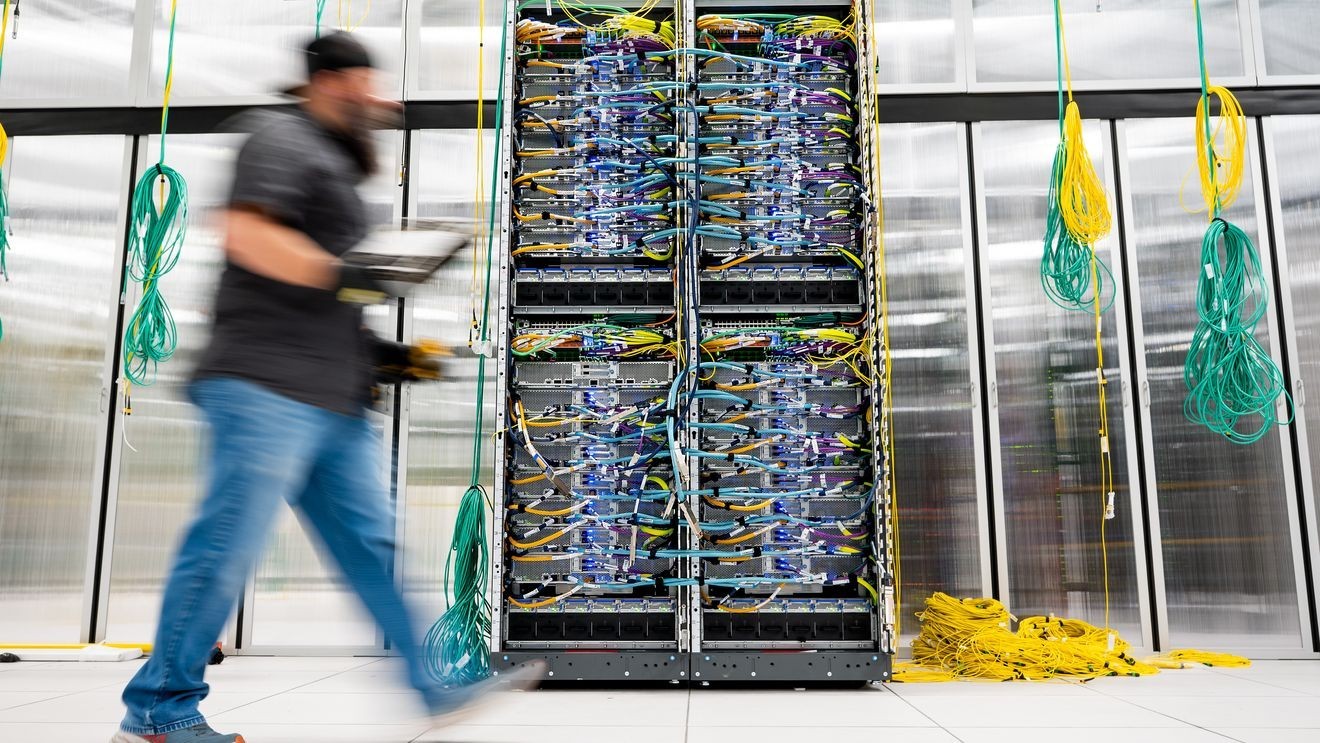
(TNND) — Major technology firms are poised to invest a staggering $3.7 trillion in artificial intelligence infrastructure over the next five years, a commitment that could rival the historical railroad expansion of the 1850s, according to a new report from CBRE. This monumental build-out is being driven by hyperscalers like Google, Amazon, and Microsoft, who are all competing to establish dominance in the AI landscape.
Julie Whelan, head of occupier research at CBRE, described the AI infrastructure expansion as “historic,” suggesting it will enhance the U.S.’s long-term global competitiveness in an evolving economic environment. Released on Thursday, the report is the first installment in a four-part series examining the implications of AI on the workforce and the broader economy.
The report highlights that while nearly 80% of American companies are currently utilizing AI technologies, 90% report minimal impact on their business operations thus far. “We seem to be just scratching the surface of how AI is expected to change the working world,” Whelan noted. Concerns about AI’s potential negative effects on jobs persist, yet Whelan argues that the more pressing narrative is how AI will redefine existing roles rather than eliminate them.
“Workers will adapt and new roles will emerge, much like how many of today’s careers didn’t even exist 25 years ago,” Whelan stated. She emphasized that with a declining pool of working-age individuals entering the labor market, AI could be crucial in sustaining economic growth. The report also indicated that employment among entry-level workers in the most AI-exposed sectors has been slower compared to those in less-exposed roles.
Despite the optimism surrounding AI, skepticism remains. A Pew Research Center report from last year found that many workers are more worried than hopeful about AI’s impact on job availability, with approximately one-third anticipating a decrease in opportunities. Additional findings from Brookings Metro and Opportunity@Work suggest that pathways to well-paying jobs for millions of Americans are under threat due to AI advancements.
Furthermore, a recent survey conducted by Gallup and the Lumina Foundation revealed that nearly half of college students are reconsidering their majors in light of uncertainty surrounding AI’s influence on the job market. However, not all reports convey a bleak outlook. A study by the University of Phoenix Career Institute indicated that possessing AI skills can bolster workers’ confidence in securing better job opportunities.
Moreover, LinkedIn career expert Andrew Seaman pointed out that companies are recognizing the limitations of AI, prompting a search for inherently human skills such as collaboration, client relations, and leadership. This suggests a synergistic relationship between AI and human capabilities rather than a straightforward replacement.
CBRE’s findings indicate that the transformation driven by AI will likely alter job composition more than job quantity, with a reconfiguration of roles taking precedence over outright job loss. The firm draws parallels between the current AI evolution and past technological milestones, including the advent of the internet and smartphones. Historically, office-using jobs have seen accelerated growth following significant technological advancements, a trend CBRE anticipates will continue, albeit at a diminished rate.
Whelan noted early indicators that suggest steady demand for office space, particularly in major markets that boast a skilled talent pool and burgeoning industries. The immediate effects of the AI surge are predominantly felt in the realms of data centers and industrial real estate. Construction of data centers has surged to twelve times the levels seen in 2020, while manufacturing leasing has climbed 28% from early 2025, primarily due to the needs of tech companies developing AI infrastructure.
In terms of investment, U.S.-based AI startups have secured approximately $578 billion in venture capital since 2020, with nearly 75% of that total occurring in just the past two years. Last year’s AI buildout is believed to have accounted for nearly half of the growth in U.S. gross domestic product, a stark contrast to just 8% growth in 2023 and 2024.
Overall, the landscape for data centers in North America is experiencing record growth, fueled by escalating demand from AI development, cloud computing, and e-commerce, as reported by CBRE. As the saga of AI continues to unfold, its ramifications on the workforce, economy, and commercial real estate remain a focal point for businesses, policymakers, and workers alike.
See also Vertiv Reports 83% Earnings Growth Amid $15B AI Data Center Demand Surge
 Galaxy Digital Shifts Focus to AI Data Centers, Reports $216M Q1 Loss
 Nebius Acquires Eigen AI for $643M to Enhance AI Infrastructure and Efficiency
 New York City Cancels AI-Focused High School Amid Widespread Parental Backlash
 Apple Faces Mac Mini and Studio Shortage as OpenClaw Drives AI Demand Surge