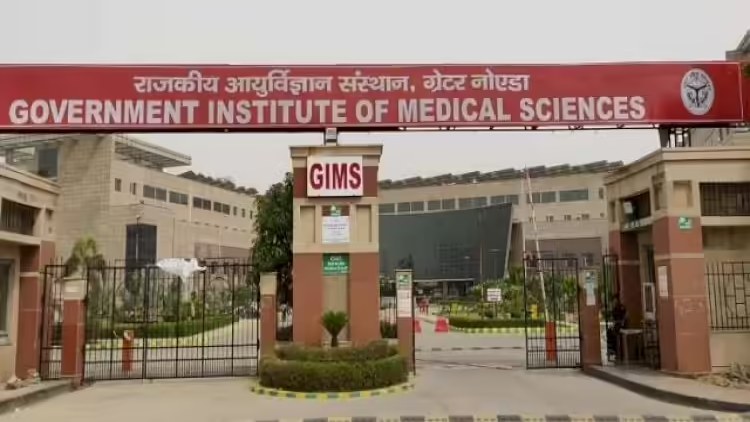
Greater Noida News (28/12/2025): In a groundbreaking initiative aimed at revolutionizing public healthcare through technology, the Government Institute of Medical Sciences (GIMS) Government Hospital in Greater Noida is set to unveil India’s first AI Clinic embedded within a government hospital on January 2. This initiative, established through the hospital’s Centre for Medical Innovation (CMI), seeks to foster a collaborative environment where clinicians, startups, and academic institutions can develop, test, and deploy artificial intelligence solutions in real clinical settings.
The AI Clinic serves as a pioneering model that integrates innovation directly into healthcare delivery rather than treating it as a separate entity. This integration ensures that AI-based solutions are not only clinically relevant but also ethically deployed, prioritizing patient safety and aligning with everyday medical workflows. Startups and innovators have been invited to apply, gaining early access to this unique hospital-based validation platform.
To bolster this initiative, IIT Kanpur has come on board as the ecosystem partner, providing essential academic mentorship, technical expertise, and incubation support. This collaboration aims to bridge the divide between cutting-edge research, technological development, and practical healthcare delivery, thereby enhancing India’s AI-driven MedTech landscape.
The launch event will feature insights from several renowned national and international experts in healthcare and artificial intelligence. Dr. Siva Kumar, a Senior Clinician at NHS Trust in London, will share global perspectives on the adoption of AI in healthcare systems. Meanwhile, Dr. Harsha Bhayana, MBBS, MD (Pediatrics) from PGIMER Chandigarh, will discuss the integration of AI tools into clinician workflows and bedside practices. Dr. Deepti Chugh, Vertical Head for Bio & Healthcare at SIIC IIT Kanpur, will focus on the role of academic incubators in fostering AI innovation and supporting startups. Dr. Archana, a Consultant at the Ministry of Health and Family Welfare (MoHFW), will address critical issues related to patient safety, ethics, and responsible AI deployment.
The Director of GIMS Government Hospital will offer insights from a public hospital leadership perspective on integrating AI into government healthcare systems. The session will be moderated by Dr. Rahul Singh – Amritraj, CEO of the GIMS Medical Incubator (CMI), who will guide discussions concerning doctor data governance and the practical deployment of AI in clinical practice.
By establishing the AI Clinic within GIMS Government Hospital, the institution aims to set a national benchmark for AI-led innovation in public healthcare. This initiative ensures that emerging AI technologies are not only clinically validated before broad adoption but also ethically sound, patient-centric, and seamlessly integrated into daily clinical workflows.
The AI Clinic aspires to provide a scalable and replicable framework that could be adopted by government hospitals across India, thereby strengthening the nation’s public health infrastructure through responsible and evidence-based use of artificial intelligence. CMI at GIMS Government Hospital is India’s first medical incubator situated within a public hospital, operating under the Department of Medical Education, Government of Uttar Pradesh. CMI focuses on clinical validation, translational research, and MedTech entrepreneurship, enabling startups and innovators to develop healthcare solutions that are both safe and effective for real-world deployment.
With IIT Kanpur as its ecosystem partner, CMI offers startups working on AI healthcare solutions access to invaluable mentorship, technical guidance, and incubation support, further solidifying GIMS Government Hospital’s leadership role in the realm of MedTech and AI-driven healthcare innovation.
See also AI Transforms Global Markets in 2025: Key Breakthroughs in Finance, Energy, and Healthcare
 BigBear.ai Acquires Ask Sage Amidst Falling Revenue and Market Challenges
 Zooey Zephyr Calls for Regulation of AI Girlfriend Apps Over Consent Concerns
 AI Solutions Could Cut Energy Costs by 30-40% as Regulations Slow Progress