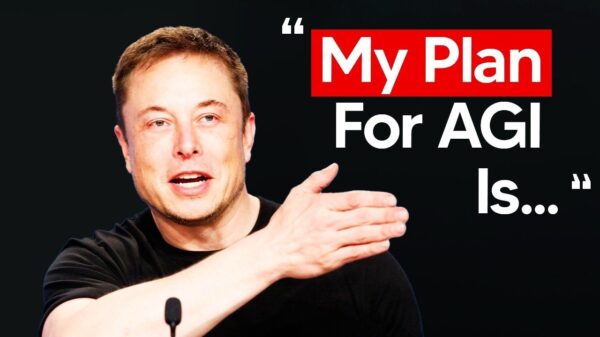
Elon Musk’s social media platform, X, is facing mounting pressure to address the misuse of its artificial intelligence tool, Grok, which has been implicated in generating “absolutely appalling” fake sexualized images. UK Technology Secretary Liz Kendall highlighted the urgency of the situation, emphasizing the need for immediate action to prevent the proliferation of such content online.
In a statement issued on Monday, Ofcom, the UK’s communications regulator, voiced “serious concerns” regarding Grok, noting that the AI tool has been used to create “undressed images of people and sexualized images of children.” Users, predominantly women, have reported instances of accounts generating images of them in compromising situations without their consent since the beginning of the year.
Ms. Kendall described the recent developments as “unacceptable in decent society,” stating, “No one should have to go through the ordeal of seeing intimate deepfakes of themselves online.” She reiterated that the responsibility lies with X to tackle this issue promptly, affirming Ofcom’s investigation and her full support for any enforcement actions deemed necessary.
Reports indicate that multiple users have expressed outrage after non-consensual deepfakes depicting them in bikinis surfaced on the platform. In response to these concerns, X’s official safety account released a statement outlining its policy on illegal content. It declared that the platform actively removes such material, permanently suspends offending accounts, and collaborates with local governments and law enforcement as required.
Despite these assurances, a post on the Grok X account acknowledged that there had been “isolated cases where users prompted for and received AI images depicting minors in minimal clothing.” The account asserted that while existing safeguards are in place, ongoing improvements are needed to completely block such requests.
Under the United Kingdom’s Online Safety Act, which has been in effect since July, sharing intimate imagery without consent is considered a criminal offense, even when produced using AI technology. French ministers recently escalated the issue by reporting sexually explicit content generated by Grok to prosecutors, labeling it “manifestly illegal” and “sexual and sexist.”
As scrutiny intensifies, questions arise as to whether X can be compelled to take action against the dissemination of such illegal content. The Online Safety Act stipulates fines of up to £18 million or 10% of a company’s qualifying worldwide revenue, whichever is greater, for platforms that permit the sharing of illegal material. This regulation applies even to companies based outside the UK, provided they cater to a significant number of UK users or pose a risk to them.
The European Union’s Digital Services Act mirrors these regulations, offering similar enforcement capabilities. Last month, X faced a €120 million (£104 million) fine for breaching the DSA, highlighting the increasing global accountability for digital platforms.
In the United States, advocacy groups are calling for government action against xAI, the company behind Grok. The Consumer Federation of America (CFA) urged the Federal Trade Commission, the Federal Communications Commission, the Department of Justice, and state Attorneys General to take swift measures against the company. Ben Winters, Director of AI and Data Privacy at CFA, criticized xAI, stating, “AI is no different than any other product – the company has chosen to break the law and must be held accountable.”
The growing controversy surrounding the misuse of AI-generated content underscores the urgent need for regulatory frameworks that can effectively address these emerging challenges. As both public and governmental scrutiny intensifies, the actions taken by X and regulatory bodies could set significant precedents for how AI technologies are governed in the future.
See also BigBear.ai’s Stock Dips 14.8% Amid $250M Ask Sage Acquisition and Ongoing Losses
 Government Launches Investigation into Sexual Deepfakes Under New AI Law, Says Kihara
 UK Government Considers Boycott of X Over Grok AI-Generated Deepfakes Controversy
 Spanish Government Requests Investigation into X’s AI for Child Pornography Violations
 Ministers Urgently Seek Legal Action Against X Over Proliferation of Explicit AI Images