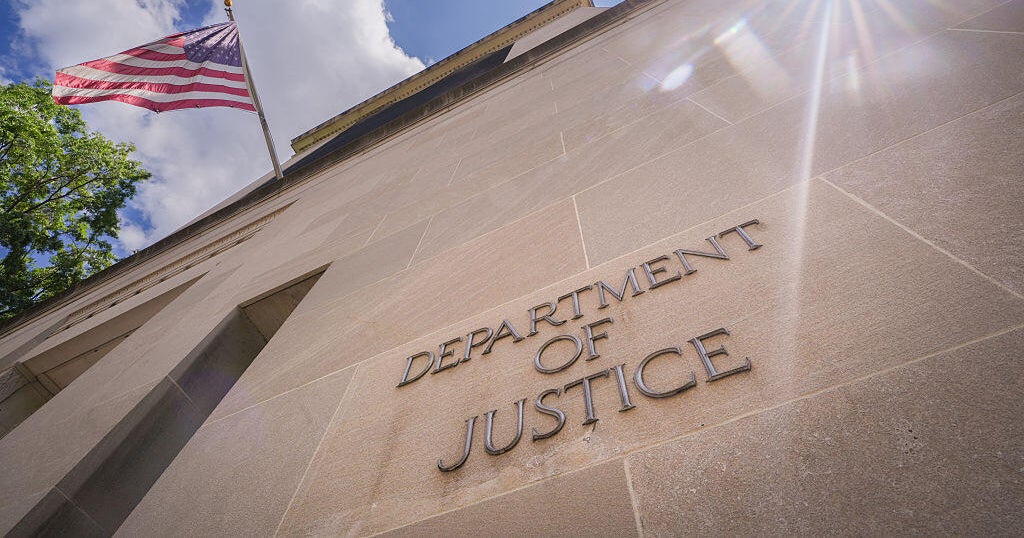
The Justice Department announced on Friday the creation of an artificial intelligence taskforce aimed at challenging state-level regulations that could hinder innovation in the AI sector. According to an internal memo reviewed by CBS News, the taskforce will work to ensure AI companies can operate without “cumbersome regulation.” The memo, authored by Attorney General Pam Bondi, references a recent executive order from President Trump, which seeks to limit what it describes as “excessive” state regulations impacting the AI industry.
Trump’s executive order contends that a “patchwork” of conflicting regulations across states could jeopardize the AI sector’s growth and competitiveness. In response, the new AI Litigation Taskforce will challenge state laws deemed illegal or unconstitutional, particularly those that regulate interstate commerce or conflict with existing federal regulations.
The taskforce is to be guided by the president’s directive and will include consultations with David Sacks, the White House’s AI and crypto czar. Sacks, a noted venture capitalist in Silicon Valley, has been outspoken in support of the administration’s measures to reduce state oversight. He stated on social media platform X last month that the executive order would equip the federal government with the necessary tools to combat what he termed “onerous and excessive state regulation.”
Leadership of the AI Litigation Taskforce will fall to Bondi or her designated appointee, and its membership will comprise representatives from key divisions within the Justice Department, including the offices of the Deputy and Associate Attorney General, the Civil Division, and the Solicitor General’s office.
Several states, including Colorado, California, Utah, and Texas, have enacted regulations that impose specific requirements on AI companies. Additional states are currently deliberating similar measures. Recent legislative efforts in various statehouses have primarily focused on safeguarding consumers from potential AI overreach, such as proposed legislation aimed at regulating the use of “deepfakes” and requiring transparency when consumers interact with AI chatbots, according to research from the Brookings Institution.
In December, a group of Senate Democrats led by Sen. Ed Markey of Massachusetts introduced legislation intended to nullify Trump’s executive order concerning state AI regulations. Markey asserted that it is Congress’s responsibility to counteract what he characterized as the president’s “illegal power grab.” He expressed confidence that the courts would ultimately invalidate the executive order.
As the AI sector continues to expand rapidly, balancing innovation with regulatory oversight remains a critical challenge. The establishment of the AI Litigation Taskforce signals the federal government’s intent to assert its influence over the regulatory landscape, potentially reshaping how AI companies navigate state-level laws. The implications of this initiative are likely to resonate throughout the industry, prompting further discussions on the need for a coherent regulatory framework that fosters innovation while protecting consumer interests.
See also Character.AI and Google Settle Teen Safety Lawsuits, Shifting AI Liability Landscape
 Unlocking Responsible AI: Essential Strategies for Healthcare Leaders to Mitigate Risks and Drive Innovation
 Uncover 2 AI Stocks Set to Surge: Nvidia & Meta Could Lead You to Millions
 Google DeepMind and Boston Dynamics Launch Gemini 3-Powered Atlas Robot with Real-Time Reasoning
 CES 2026 Wraps Up: Major AI Breakthroughs from Nvidia, AMD, and Robot Innovations by Hyundai