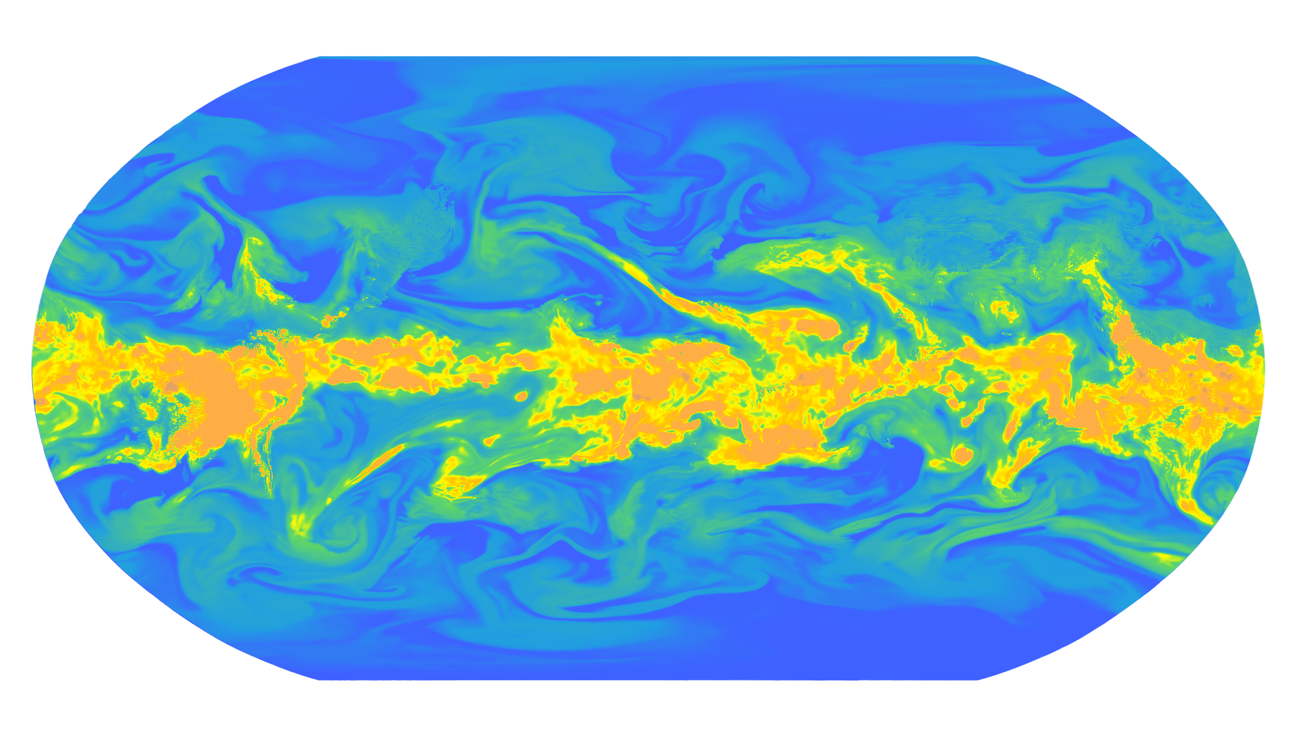
In the realm of meteorology, accurate weather predictions are essential, particularly when planning for the most extreme scenarios. Recognizing this need, researchers have developed a groundbreaking model, WeatherNext 2, which can generate hundreds of potential weather outcomes from a single input within a mere minute. In stark contrast, traditional physics-based models often require hours on supercomputers to achieve similar results.
The capabilities of WeatherNext 2 significantly enhance forecasting accuracy, delivering high-resolution predictions down to the hour. This new model outperforms its predecessor, the original WeatherNext, on 99.9% of variables—including temperature, wind, and humidity—across lead times of 0 to 15 days. This leap in performance allows for forecasts that are not only more precise but also more applicable to various scenarios.
Innovative AI Approach: Functional Generative Networks
The remarkable success of WeatherNext 2 can be attributed to its novel AI modeling approach known as a Functional Generative Network (FGN). This architecture ingeniously incorporates ‘noise’ directly into the model, ensuring that the generated forecasts are both physically realistic and interconnected. This characteristic is particularly advantageous for predicting complex weather phenomena.
Central to the FGN’s functionality are two key terms in meteorology: “marginals” and “joints.” Marginals denote individual weather elements—such as the precise temperature in a specific location or the wind speed at a certain altitude. Traditionally, weather models have relied on extensive datasets to predict these elements. However, the innovative model utilized by WeatherNext 2 is trained solely on these marginals. Surprisingly, it has managed to effectively forecast ‘joints’ as well—comprehensive systems that depend on the interaction of these standalone weather elements.
This ability to forecast joints is particularly critical when aiming for useful predictions. For instance, it allows meteorologists to identify entire regions that may be impacted by extreme heat or to estimate the expected power output of a wind farm based on varying conditions.
Implications for Meteorology and AI
The implications of WeatherNext 2 extend beyond mere accuracy. The model demonstrates how AI can revolutionize the field of meteorology and improve our understanding of complex environmental systems. By providing more precise forecasts, it helps communities and industries prepare better for adverse weather conditions, ultimately reducing risks associated with natural disasters.
As the climate continues to change and extreme weather events become more frequent, the ability to predict these events accurately is paramount. With advancements like WeatherNext 2, meteorologists are better equipped to respond effectively to the challenges posed by climate variability. The integration of AI into weather prediction models thus marks a significant step forward in both meteorology and artificial intelligence, paving the way for smarter and more adaptable forecasting technologies.
In conclusion, WeatherNext 2 exemplifies how a cutting-edge AI approach can address one of the most pressing needs in weather forecasting. By focusing on individual weather elements and their interactions, it not only enhances predictive accuracy but also provides valuable insights that can inform decision-making across various sectors. As we look to the future, the role of AI in meteorology is set to expand, offering promising avenues for further research and application.
See also Lumen and HPE Launch Edge AI Partnership to Enhance Network Security and Performance
 Vermillio Unveils Trace ID Technology to Combat Unauthorized Deepfakes Effectively
 Dario Amodei Pushes for AI Guardrails Amid Job Impact Concerns in 2025
 Cisco Acquires AI Translation Startup EzDubs to Enhance Webex with Real-Time Features
 Google Cloud Launches Free Learning Path to Bridge AI Prototype-to-Production Gap