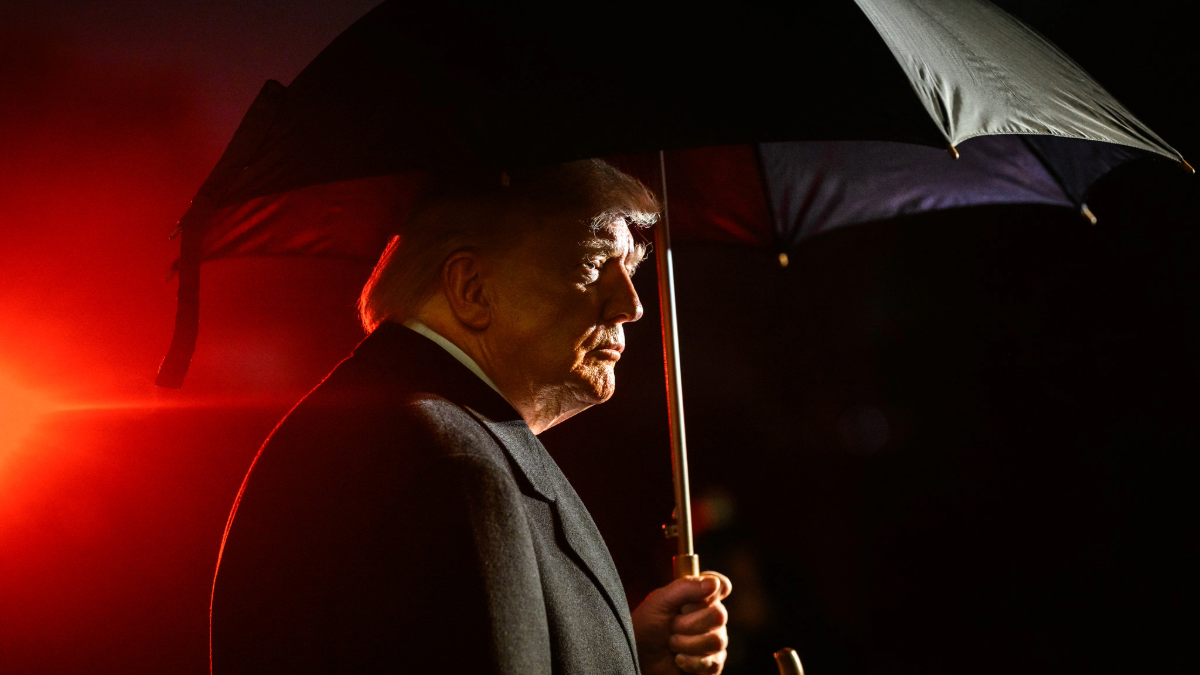
President Donald Trump is intensifying efforts to secure critical minerals, a key component of his administration’s ambitious “Pax Silica” initiative aimed at establishing global technological dominance. Launched by the United States Department of State in December, the initiative seeks to build a coalition of countries focused on creating a new economic paradigm characterized by secure supply chains, trusted technology, and strategic infrastructure. Central to this strategy is Trump’s renewed focus on Greenland, which he views as critical due to its substantial mineral deposits.
The administration’s initiative, described by Under Secretary of State for Economic Affairs Jacob Helberg as “American AI diplomacy at its best,” aims to heighten the U.S. competitive edge in technology while countering China’s dominance in the supply of rare earth elements and advanced manufacturing. Participating nations, including Australia, Japan, South Korea, and the United Kingdom, signed the “Pax Silica Declaration” during a summit on December 12, expressing their intent to collaborate on growth across the global AI supply chain.
Since the summit, additional countries such as Qatar and the United Arab Emirates have joined the declaration, with India expected to follow suit. Although the declaration lacks formal treaty status and enforcement mechanisms, it represents a strategic alignment aimed at reducing reliance on China, which currently controls about 90% of rare earth processing. The Trump administration views this situation as a national security threat and is working to create alternative supply chains through allied nations.
The framework of Pax Silica envisions the U.S. providing advanced technology, security guarantees, and market access, while allies contribute capital, manufacturing capabilities, and natural resources. Countries like Japan and South Korea are expected to leverage their semiconductor expertise, while Australia brings essential minerals. This strategy positions the U.S. at the forefront of AI technology standards and access.
While the rhetoric surrounding Pax Silica is relatively new, the pursuit of stable supply chains for national security has long been a focus of U.S. policy. Both the Biden and Trump administrations have taken steps to secure critical minerals, with Biden utilizing the Defense Production Act to bolster supply and develop international partnerships for mineral projects. Trump’s approach, however, reflects a heightened urgency, utilizing every available resource to establish critical minerals deals worldwide, ranging from Kazakhstan to Malaysia.
On January 14, Trump issued a proclamation aimed at adjusting imports of processed critical minerals, directing the Secretary of Commerce and the U.S. Trade Representative to negotiate agreements and consider price floors for trade. This aggressive approach underscores the administration’s commitment to securing critical minerals as a priority.
A notable aspect of this strategy is Trump’s unabashed interest in Greenland, which he has claimed is essential for U.S. national security due to its rare earth reserves. On social media, he stated, “For purposes of National Security and Freedom throughout the World, the United States of America feels that the ownership and control of Greenland is an absolute necessity.” His declaration has raised eyebrows among international observers, particularly as American tech elites, including Jeff Bezos and Bill Gates, have begun investing in mining ventures on the island.
Despite Trump’s ambitious claims, widespread support for a U.S. takeover of Greenland appears limited, with many in Greenland, Denmark, and Europe opposing the idea. However, Trump has indicated a willingness to confront international objections, recently announcing tariffs on the United Kingdom and other European nations opposed to his Greenland ambitions. This aggressive rhetoric raises questions about the stability of Western alliances and the U.S. administration’s strategy for securing critical resources.
The Pentagon has also prioritized securing critical minerals, with Secretary of War Pete Hegseth announcing significant investments aimed at reducing reliance on foreign sources. In collaboration with figures like Elon Musk, Hegseth declared a goal of transforming the military into an “AI first warfighting force across all domains.” Such initiatives intertwine with Trump’s broader narrative of American dominance in the global arena.
The pursuit of AI supremacy seems to serve as a unifying principle for Trump’s administration, justifying actions from mineral deals to territorial ambitions. This strategy reflects historical imperial ambitions, suggesting that perceptions may hold as much weight as tangible outcomes. As Trump has noted, “I found Rome a city of bricks and left it a city of marble,” a sentiment that reinforces the idea that the appearance of power can, in itself, consolidate authority.
See also AI Processor Market: 17 IPOs and 21 Acquisitions Since 2010 Amid $28B Investment Surge
 Morgan Stanley Initiates Nebius (NBIS) at Equalweight, Sees Long-Term AI Infrastructure Upside
 Nvidia Stock Falls 4.3% as China Delays H200 Chip Clearance, Impacting AI Sector
 Anthropic CEO Warns Exporting AI Chips to China Poses National Security Risks