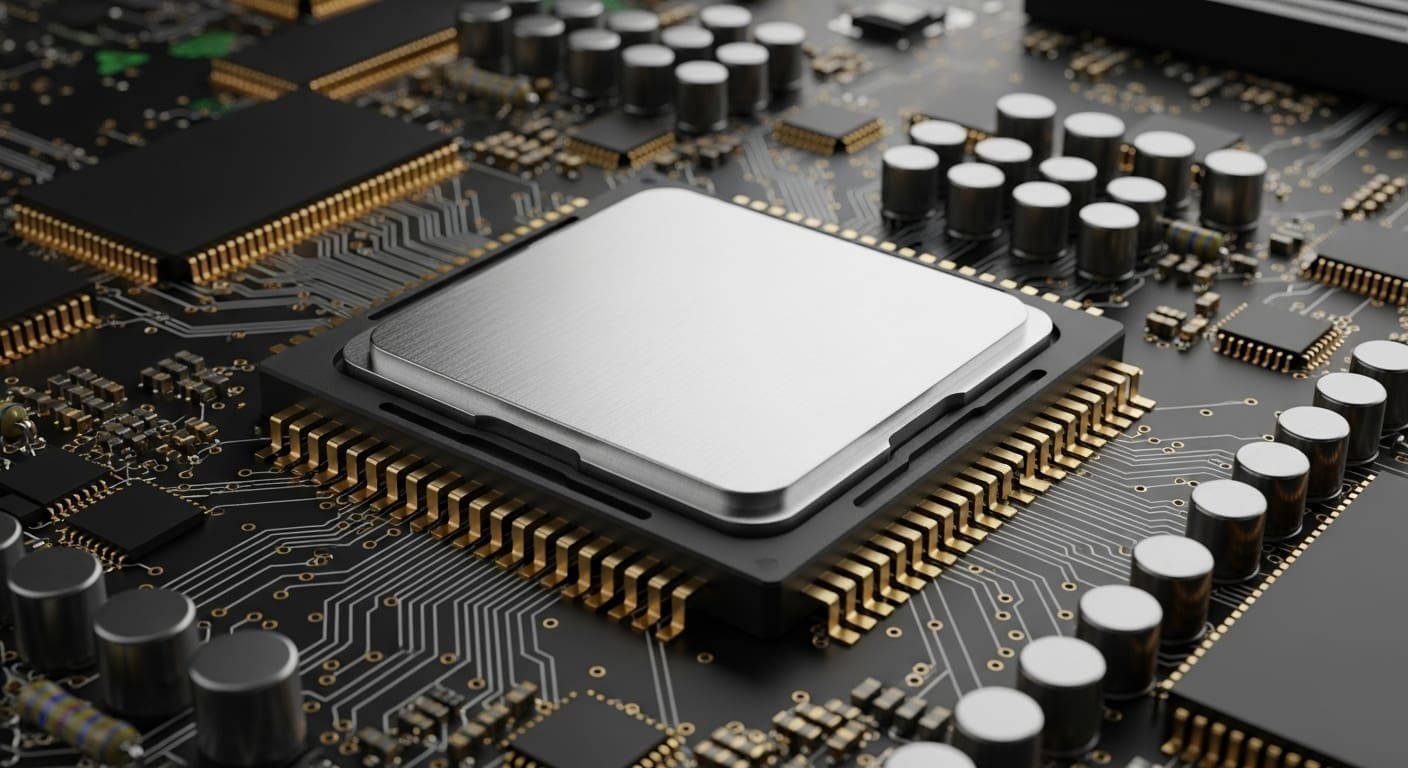
Lightmatter and Cadence have announced a strategic collaboration aimed at accelerating the development of co-packaged optics (CPO), a crucial advancement in next-generation artificial intelligence (AI) infrastructure. The partnership, revealed on January 26, 2026, will integrate Cadence’s high-speed SerDes IP with Lightmatter’s Passage™ optical engine, marking a significant shift from traditional data transfer methods to fully integrated, 3D-stacked photonic interconnects. This initiative is set to address intricate optics-electronics integration challenges, with the ultimate goal of creating high-performance, manufacturing-ready CPO tailored for hyperscale AI data centers. “The next big leap in AI performance requires a fundamental change in how we move data,” stated Ritesh Jain, SVP of Engineering & Operations at Lightmatter, highlighting the importance of this move toward enhanced energy efficiency and bandwidth density for future AI models.
The Passage engine from Lightmatter is driving innovation in 3D-stacked silicon photonics, a vital development for hyperscale AI data centers. This technology departs from conventional data transfer methods, shifting from pluggable and near-packaged optics to fully integrated interconnects. The Passage platform, described as “the world’s first 3D-stacked silicon photonics engine,” connects thousands to millions of XPUs, directly addressing data bottlenecks within AI systems and promising substantial improvements in both bandwidth density and energy efficiency. Lightmatter’s technology is poised to redefine the architecture of next-generation AI infrastructure.
Through this collaboration, Cadence and Lightmatter will optimize CPO for hyperscale AI data centers by moving beyond traditional data transfer techniques. This transition to fully integrated, 2D and 3D-stacked photonic interconnects represents a pivotal moment in AI infrastructure development, tackling the limitations inherent in current systems. Cadence’s Universal Chiplet Interconnect Express™ (UCIe™) IP will be leveraged for disaggregation, alongside the company’s established expertise in electronic design automation (EDA).
Boyd Phelps, SVP and GM of the Silicon Solutions Group at Cadence, remarked, “Cadence is dedicated to providing next-generation optical interconnect solutions to optimize data center performance and efficiency.” Industry analyst Roy Chua from AvidThink emphasized the inevitability of 3D-stacked photonic designs, calling this collaboration “crucial because it addresses the architectural foundation of electrical-optical connectivity integration.” The goal is to deliver scalable, power-efficient AI systems by optimizing advanced CMOS IP with a future-ready CPO design.
The industry is witnessing a fundamental shift in AI infrastructure, with an increasing focus on co-packaged optics to overcome the limitations of traditional data transfer methods. Analysts indicate that this partnership is set to deliver manufacturing-ready CPO solutions that utilize advanced-node CMOS technology. The growing demand for increased AI capacity is driving this transformation, as scale-up and scale-out strategies redefine the infrastructure requirements for modern AI applications.
As AI capacity continues to expand dramatically to accommodate unprecedented demand and workloads, scale-up and scale-out are transforming AI infrastructure.
Boyd Phelps, SVP and GM of the Silicon Solutions Group at Cadence
The collaboration between Lightmatter and Cadence is indicative of a broader trend in the tech industry, where companies are increasingly seeking innovative solutions to enhance the performance and efficiency of AI systems. As the race for advanced AI capabilities intensifies, the integration of optical technologies promises to be a game changer, providing the necessary bandwidth and energy efficiency for the next generation of AI applications.
This partnership not only highlights the importance of co-packaged optics in the current technological landscape but also sets the stage for future developments in AI infrastructure. By combining expertise in photonics and integrated circuit design, Lightmatter and Cadence aim to reshape how data is processed and transmitted in AI systems, ensuring that these technologies can meet the demands of an ever-expanding digital world.
For more information, you can visit the Lightmatter website and the Cadence website.
See also Google Launches AI-Powered Chrome Feature to Transform Online Banking and Finance
 Meta Invests $135B in AI to Enhance User Experience, Reveals Zuckerberg During Earnings Call
 AI Ads Surpass Human Creativity in Engagement by Using Trust-Building Visuals, Study Reveals
 Unlock Legal AI Strategies: Join Expert Panel on February 12 for Practical Insights
 Google DeepMind Launches Project Genie, Enabling Real-Time AI-Generated Interactive Worlds