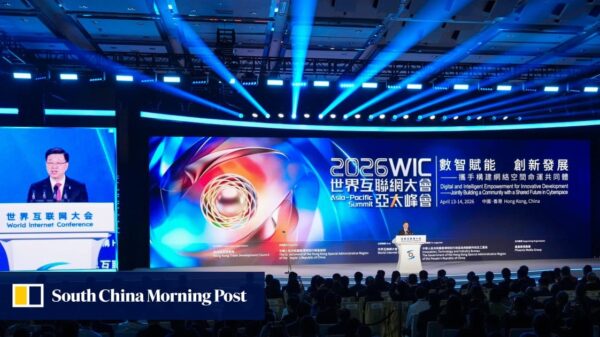
At the GASA 10th Anniversary Forum held in Hong Kong on January 10, Professor Zhang Wenhong, director of China’s National Center for Infectious Diseases in Shanghai, voiced strong concerns regarding the integration of artificial intelligence (AI) in hospital diagnostic and treatment processes. His remarks come at a time when healthcare institutions are increasingly considering AI solutions to enhance efficiency and accuracy in patient care.
Professor Zhang articulated a fundamental worry: if medical professionals, particularly those in training, lean heavily on AI for diagnoses without mastering the essential skills of diagnostic thinking, they risk losing critical judgment skills. He emphasized that reliance on AI could impair their ability to verify its conclusions, particularly in complex or atypical medical cases that AI may not fully grasp. This phenomenon, according to Zhang, represents a significant and often overlooked risk in the pursuit of technological convenience.
The dialogue at the forum reflects a broader debate surrounding the use of AI in healthcare, where the promise of improved diagnostic capabilities often collides with concerns about the potential erosion of human expertise. As hospitals and clinics worldwide experiment with AI technologies—from diagnostic imaging to predictive analytics—questions about the balance between technological advancement and traditional medical training are becoming increasingly pertinent.
Proponents of AI in healthcare argue that these tools can enhance diagnostic precision, reduce human error, and facilitate faster decision-making. However, critics like Zhang caution that the introduction of AI should not replace the foundational training that doctors undergo. They argue that a deep understanding of human pathology and clinical reasoning is crucial for making informed decisions, especially when faced with complicated patient scenarios.
Recent advancements in AI technologies, such as machine learning algorithms and natural language processing, have led to significant improvements in various aspects of healthcare. These tools can analyze vast amounts of data more quickly than human practitioners, potentially identifying patterns that may go unnoticed. However, the question remains whether these capabilities should supplant traditional methods or serve as a complement to them.
During the forum, Zhang underscored the importance of maintaining a balanced approach to AI adoption in the medical field. He suggested that while AI can assist in routine tasks, it should never be seen as a replacement for comprehensive medical training. The challenge lies in integrating these technologies in a way that enhances rather than diminishes the skills and competencies of healthcare professionals.
This perspective resonates with ongoing discussions among medical educators and practitioners regarding the future of medical training in an increasingly digital world. As the healthcare landscape evolves, there is a growing need for curricula that incorporate AI and technology alongside traditional medical education, ensuring that future doctors are equipped to navigate both realms effectively.
Looking ahead, the dialogue surrounding AI in healthcare will likely intensify. As institutions weigh the benefits of adopting advanced technologies against the potential risks of diminished clinical skills, the insights shared by Professor Zhang at the GASA forum may serve as a guiding principle. Striking a balance between embracing innovation and preserving the core competencies of medical practice will be crucial as the industry moves forward in this transformative era.
See also India Announces $70 Billion AI Mission 2.0 to Expand National AI Infrastructure
 AI Innovations Support Ukraine’s Education Amid Ongoing War Crisis
 PaleBlueDot AI Secures $150M Series B, Surpassing $1B Valuation for Global AI Compute Expansion
 NVIDIA and TSMC Stocks Surge Over 59% on Strong AI Demand and Eased Trade Tensions
 Ex-Google Engineer Linwei Ding Convicted of Stealing 2,000+ AI Trade Secrets for China