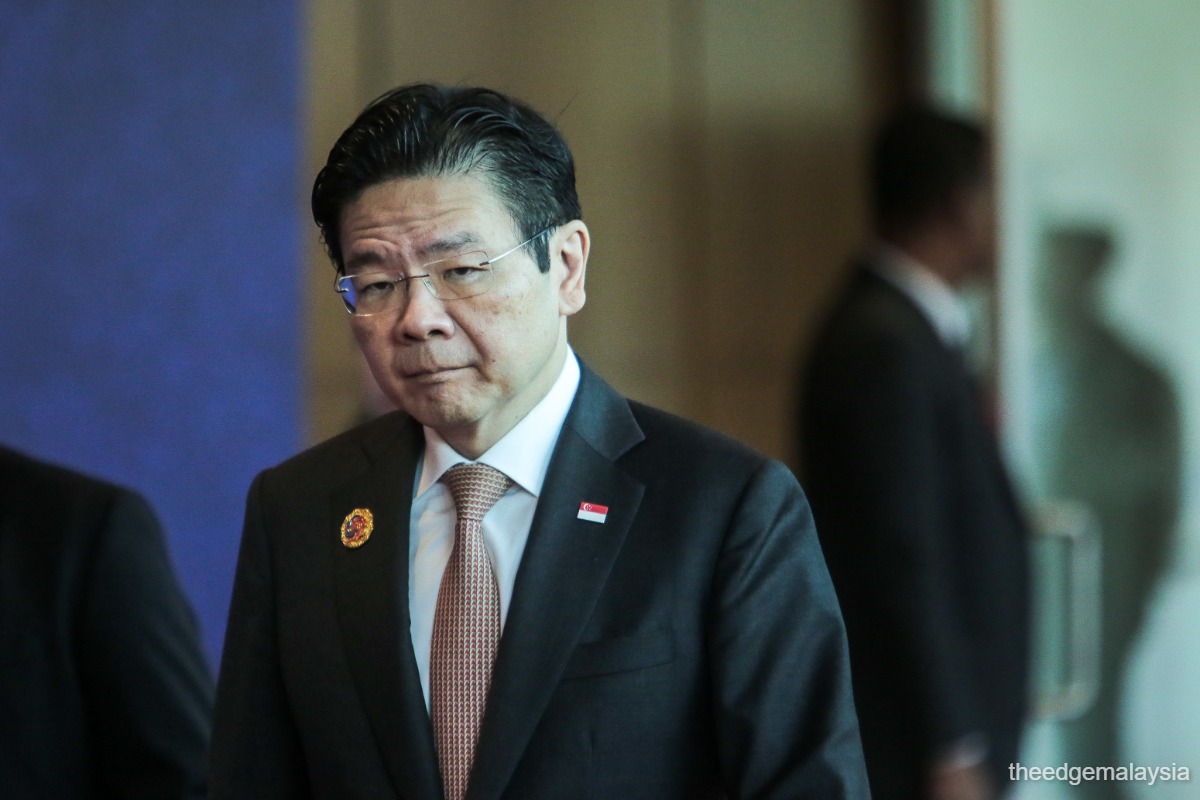
(Feb 11): Singapore Prime Minister Lawrence Wong is set to leverage his 2026 budget speech on Thursday to establish the nation as a key artificial intelligence (AI) hub. This initiative forms a critical component of his government’s broader strategy to diversify economic growth amid deteriorating global trade conditions.
Wong, who also holds the role of finance minister, is expected to detail the city-state’s financial allocations and strategies surrounding AI, while assuring citizens and small businesses that they will not be left behind. The budget is also likely to address the pressing needs of an ageing population, including retraining and living costs.
The annual budget announcement, which is one of Singapore’s most anticipated political events, is likely to feature fewer financial handouts compared to 2025. That year coincided with an election and celebrated the country’s 60th anniversary, during which Wong’s People’s Action Party secured a greater share of the vote.
Wong is also anticipated to provide an update on the Economic Strategy Review, initiated last year to reassess the sectors that will drive the country’s economic focus. Analysts project a budget surplus of 0.6% of gross domestic product (GDP) for the 2026 fiscal year, beginning in April, according to a median estimate in a Bloomberg survey. This marks the first budget of a new five-year parliamentary term, during which the government is legally mandated to achieve budget balance.
“The government has historically been prudent in the first year, reserving some dry powder in the event of unexpected shocks or a downturn in later years,” noted Maybank Securities Pte Ltd’s Chua Hak Bin and Brian Lee in a report.
The fiscal 2025 budget totaled approximately S$147 billion (US$116 billion or RM456.83 billion), including around S$23 billion designated for special transfers, which encompass cash, vouchers, or rebates for individuals and businesses. The surplus from that budget is estimated to have reached 1.1% of GDP, surpassing the government’s initial forecast of 0.9%, buoyed by better-than-expected economic growth that enhanced tax and duty collections. Authorities predicted this week that the economy would likely expand by 2%-4% this year, reflecting an improvement from earlier expectations but still slower than in 2025.
Despite its reliance on trade, Singapore faces challenges, including the lowest tariff of 10% imposed by the US. The potential for tariffs on semiconductors and pharmaceuticals raises concerns about future economic stability, according to Yun Liu, an analyst at HSBC Holdings plc. “Despite decent growth, challenges are present,” she stated, adding that rising inflation may heighten cost-of-living pressures, necessitating support measures.
The budget is poised to include initiatives aimed at enhancing AI readiness, potentially offering grants for digital transformation, governance training, and establishing shared data pools for businesses. “This would make businesses in Singapore as a whole more resilient and in turn equip all of us for the intelligent age,” said Paul Kent, a partner handling corporate transformation at KPMG LLP in Singapore.
The government is also expected to increase funding for AI research and development and further invest in high-tech capabilities while continuing efforts to attract private-sector investments. Recently, Micron Technology Inc announced a substantial US$24 billion investment in Singapore, driven by AI-related demand. Singapore has already earmarked over S$1 billion for public AI research over the next five years and is set to establish its National Space Agency starting April 1.
Maybank analysts anticipate that the budget will emphasize upgrading national tech capabilities to foster resilience amid geopolitical tensions and intensifying competition for foreign direct investment in the region.
Recognizing the potential downsides of AI, the government may also implement measures to support individuals at risk of job displacement due to automation, such as expanding internships for recent graduates and re-skilling workers in vulnerable sectors like call centers. “Concerns are mounting over a K-shaped growth path — where wealth gains from a buoyant, tech-led market rally may not be broadly shared,” noted Jester Koh, an associate economist with United Overseas Bank Ltd (UOB).
There are additional worries regarding the labor market. Recommendations from the Singapore Business Federation include facilitating increased access to foreign labor, as nearly half of the businesses surveyed reported rising costs and supply constraints stemming from hiring restrictions.
With inflation expected to rise this year, cost-of-living pressures may become a focus again. Cash handouts and rebates, however, are likely to be targeted at lower-income households following the extensive measures implemented in the 2025 budget. Furthermore, Singapore is projected to attain “super-aged” status in 2026, with over 20% of its population aged 65 and above, prompting the need for increased funding for senior employment, age-friendly workplaces, and retirement adequacy, according to Maybank.
Healthcare spending is also projected to rise significantly as the population ages and fertility rates decline, placing additional burdens on the public healthcare system.
See also IT Ministry Mandates Prominent Labels for AI-Generated Content, Shortens Takedown Timelines
 Odisha Government Partners with AIRAWAT to Launch AI-Driven Urban Services Initiative
 Singapore Launches $1B AI Initiative with 400% Tax Deductions to Boost Economy
 Vermont’s Tech Chief Mark Combs to Retire; State Seeks Visionary Replacement