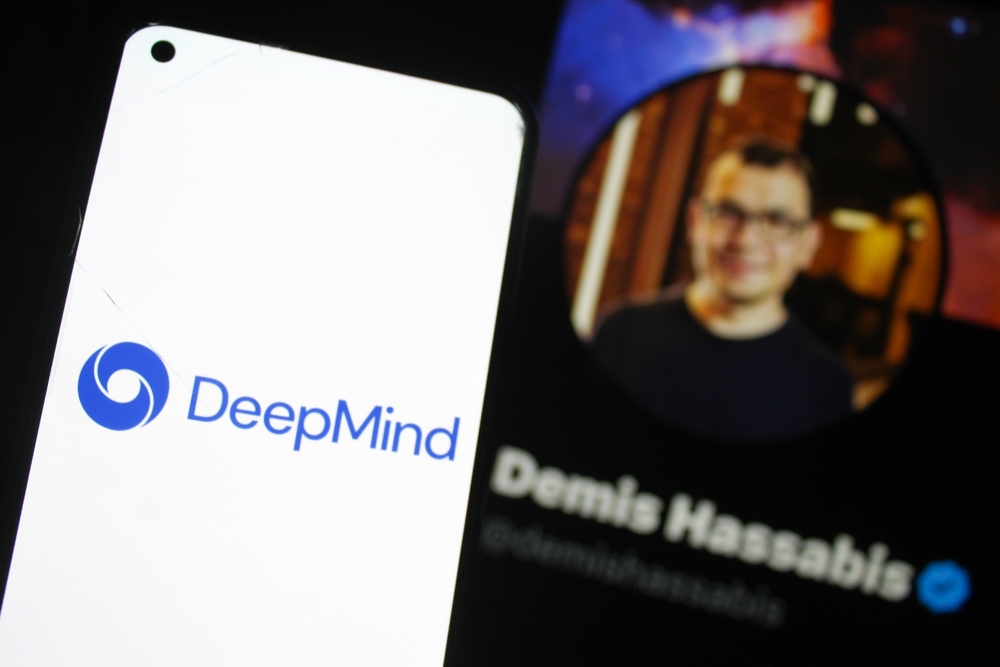
As discussions regarding a potential artificial intelligence bubble gain momentum, a leading voice in the industry has expressed caution. Demis Hassabis, the chief executive and co-founder of Google DeepMind, recently highlighted troubling trends in the AI ecosystem that could signal unsustainable speculation, even while maintaining optimism about the technology’s long-term potential.
Hassabis’s remarks came at a significant moment, coinciding with the launch of Gemini 3, Google’s latest flagship AI model. Investor confidence appears to be wavering, with concerns that the current pace of investment may be outpacing commercial realities.
Assessing the Bubble Risk
In an interview on the Hard Fork podcast, Hassabis was asked whether the AI sector is indeed experiencing a bubble. He suggested that the issue is not as straightforward as a binary “yes” or “no” answer. “It’s too binary a question,” he stated. “My view … is that there are some parts of the AI industry that are probably in a bubble. If you look at seed investment rounds being multi-ten-billion-dollar rounds with basically nothing … that might be the first signs of some kind of bubble.”
Echoing this sentiment, Alphabet CEO Sundar Pichai warned in a separate interview with the BBC that if the overheated market cools, “no company is going to be immune.”
Long-Term Opportunities Remain
Despite these warnings, Hassabis emphasized that numerous sectors within AI are robust and hold substantial promise. He pointed to several initiatives, including the new Gemini app, NotebookLM, as well as advancements in robotics and drug discovery at Isomorphic Labs, which he believes could support “half a dozen to a dozen” significant revenue streams for Alphabet over time.
Hassabis also noted that AI is already generating significant returns within Google’s core offerings, which reach billions of users. “We have so many ideas; it’s just about execution,” he remarked. “A lot of that will bring in near-term revenue while we invest in the future.”
Market Concerns and Historical Parallels
The conversation surrounding a bubble emerges against a backdrop of inflated valuations within the sector. Alphabet’s market capitalization recently hit $3.5 trillion, while OpenAI is reportedly valued at nearly $500 billion. Nvidia briefly surpassed a valuation of $5 trillion earlier this year. However, some investors are beginning to withdraw, with reports indicating that Peter Thiel’s fund pulled nearly $100 million from Nvidia, and Michael Burry is taking short positions against Nvidia and Palantir.
Pichai characterized the current moment as “extraordinary,” but he also acknowledged “elements of irrationality” reminiscent of the exuberance seen during the late 1990s dot-com boom. Analysts warn that a correction could resemble the dot-com crash, which wiped out trillions in household and market wealth. Former IMF chief economist Gita Gopinath has indicated that a similar downturn today could erase over $20 trillion from U.S. households and $15 trillion globally.
Resilience Amid Uncertainty
In light of these developments, Hassabis assured listeners during the podcast that Alphabet is focused on resilience regardless of how the economic cycle unfolds. “I feel really good where we are as Alphabet, whether there’s a bubble or not,” he stated. “Our job is to be winning in both cases.” He believes that if the industry continues to expand, Google will be well-positioned to capitalize on new opportunities. Conversely, should a retrenchment occur, Alphabet will remain one of the companies best equipped to weather the downturn.
As Google prepares for the gradual rollout of Gemini 3 in the United States, analysts are closely monitoring whether this launch can sustain developer interest amidst a climate of growing market skepticism. Hassabis, who was recently awarded the Nobel Prize in Chemistry alongside colleague John Jumper for their work on AlphaFold, reiterated that DeepMind will maintain its focus on science-driven research, even as the broader AI market faces volatility.
Sources: HardFork podcast; New York Times; BBC
 Staffordshire Students Confront Lecturer Over AI-Generated Course Slides
 Amazon Invests $125B in AI, AWS Growth Surges Over 20% Amid Insider Sales
 AI Tools’ Financial Advice Accuracy Plummets to 56% According to New Study
 Nvidia Reports $57B Revenue, Surpassing Expectations Amid AI Bubble Concerns
 Landstar Reveals AI Strategy to Enhance Customer Service and Retain Business Capacity Owners