






















































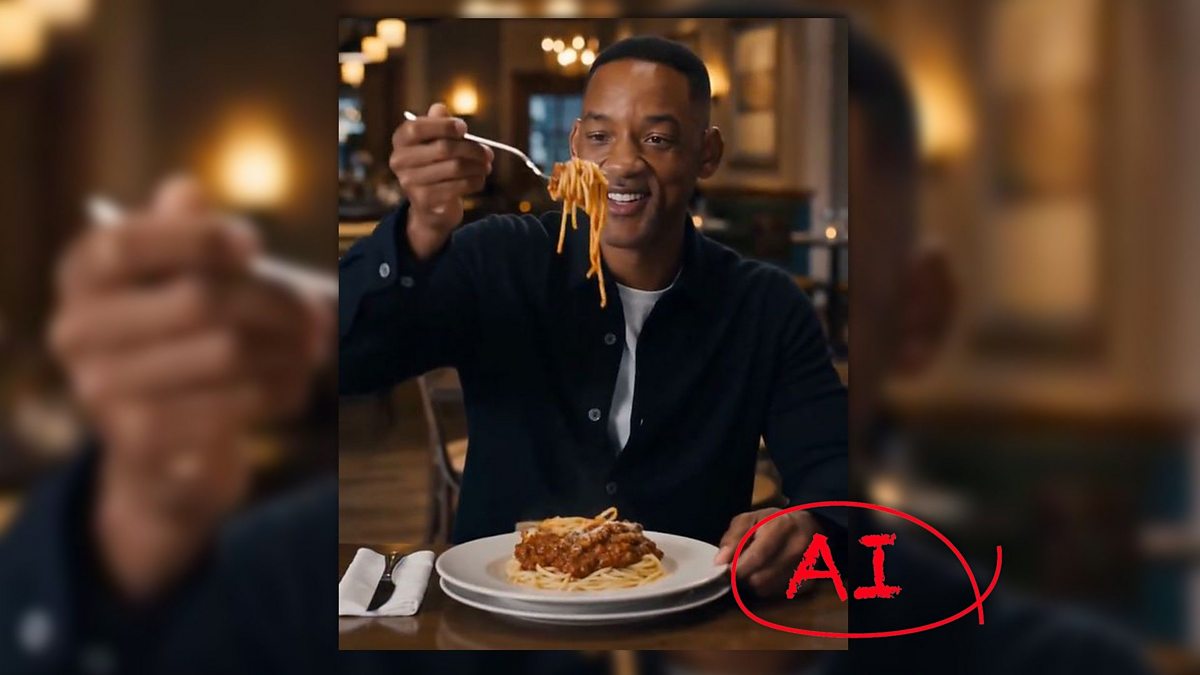
The rise of artificial intelligence (AI) has led to remarkable advancements in video generation technology, exemplified by the recent iterations of the viral “Will Smith eating spaghetti” videos. These clips, at first glance, appear strikingly realistic, showcasing the rapid evolution of AI capabilities. However, as the technology becomes more sophisticated, questions arise regarding the ability to discern AI-generated content from authentic videos.
Despite the impressive realism of these AI-generated clips, there remain identifiable indicators that can help viewers determine their authenticity. Many AI-created videos are explicitly labeled as such, serving as a first line of defense against misinformation. Viewers are also encouraged to scrutinize captions and comments accompanying the videos, as these can provide further context or clues about a clip’s origin. For high-profile subjects like celebrities, cross-referencing content with trusted news sources or established platforms such as Getty Images can enhance the verification process.
In particular, checking official social media accounts of the individuals depicted can be an effective method for confirming the legitimacy of a video. Many celebrities maintain verified accounts on platforms like Instagram, where a blue checkmark indicates authenticity. This verification can reassure viewers that the content they are engaging with is genuine, especially in an age where deception can be easily orchestrated.
Another hallmark of AI-generated videos, as well as images, is the frequent occurrence of minor errors—particularly in details such as text or logos. Viewers are advised to remain vigilant for any discrepancies that may suggest a video has been artificially created. For instance, if a logo appears slightly distorted or text is misspelled, these can be indicators of AI involvement. Furthermore, content that appears “too perfect” may warrant skepticism, as AI often struggles with subtle nuances that characterize human-created work.
The implications of these advancements extend beyond mere entertainment; they touch on broader societal concerns regarding misinformation and the integrity of digital content. As AI technology develops, the potential for misuse also increases, leading to challenges in media literacy and the public’s ability to discern fact from fabrication. The rise in AI-generated content emphasizes the need for ongoing education regarding digital literacy, equipping individuals with the tools necessary to navigate this evolving landscape.
As AI continues to refine its capabilities, the line between genuine and artificial content is likely to blur further. It raises important questions about the future of media consumption and the necessity for critical thinking skills among viewers. The ability to identify AI-generated content will be crucial as new methods for creating and disseminating information emerge. In a world increasingly influenced by technology, understanding these nuances will be essential for maintaining trust in the content we encounter daily.
See also Seedance 2.0 Launches, Offering Creators Free Access to ByteDance’s Advanced AI Video Model
 India’s Ashwini Vaishnaw Unveils AI Mission 2.0 with Enhanced Safety and Sovereign Models
 Free AI Image Generators: Top 3 Tools to Create Stunning Visuals with Ease
 AuraML Launches India’s First Multimodal Robotics Model, Powered by NVIDIA Technology
 Discover Top AI Video Generators: Create Without Login or Watermark, Free Online















