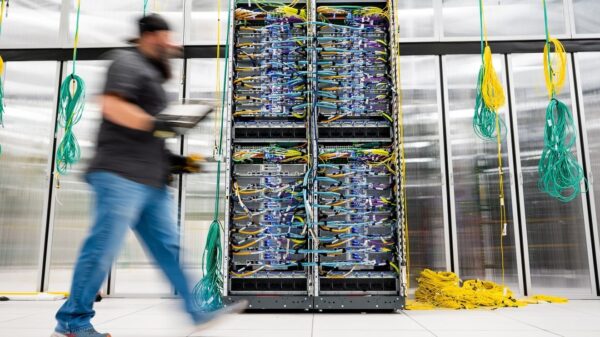
In a candid interview with CNBC, Google DeepMind CEO Demis Hassabis highlighted the ongoing constraints in the supply chain for memory chips, underscoring the challenges faced by even tech giants like Google. “The whole supply chain is kind of strained,” Hassabis stated, emphasizing that the physical limitations of chip availability are impacting the deployment of AI technologies. This situation is exacerbated by a heightened demand for memory chips from AI companies, which are competing fiercely for resources amid a backdrop of rising costs and limited supply.
Hassabis explained that while Google produces its own Tensor Processing Units (TPUs), there are still “key components” that remain supply-constrained. This scarcity hampers the company’s ability to fully realize its ambitions for its Gemini models and other AI applications. “You need a lot of chips to be able to experiment on new ideas at a big enough scale that you can actually see if they’re going to work,” he noted, signifying that research and development are also suffering due to these constraints.
The memory shortage has significant implications for the broader tech industry, where firms such as Google, Meta, and OpenAI are reliant on access to memory chips for their AI initiatives. Mark Zuckerberg has pointed out that AI researchers prioritize not only financial resources but also the availability of chips and streamlined reporting structures, highlighting the critical nature of memory in advancing AI capabilities.
Hassabis described the memory supply chain as facing “choke points” wherever there are capacity constraints, a sentiment echoed across the industry. The supply side is dominated by a few key players—**Samsung**, **Micron**, and **SK Hynix**—who are struggling to balance the demands from AI hyperscalers against the needs of their longstanding consumer electronics customers. This imbalance is further complicated by the differing requirements for memory types, as AI companies predominantly seek high-bandwidth memory (HBM) chips, distinct from those desired by traditional PC manufacturers.
Despite its in-house capabilities, Google is not insulated from these market dynamics. Hassabis pointed out that the dependency on a limited number of suppliers for essential components means that challenges persist. “It still, in the end, actually comes down to a few suppliers of a few key components,” he said, indicating the fragility of the current supply chain.
Google’s commitment to AI infrastructure remains strong, with the company projecting capital expenditures of **$175 billion to $185 billion** for 2026, aiming to bolster its position in the competitive landscape. This financial commitment underscores the urgency of addressing the supply constraints that are hindering progress in AI research and development.
As companies like Google navigate these supply chain issues, the competition for memory chips is likely to intensify. The ongoing chip shortage is no longer a challenge confined to consumer electronics; it is now a pivotal factor that could shape the future of AI technology and its deployment across various sectors. The struggle for resources will continue to influence strategic decisions, funding allocations, and ultimately, the pace at which the AI sector can innovate and expand.
See also India’s AI Initiative Aims for ‘DeepSeek Moment’ with Homegrown Technology
 Perplexity Launches Comet AI Browser for iPhone, Enhancing User Workflow and Research Efficiency
 Cybersecurity Stocks Plummet After Anthropic Launches Claude Code Security Tool
 Sarvam AI Builds Advanced Models with Just 40 Researchers, Highlights Frugal Strategy