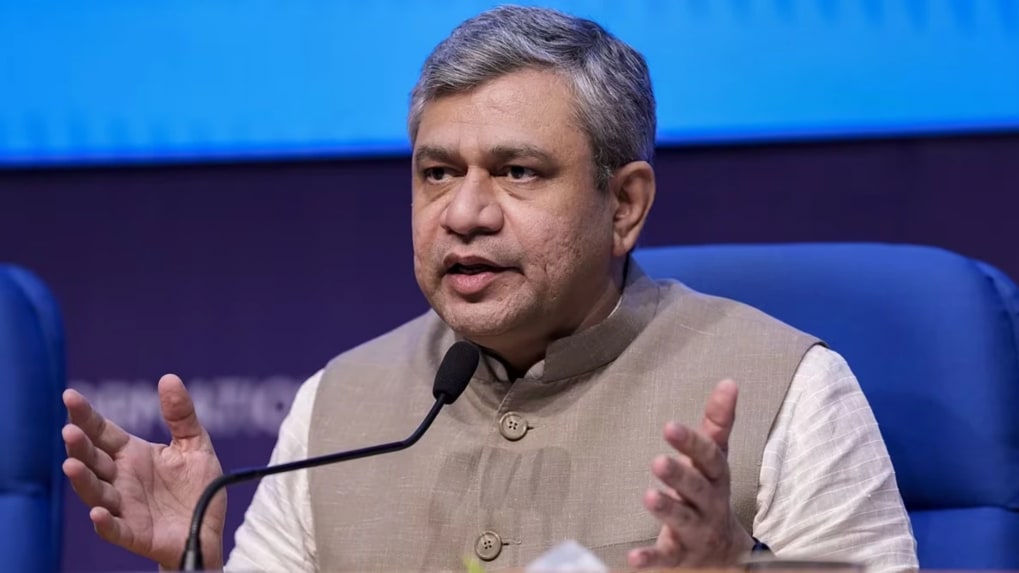
India’s Union Minister Ashwini Vaishnaw announced a significant progression in the country’s artificial intelligence (AI) strategy during the AI Impact Summit 2026, held recently. He stated that the nation will elevate its AI Mission with expanded sovereign models, improved safety infrastructure, and enhanced accessibility to technology for all citizens. The five-day summit concluded with over 500,000 attendees, showcasing strong participation from global AI leaders, startups, and students, marking it as a major policy milestone.
Vaishnaw revealed that the forthcoming Delhi declaration has garnered over 70 signatories, exceeding the previous summit’s 60, and is expected to surpass 80 by its conclusion. He emphasized the considerable consensus surrounding the declaration, noting that all major AI stakeholders have aligned on voluntary safety guardrails. “For the first time, all the big AI players came on the same stage and agreed,” he remarked, highlighting the unprecedented nature of these commitments.
Addressing skepticism regarding the symbolic nature of these voluntary commitments, Vaishnaw asserted that the summit had moved beyond mere paperwork. “There is lots and lots of real action — real MOUs, real understandings,” he stated, reflecting a sense of progress in AI governance.
As part of its AI Mission 2.0, India aims to accelerate advancements in foundational AI models, common compute resources, and safety measures. Currently, the country supports a suite of 12 foundational AI models, some of which are already deployed. Vaishnaw acknowledged the achievements of Indian engineers and researchers, who have developed models that have impressed global industry leaders despite the country’s relatively limited resources.
Furthermore, he confirmed that India’s AI Safety Institute initiative is expanding, with 12 institutes now working collaboratively to enhance research focused on responsible AI deployment. This development aligns with Prime Minister Narendra Modi’s vision of “Manav AI” — a human-centric approach to artificial intelligence. Vaishnaw noted that this vision resonated strongly during bilateral discussions, positioning the summit as a pivotal moment for responsible and ethical AI.
In an effort to ensure that AI benefits reach the “last person” in India, Vaishnaw drew comparisons to the rapid nationwide rollout of 5G technology. He stated, “You saw how the fastest rollout of 5G took place,” suggesting that a similar urgency will govern the diffusion of AI technology. He reiterated the government’s commitment to inclusive growth, grounded in the Antyodaya philosophy, stressing that AI adoption would not be limited to elite or enterprise applications.
The minister outlined a vision for sector-wide integration of AI across public services, enterprise applications, and citizen-centric use cases, aimed at delivering technology that enhances the lives of all Indians. Vaishnaw also highlighted the level of international participation at the summit, identifying India as a “trusted country” in the dialogue surrounding emerging technology governance. Alongside the AI commitments, the summit also facilitated advances in semiconductor cooperation through the Pax Silica agreement, further solidifying India’s role in resilient supply chains.
Looking ahead, the minister’s primary message was one of proactive positioning. India aims to not only be a significant market for AI but also a key player in shaping rules and standards around AI safety, sovereign model development, and global consensus-building. With AI Mission 2.0 in focus, the shift is evident from hosting global discussions to embedding robust AI infrastructure, safety protocols, and computational capabilities at scale, paving the way for transformative impacts across sectors.
First Published on February 20, 2026, 19:43:09 IST
See also OpenAI Retires GPT-4o and Legacy Models in Shift to New AI Systems
 OpenAI Reveals Best Free AI Generator Apps for 2024 to Boost Creativity and Productivity
 CremyX Launches Multimodal Brand Import, Enhancing AI Marketing with Website and TikTok Analysis
 India’s Sarvam, Gnani.ai, and BharatGen Launch Indigenous AI LLMs to Combat Bias
 OpenAI Faces Defamation Lawsuit Over False Claims from ChatGPT Outputs