The Indian technological landscape is witnessing transformative developments in February 2026, coinciding with the India AI Impact Summit 2026 in New Delhi. The unveiling of new indigenous and sovereign AI models by Sarvam, Gnani.ai, and BharatGen represents a significant milestone in creating homegrown alternatives to global AI systems predominantly influenced by major tech corporations. These models, designed for real-world applications across voice and language interfaces, signify a pivotal shift from reliance on foreign AI tools to the establishment of a robust domestic AI infrastructure, targeting sectors such as education, healthcare, agriculture, and governmental services on a large scale.
This initiative aligns with the broader IndiaAI Mission, which aims to cultivate an indigenous ecosystem of large language models (LLMs) to mitigate bias concerns and ensure that Indian AI systems are trained primarily on data reflective of the Indian populace. However, questions remain regarding the effectiveness of these models in addressing bias and the challenges that must be navigated during their deployment.
Among the highlights are the highly anticipated LLMs from Sarvam AI, consisting of a 105-billion-parameter model and a 30-billion-parameter model, both developed entirely in India. Sarvam claims that the larger model can outperform Google’s Gemini Flash and DeepSeek R1 across various benchmarks, utilizing a mixture-of-experts (MoE) architecture to lower inference costs. Sarvam emphasizes efficiency as a core component for scaling AI suitable for population-level applications, focusing on agentic AI, programming, and complex reasoning tasks.
Meanwhile, Gnani.ai has introduced the Vachana TTS, a text-to-speech model capable of cloning human voices in 12 Indian languages using reference audio of under 10 seconds. The model is designed for high-volume applications and operates effectively in low-bandwidth environments, making it ideal for enterprise deployments, customer service systems, and governmental use, with all models and datasets hosted in India.
BharatGen is also making strides with its 17-billion-parameter multilingual foundational model, the BharatGen Param2 17B MoE, developed under the guidance of an IIT Bombay-led consortium. This model has been optimized for the Indic language group and aims to facilitate AI adoption in various sectors, including enterprise, agriculture, healthcare, education, and governance. BharatGen plans to release this open-source model and its associated documentation through its Hugging Face repository, allowing developers and enterprises to create and customize India-centric AI applications. Backed by nearly Rs 900 crores from the IndiaAI Mission, BharatGen is currently the largest beneficiary of India’s sovereign LLM initiative.
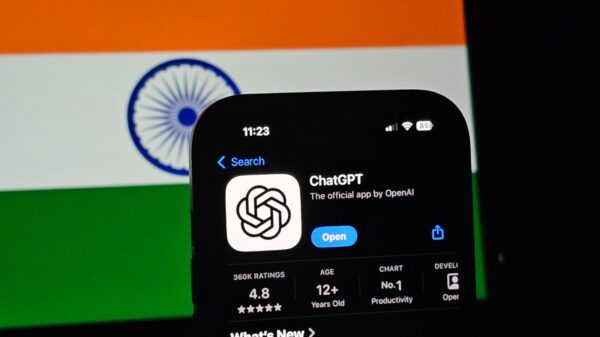
As generative AI technologies reshape global industries and human interactions, India is asserting its position in this dynamic environment. With ChatGPT reaching 100 million weekly users in India by late February 2026, it has become the platform’s largest user base. Google Gemini is also extensively utilized in the country, particularly for educational purposes. However, a Google-Kantar report from April 2025 indicates that only 31% of Indians have engaged with generative AI platforms. The primary drawback of foreign LLMs lies in their inherent biases and their inadequate ability to address India’s diverse socio-cultural contexts, resulting in outputs that are often culturally inaccurate.
For example, a request to generate an image of an Indian in May 2024 yielded a disproportionate number of outputs featuring a “man with a turban.” This highlights an inherent bias, which overlooks India’s rich cultural and demographic variety. Furthermore, a lack of formal and digital literacy exacerbates the trust deficit stemming from these cultural mismatches. Despite being the world’s second-largest generator of digital data, India’s potential to provide high-quality datasets for training AI models remains underutilized, especially considering initiatives like AIKosh, which aggregates datasets from various institutions, including IIT Bombay.
Nevertheless, the path ahead is fraught with challenges. India’s vast regional, linguistic, and cultural diversity means that biases in AI could manifest in ways that might not be apparent in Western contexts. AI models trained on urban or English datasets may underperform for those utilizing regional dialects or residing in rural areas. Additionally, caste dynamics, which are pivotal in India, must be considered to avoid embedding biases into sovereign models. The risk of perpetuating socio-economic disparities, language barriers, and gender biases remains a critical concern for developers of indigenous AI systems.
Yet, with the support of the IndiaAI Mission and government initiatives, the country’s journey into generative AI is gaining momentum. If executed successfully, Indic LLMs have the potential to offer what foreign counterparts currently lack—unbiased and accurate communication in Indian languages. The success of these indigenous models hinges on whether they can reach underserved populations and transform the lives of citizens in the Global South, marking a significant step in the evolution of AI technologies tailored for local contexts.
See also OpenAI Faces Defamation Lawsuit Over False Claims from ChatGPT Outputs
 New Study Reveals Synthetic Data’s Impact on AI Training and Bias Mitigation Strategies
 Umeå University Launches Multimodal AI Initiative to Enhance Research Capabilities
 AI Tools Match Human Expertise in Data Analysis, Boosting Preterm Birth Predictions
 Gemini App Launches Video Templates for Streamlined Content Creation