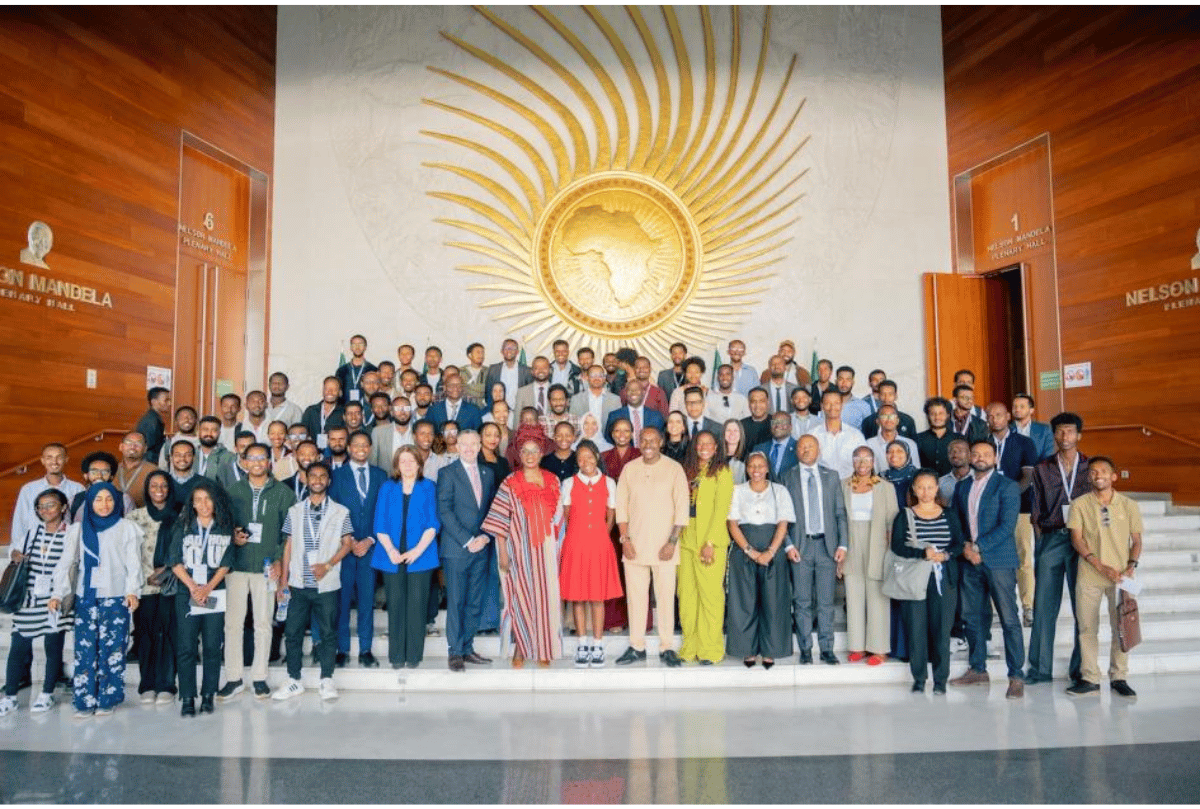
The African Union Commission (AUC) has entered into a landmark Memorandum of Understanding (MoU) with Google to drive artificial intelligence (AI) and digital transformation throughout Africa. The agreement, signed on February 17, 2026, at the AU Headquarters in Addis Ababa, was formalized by H.E. Commissioner Lerato D. Mataboge and Mr. Charles Njenga Murito, Google’s Regional Director for Sub-Saharan Africa, Government Affairs & Public Policy. This collaboration aims to secure Africa’s digital future and strengthen the continent’s digital capacity.
This partnership signifies a shift from merely adopting technology to building Africa’s sovereign digital capabilities and enhancing long-term resilience. Guided by the African Union’s Continental AI Strategy and the Digital Transformation Strategy for Africa (2020–2030), the MoU focuses on several key priorities: advancing AI and digital infrastructure, fostering AI talent development, promoting research and education, supporting entrepreneurship and startups, and establishing responsible AI governance frameworks.
During the signing ceremony, Commissioner Mataboge emphasized the strategic importance of this collaboration. “Under the African Union’s Digital Transformation Strategy for Africa (2020–2030), we have committed to building inclusive digital economies that leave no one behind,” she stated. “In parallel, the African Union’s Continental AI Strategy provides a clear framework for how Africa will develop and govern AI in a way that is ethical, responsible, inclusive, and development-oriented.”
Mr. Murito, representing Google, reiterated the company’s commitment to enhancing AI readiness and public sector capacity across Africa. He described the partnership as a move “from digital access to digital agency.” In line with this collaborative effort, Google announced several initiatives, including an AI readiness training program for African public officials, launched in partnership with Cori Zarek and Apolitical. Furthermore, Google plans to train 3 million students and teachers by 2030 while providing free access to its Gemini Pro and NotebookLM tools, which now support local languages like Amharic.
The signing ceremony also engaged young African innovators and university students, allowing them to voice their perspectives on the agreement’s implementation. Their involvement underscores the partnership’s core goal of empowering the next generation to lead Africa’s digital transformation. “Today’s signing is a symbol of partnership. But tomorrow’s success will depend on your participation,” Mataboge remarked, emphasizing the importance of youth engagement.
This MoU represents a shared commitment to leveraging emerging technologies to enhance digital public infrastructure, broaden access to opportunities, and promote responsible innovation. By aligning with global trends and advancing local capacities, Africa aims to position itself as a leader in the digital age. The collaboration with Google highlights a strategic move towards not just participation in the digital economy, but leadership within it, as the continent embraces the potential of AI and other technologies for sustainable growth and development.
See also OpenAI’s $500B ‘Stargate’ Project Stalls Amid Leadership Disputes and Financing Woes
 Getty Images Wins Limited Trademark Infringement Case Against Stability AI
 Defense Secretary Hegseth Summons Anthropic CEO Over Claude AI’s Military Use Restrictions
 Anthropic’s CEO Dario Amodei Meets Defense Secretary Hegseth Over AI Contract Dispute
 Modine Achieves 31% Data Center Sales Growth, Targets $3B in Revenue by 2028