
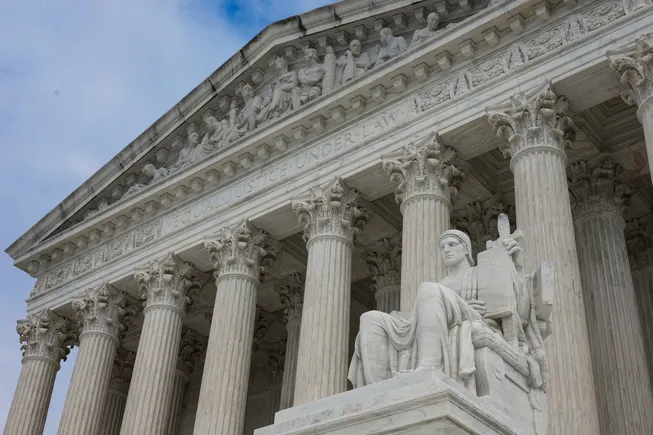
As artificial intelligence tools proliferate and generative AI applications advance in producing consistent and thematic content, a significant legal hurdle remains: creators and brands cannot claim ownership of AI-generated works. This was underscored on Monday when the U.S. Supreme Court declined to hear an appeal from Missouri computer scientist Stephen Thaler, who sought copyright protection for visual art produced by his AI system.
The Supreme Court’s decision follows a series of lower court rulings that upheld a determination by the U.S. Copyright Office, which found that AI-generated art lacks eligibility for copyright protection due to the absence of a human creator. This ruling highlights a key aspect of copyright law: existing regulations require a human originator for works to be legally protected.
Thaler has been advocating for copyright protection of AI-generated content since 2018 but has struggled to effect any changes in the law or to prompt a reinterpretation of current statutes in light of technological advancements. The Copyright Office and various international copyright regulators have consistently rejected applications for copyright protection on AI-generated artworks, as they emphasize the necessity for a human creator in any work eligible for legal protection.
According to the Copyright Office, while generative AI outputs can be copyrightable under certain conditions, such as when a human determines the expressive elements of the work, simple prompts alone do not fulfill the necessary criteria at this stage. The implications of this legal landscape are particularly important for businesses leveraging AI tools, as it means that any AI-generated style elements or characters do not confer ownership rights. Consequently, these creations can be freely utilized by others.
This lack of ownership extends to AI-generated characters used in video content. If a creator generates a character for regular social media posts, that character can legally be appropriated and reused by other users without the original creator’s permission. As AI depictions become more ubiquitous, there is speculation that the law will need to evolve to address these issues more comprehensively.
While the current legal framework presents challenges for social media marketers and brands, it also serves as a crucial reminder that AI-generated content lacks the same ownership protections as human-crafted works. As the industry continues to develop and AI technologies become further integrated into branding and marketing strategies, these legal considerations will be central to discussions about intellectual property and creative rights.
Looking ahead, the intersection of AI technology and copyright law remains a dynamic area, with potential for significant evolution as the implications of AI-generated content become increasingly recognized. The ongoing dialogue around these issues will likely shape how creators engage with emerging technologies and navigate the legal landscape in the future.
See also Dabudai Launches AI Visibility Platform to Transform SEO Strategies for Brands
 Salesforce Launches AI Fan Companion for 827 Million Formula 1 Fans, Enhancing Engagement
 AI’s Role in Marketing: How Indian Brands Use Strategy to Avoid Generic Messaging
 AI-Optimized SSDs Mislead Consumers, Prioritize Writes Over Critical Read Speeds
 TTEC Digital Achieves Google Cloud Expertise in Customer Engagement and Data Analytics