(Bloomberg) — The euphoria surrounding artificial intelligence (AI) is giving way to skepticism among investors, marking a significant shift in the valuation of the world’s largest technology companies. Over the past decade, owning shares of these tech giants required hefty investments, but recent trends suggest a recalibration in the market.
The stocks of major technology firms, often referred to as the “Magnificent Seven,” have underperformed in recent months, driven by concerns over escalating spending on AI and a market rotation into sectors expected to thrive in a growing economy. Since the end of October, an index tracking these companies has declined more than 7%, while the S&P 500 Index has remained relatively stable. This contrasts sharply with their performance in 2023 and early 2024, when the Magnificent Seven significantly outperformed the broader market.
These tech giants are now trading at valuations that have not been seen in years. For instance, Nvidia Corp. is currently priced at just over 21 times forward earnings, aligning closely with the S&P 500 and well below its ten-year average of 35 times. Similarly, shares of Amazon.com Inc. are priced at 23 times forward earnings, a stark reduction from its average of 46 times over the past decade. Excluding Tesla Inc., which has long been an outlier, the rest of the Magnificent Seven—including Alphabet Inc., Apple Inc., Meta Platforms Inc., and Microsoft Corp.—are trading at 23 times estimated profits, the most affordable since mid-2018.
The recent downturn has caught many investors off guard, as these stocks previously commanded significant premiums due to rapid revenue growth and dominant market positions. However, the current scenario is viewed by some as a logical consequence of companies like Amazon investing heavily in AI infrastructure.
Brett Ewing, chief market strategist at First Franklin Financial Services, remarked on the transformation occurring in the markets, stating, “There’s been a complete repricing of the Magnificent Seven because they underwent a transformation from asset-light companies with massive cash flows to companies that have been forced to move at an accelerated pace into becoming asset-heavy.”
Despite many of their core strengths, such as profit growth, remaining intact, the earnings expansion for these companies is slowing. According to data compiled by Bloomberg Intelligence, earnings for the Magnificent Seven are projected to rise by 19% in 2026, compared to 12% for the remainder of the 493 companies within the S&P 500. This slowdown is partly attributed to the hundreds of billions spent on AI development, which have burdened their balance sheets with depreciating assets and reduced free cash flow.
The leading spenders—Amazon, Microsoft, Alphabet, and Meta—are expected to invest a combined $618 billion in capital expenditures by 2026, up from $376 billion in 2025. Consequently, their collective free cash flow is anticipated to drop to $94 billion this year, down from $205 billion in 2025 and $230 billion in 2024.
Ewing noted, “These companies look a lot different than they did just a few years ago. Capex levels matter, maintenance matters, the ratio of physical assets to soft assets matters. They deserve different multiples and different expectations.”
This shift in investor sentiment is particularly evident in Amazon’s stock price, which has fallen to one of its lowest valuations among megacaps after years of commanding high multiples due to robust revenue growth. Microsoft’s shares are also notably low, priced at 22 times forward earnings, the cheapest since 2022. In contrast, Apple is trading at 29 times estimated profits, significantly above its decade-long average of 22 times. Unlike its counterparts, Apple is not heavily investing in AI infrastructure, instead opting for partnerships with Google to enhance its AI capabilities.
Despite the recent selloff, some investors remain optimistic about the long-term prospects for the Magnificent Seven. Lisa Shalett, chief investment officer at Morgan Stanley’s wealth management division, highlighted that the market is increasingly differentiating between companies with sustainable earnings growth and those with potentially peaking earnings. Shalett pointed out Nvidia as a prime example, noting that its valuation has plummeted over the last four months, with even a strong earnings report failing to resuscitate its stock price.
While the allure of the Magnificent Seven may have diminished, Ewing maintains a positive outlook for the future, asserting, “I don’t think the age of Big Tech is over. They continue to have amazing size and scale, and what they’re able to do is amazing. I’m positive about the companies over the long term, but in the short term, just thinking as an investor, I’m not adding money.”
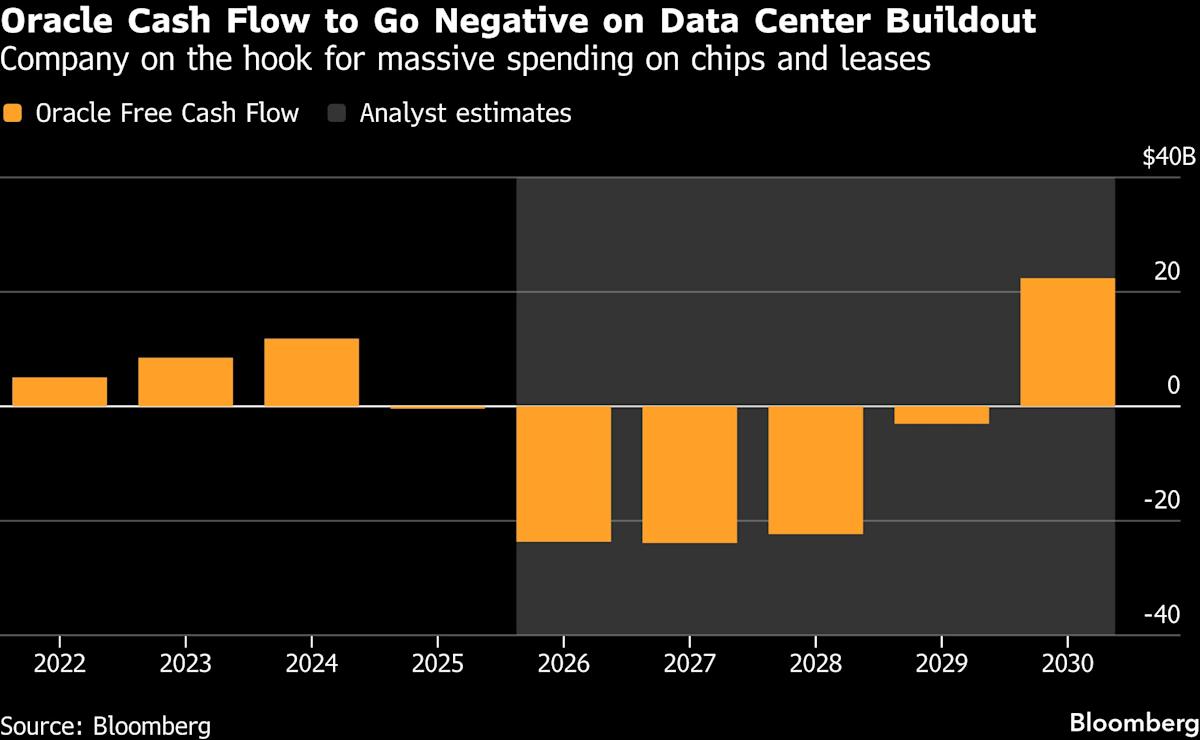
In related news, Oracle Corp. has announced plans to cut thousands of jobs as part of a strategy to manage a financial crunch stemming from its extensive AI data center expansion.
See also Pepeto Raises $7.4M, Leading AI Presale Against DeepSnitch, Mutuum, and IPO Genie
 AI Finance Apps Revolutionize Budgeting: Automate Savings and Invest Smartly in 2026
 AI Transforms Financial Workflows in 2026: Adaptive Systems Replace Automation
 Hong Kong Regulators Launch GenA.I. Sandbox++ to Enhance AI Risk Management in Finance
 UK Finance Firms Urged to Enhance AI Security with Five Essential Tactics