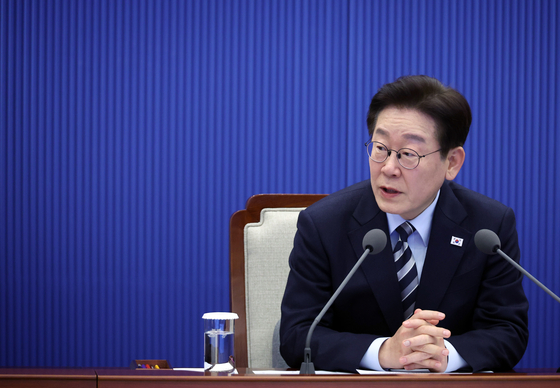
SEOUL, March 13, 2026 — President Lee Jae Myung announced on Friday that the South Korean government will intensify collaborative efforts to promote artificial intelligence (AI) transformation across various industrial sectors, working alongside private enterprises. This initiative was revealed in a post on the social media platform X, where Lee highlighted a forthcoming joint project involving multiple government ministries.
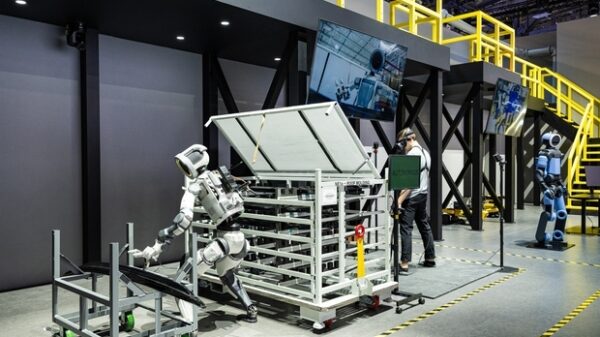
The Ministry of Science and ICT, the Ministry of Trade, Industry and Resources, and the Ministry of SMEs and Startups are set to launch bids for significant AI projects aimed at developing AI solutions specifically for factory environments. In his post, Lee stated, “The government will bring together all our capabilities to swiftly push forward industrial AI transformation.”
Lee emphasized that the initiative is feasible due to his administration’s efforts to lower barriers across ministries, thereby enhancing interagency cooperation. The projected initiative comes with a budget of 432 billion won (approximately $289.7 million) and includes programs designed to support smart factories, the application of AI in manufacturing, and the seamless integration of these technologies.
The government plans to announce the bid for these projects next week, with the ICT Ministry leading efforts to develop AI agents that can manage or operate industrial processes. Additionally, the initiative aims to enhance AI integration in everyday life, including in networks and cybersecurity domains.
This move aligns with a broader global trend where governments are increasingly recognizing the potential of AI to transform economies. South Korea’s proactive approach is part of a strategy to solidify its position in the competitive global landscape, particularly as other countries also ramp up their AI endeavors.
As industries across the globe explore AI applications, South Korea’s commitment to fostering collaboration between the public and private sectors could serve as a model for other nations. Experts believe that such initiatives can catalyze advancements in efficiency and productivity, providing a significant edge in the rapidly evolving technology sector.
Lee’s announcement reflects a commitment not only to technological advancement but also to ensuring that South Korea remains at the forefront of the digital revolution. By engaging with private sector partners, the government is positioning itself to leverage innovative solutions that could lead to substantial economic benefits.
Looking ahead, the effectiveness of this industrial AI transformation will depend on the successful execution of the projects and the ability to foster a conducive environment for technological innovation. As the country prepares to unveil its plans, industries are watching closely, anticipating the potential changes that could redefine industrial operations in South Korea.
See also Hong Kong Government Bans OpenClaw Installation Amid Security Concerns for Staff
 US Commerce Department Withdraws AI Chip Export Rule Amid Industry Uncertainty
 AI-Driven Claim Rejections Stunt India’s Insurance Growth at Just 7%, Expert Reveals
 US Commerce Department Withdraws AI Chip Export Rule Amid Strategic Confusion
 Nevada Deploys Google AI Tool for Unemployment Appeals Amid Lawmaker Concerns