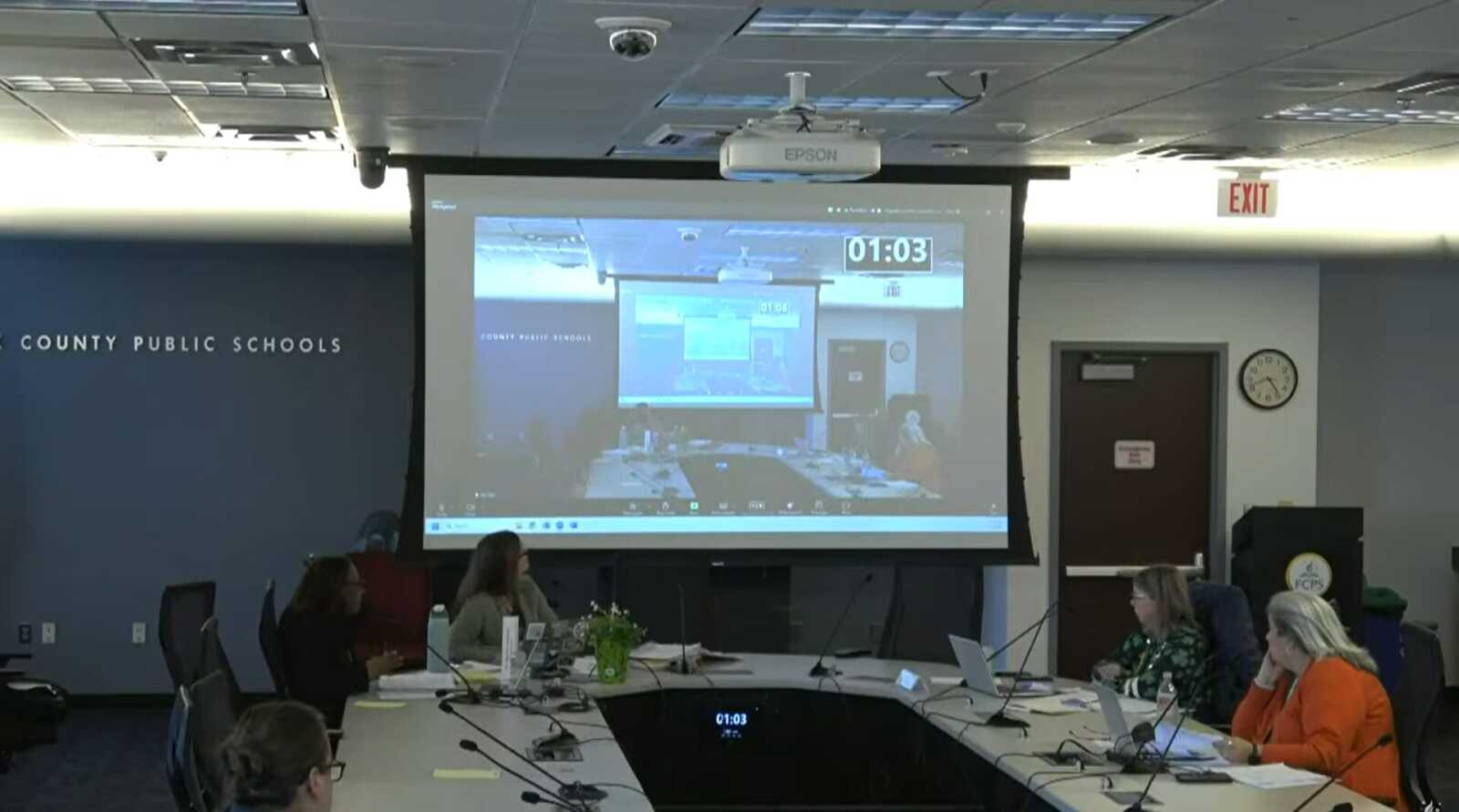
Fairfax County Public Schools officials are moving toward a comprehensive artificial intelligence policy, although a finalized version is still months away. Discussions about the draft policy took place during a governance committee meeting on March 17, 2026, where board members acknowledged the need for structured guidelines as AI technology continues to permeate educational settings.
Since October, staff have been crafting a policy to govern AI’s use within the district. The term “artificial intelligence” encompasses various technologies capable of executing complex tasks, becoming particularly associated with generative tools like OpenAI’s ChatGPT, which generate new content based on existing text, images, and videos.
AI tools are already in use across FCPS classrooms, with applications such as Adobe Express, Google Storybook, and Google’s LM approved for staff. Additionally, the district is piloting a program titled ChatGPT for Teachers.
During the meeting, Franconia District Representative Marcia St. John-Cunning emphasized that educators are already utilizing AI technologies, stating, “They’re using this anyway. Our job is to teach them how to use it responsibly.”
In a previous meeting, Superintendent Michelle Reid presented a draft proposal that outlined the school board’s philosophy towards AI, including definitions and responsibilities related to safety and usage. However, her latest revision removed an entire “procedures” section, creating a new “responsibilities” section that directs her to develop guidelines and monitor AI developments, alongside conducting a biennial staff review.
In contrast, Hunter Mill District board member Melanie Meren proposed her own draft policy during the meeting, echoing Reid’s directive for ongoing monitoring but adding specific guidelines for student safety and criteria for evaluating instructional technology. Importantly, Meren’s draft would prohibit access to generative AI for students aged 12 and younger, underscoring the importance of professional development in implementing these technologies effectively.
“It’s become very apparent to me that the only way this is going to move forward with equity and quality is through professional development,” she stated, highlighting the need for comprehensive training as technology evolves.
Mason District Representative Ricardy Anderson called for increased specificity in the proposal to address community concerns, emphasizing the necessity of incorporating developmental appropriateness and parental involvement into the policy framework. “What I didn’t see … is developmental appropriateness, is the parental component, that has to show up in some way,” she expressed.
The committee largely supported Meren’s proposal as a foundation for further discussion, with plans to review and provide feedback in the coming weeks. District representatives also noted that FCPS staff would gather additional information on potential regulations related to the policy.
Dranesville District Representative Robyn Lady articulated a desire for grassroots input, stating, “I think it’s very aspirational but I also think we need the people who do the work to provide input.”
As the committee prepares for its next meeting, scheduled for April 14, members agreed to convene additional meetings in April and May to ensure a proposed AI policy is finalized before the end of the school year. However, any proposal will still need the full school board’s approval.
The development of AI policies in educational settings reflects a broader trend as schools nationwide wrestle with the integration of technology in classrooms. As AI tools continue to evolve, the establishment of comprehensive guidelines is crucial to ensure responsible use and equitable access among students.
See also MEPs Approve Delay in AI Regulation Deadlines, Propose New Dates for Compliance
 Ro Khanna Advocates for Stronger AI Regulation and Progressive Policies at Georgetown Event
 Florida OIR Summit Features AI Insights from Commissioners and Key Industry Experts
 Republican Lawmakers Express Concerns Over White House’s AI Regulatory Push