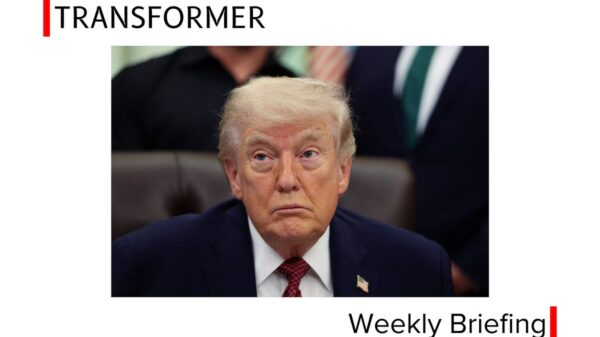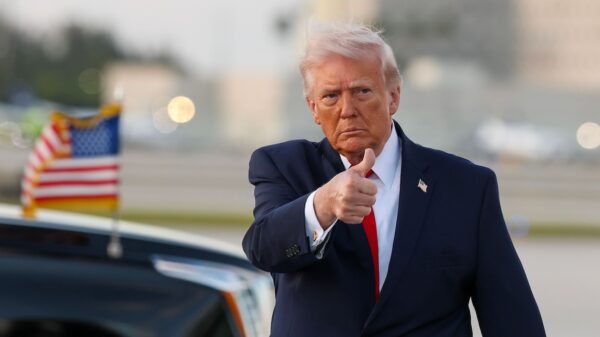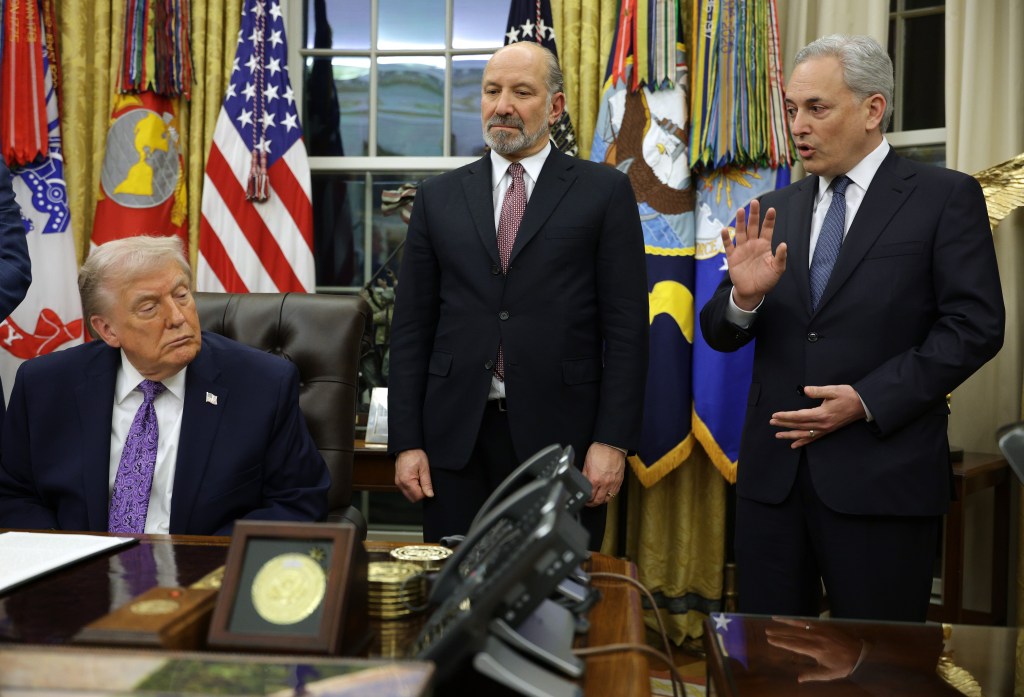
More than 50 Republican lawmakers from 22 states expressed their apprehensions in a letter to President Donald Trump earlier this month, voicing concern over the White House’s attempts to halt state-level regulation of artificial intelligence (AI). Their worries come in the wake of an executive order Trump signed in December, aimed at establishing a national standard for AI policy to prevent a fragmented regulatory landscape. This order seeks to challenge what the administration deems “onerous” state laws through legal and financial means, though the order lacks substantial enforcement power.
Republican lawmakers are increasingly anxious as national AI regulations remain absent. Chris MacKenzie, vice president of communications at Americans for Responsible Innovation, noted a growing desire within the Republican Party to protect citizens from potential AI harms. “There’s a real groundswell of support within the Republican Party over protecting the ability to safeguard people from AI harm,” he stated.
The White House is reportedly set to unveil a new AI policy framework today, aiming to push a legislative package through Congress. However, previous attempts to prevent states from regulating AI have met with limited success. Tension is rising within the Republican ranks as some lawmakers feel increasingly stifled by federal overreach.
Louis Blessing III, a Republican state senator from Ohio and one of the organizers of the letter, criticized the administration’s position. He described the executive orders that attempt to curb state legislation as “blatantly unconstitutional” and suggested that many in the party are hesitant to voice their concerns out of fear of backlash from influential figures in Washington and the tech sector. “I think they are afraid of a massive onslaught, from frankly, some very wealthy people,” he remarked.
The trigger for the letter was the White House’s intervention in Utah, where Republican lawmakers were pressured to abandon the Artificial Intelligence Transparency Act. Sponsored by state Rep. Doug Fiefia, a former Google employee, the bill aimed to enhance transparency and accountability among powerful AI models, requiring companies like OpenAI, Anthropic, and Google DeepMind to disclose safety and child protection plans, as well as provide whistleblower protections. After the bill received unanimous committee approval in January, the White House issued a letter opposing it, labeling it “unfixable” without detailing its objections. The bill ultimately did not advance to a vote.
Fiefia expressed disappointment over the bill’s failure, emphasizing the need for state-level protections in the absence of national regulations. “There are clear risks here, and the public protection, so I can’t sit back and do nothing while Congress fails to act,” he said, citing studies indicating substantial support for AI regulation among Utah voters. “There is a way to regulate while also allowing AI to innovate, but doing nothing is not the answer.”
A similar situation unfolded in Florida, where Republican state Sen. Tom Leek introduced an AI Bill of Rights. After the White House contacted Florida Speaker of the House Daniel Perez to express opposition, the bill, which included measures to require disclosure when users interact with AI and restrict contracts with foreign-linked AI firms, failed to pass before the legislative session concluded. Perez argued that regulation should be handled at the national level, despite Governor Ron DeSantis’s support for the bill.
When Trump announced the executive order on a national AI framework, observers noted that the stated intent was to block regulations emerging from Democratic-led states like California and Colorado. However, critics argue it is inadvertently stifling regulatory efforts in Republican states. Jared Hayden, a policy analyst at the Institute for Family Studies, remarked, “What we have seen is that it is actually deterring red states from regulating AI.”
As divisions within the Republican Party regarding AI regulation become more pronounced, figures like David Sacks, Trump’s AI adviser, push for a national regulatory framework that is “minimally burdensome.” In contrast, some Republican senators, including Marsha Blackburn and Josh Hawley, alongside DeSantis, raise concerns regarding child safety and energy use associated with AI technologies.
The absence of federal standards is complicating matters for both factions. Blessing voiced his frustration over the Trump administration’s approach, stating he might feel differently if a national regulatory framework existed. Meanwhile, even tech-friendly Republicans are growing weary of the regulatory vacuum. “It’s every state for themselves,” said Adam Thierer, a senior fellow at the R Street Institute. He lamented the lack of federal leadership, despite a pro-innovation AI Action Plan released last July by the Trump administration. Thierer warned of a potential “AI Articles of Confederation Era,” where varying state regulations hinder smaller companies.
Delays in implementing provisions from Trump’s December executive order have compounded frustrations, with the Commerce Department and the Federal Trade Commission missing key deadlines related to AI regulations. Fiefia emphasized the bipartisan nature of the issue, stating, “If we can’t put our heads together and come up with bipartisan solutions, it will become an issue that nobody acts on, and in turn our citizens and constituents are hurt.”
See also White House Proposes Federal AI Regulation Framework to Preempt State Laws
 Florida’s AI Growth at Risk: SB 482 Could Stifle Innovation and Investment
 Federal Government Unveils National AI Policy Framework to Enhance Data Security and Innovation
 White House Unveils AI Regulation Framework Amid Growing State-Level Laws