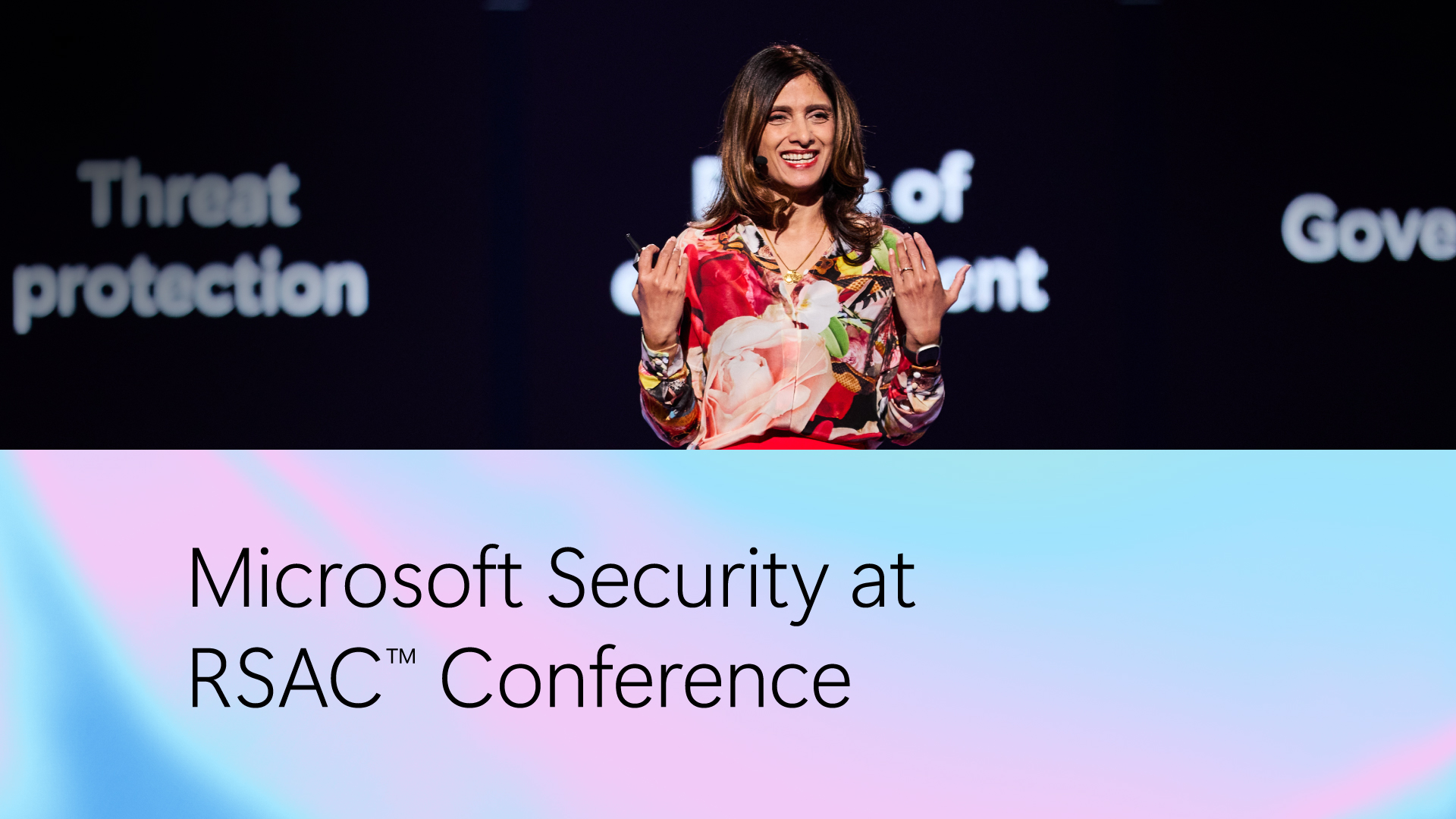
Next week, the RSAC™ Conference will mark its 35-year anniversary, continuing its role as a pivotal forum for the security community to tackle emerging challenges and seize new opportunities in their mission to enhance global safety. In the lead-up to this milestone, agentic AI is rapidly transforming industries, prompting companies to evolve into what are termed Frontier Firms. These organizations are leveraging intelligence and trust to harness agents that elevate human ambition and reimagine business models. Recent research indicates that 80% of Fortune 500 companies are now employing agents to facilitate this transition.
However, this innovation occurs amidst a surge in AI-driven attacks, where agents can potentially act as “double agents.” Chief Information Officers (CIOs), Chief Information Security Officers (CISOs), and security decision-makers are left to navigate the security implications of these developments. They face critical questions: How can they effectively monitor, govern, and secure these agents? What measures can they implement to safeguard their foundational infrastructures in this evolving landscape? Moreover, how can agentic AI serve as a shield against both traditional and emerging threats?
The foundation of effective security lies in trust, which has always been integral to safeguarding operations. In this new agentic era, security must be intricately woven into every layer of the AI ecosystem. It needs to be ambient and autonomous, mirroring the very characteristics of the AI it aims to protect. This vision of security as a core element of the AI stack will be a focal point at RSAC 2026, where new capabilities will be unveiled to assist organizations in securing agents and fortifying their foundational infrastructure.
With the launch of Agent 365, set to be generally available on May 1, organizations will gain access to a control plane for agents, which equips IT, security, and business teams with the necessary tools to monitor, secure, and govern agents at scale. This platform integrates capabilities from Microsoft Defender, Entra, and Purview to enhance security around agent access, mitigate data oversharing, and counter emerging threats.
Beyond securing agents, the focus must also shift towards safeguarding the foundational systems underpinning agentic AI. At RSAC 2026, Microsoft plans to introduce new capabilities aimed at enhancing visibility into enterprise risks, securing identities with continuous adaptive access, protecting sensitive data across AI workflows, and defending against threats at the pace and scale of AI. A key initiative involves providing comprehensive visibility into AI-related risks and usage across organizations, which is vital as AI adoption accelerates.
New offerings include a Security Dashboard for AI, which will provide security teams with a unified view of AI-related risks, and Entra Internet Access Shadow AI Detection, designed to identify previously unknown AI applications. Furthermore, an enhanced Intune app inventory will offer greater insight into installed applications, including those powered by AI, facilitating targeted remediation of high-risk software.
Identity remains a cornerstone of modern security, necessitating robust protection as it is often the most targeted layer. With Microsoft Entra, organizations can solidify their identity security through new capabilities that enhance resilience, improve tenant governance, and modernize authentication processes. Initiatives such as Entra Backup and Recovery and Entra Tenant Governance are now available in preview, while external Multi-Factor Authentication (MFA) options further bolster security parameters.
As AI increasingly integrates into daily operations, the protection of sensitive data becomes paramount. Microsoft is enhancing data security within the AI control plane, providing organizations with insights into data interactions, and preventing data oversharing. Key advancements in Microsoft Purview will include expanded data loss prevention capabilities for Microsoft 365 Copilot and a unified view of AI-related data risks within the Microsoft 365 Admin Center.
To effectively counter threats across endpoints, cloud environments, and AI services, proactive 24/7 threat protection is essential. Microsoft is extending its predictive shielding capabilities, enhancing container security, and implementing network-layer protection against malicious AI prompts. New features will include Entra Internet Access prompt injection protection and enhanced Defender for Cloud container security.
In the context of this agentic age, organizations require integrated defense mechanisms that blend human expertise with automated processes. Microsoft is introducing new agents embedded within security workflows, designed to accelerate threat investigations and automate low-value alerts. Notable additions include the Security Analyst Agent and the Security Alert Triage Agent, both aimed at streamlining security operations.
As companies grapple with the complexities of AI, applying Zero Trust principles will be critical. At RSAC 2026, Microsoft will expand its Zero Trust architecture to cover the full AI lifecycle, from data ingestion to agent behavior, providing actionable frameworks to enhance security posture.
If you are attending the RSAC 2026 Conference in San Francisco, Microsoft invites you to engage with its offerings. Attendees can participate in the Microsoft Pre-Day event and visit the Microsoft booth at the North Expo (N-5744) to explore innovations related to Microsoft Agent 365, Microsoft Defender, Microsoft Entra, Microsoft Purview, Microsoft Sentinel, and Microsoft Security Copilot. The future of security is set to be ambient, autonomous, and designed for an AI-driven era.
To learn more about Microsoft Security solutions, visit the Microsoft website and bookmark the Security blog for ongoing expert insights. Follow Microsoft Security on LinkedIn and X for the latest updates in cybersecurity.
See also American Airlines Cuts Climate Impact by 69% Using Google AI to Reduce Contrails
 Google’s AI Experiment Alters Headlines, Risks Misinforming Users with Clickbait Rewrites
 Genies Partners with Sanrio to Launch Interactive AI Experiences for Iconic Characters
 DeepSeek AI Predicts 2026 Prices for Hedera, XRP, and Polkadot with Key Insights
 NVIDIA Launches Rubin AI Supercomputing Platform with Up to 50 Petaflops Performance