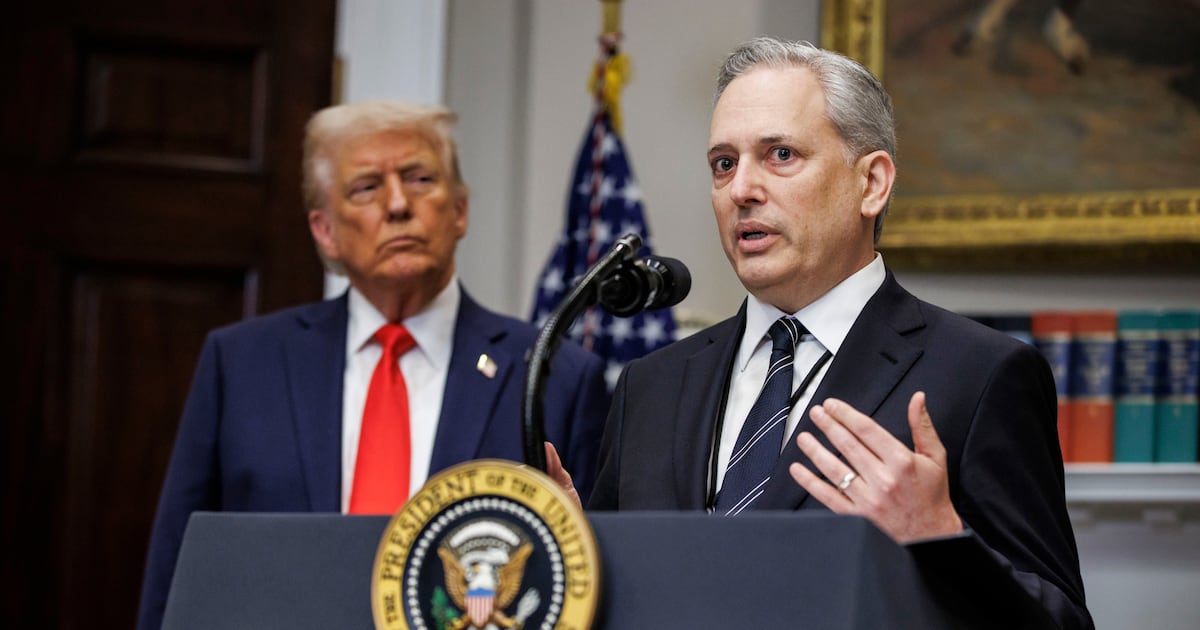
US President Donald Trump’s adviser on artificial intelligence, David Sacks, declared that the decision to permit the United Arab Emirates (UAE) to acquire advanced semiconductors marks a pivotal moment in establishing US technology as a leading global standard. Sacks, who also oversees cryptocurrency initiatives for the White House, voiced these sentiments during the Hill & Valley Forum in Washington, D.C., an event dedicated to fostering collaboration between lawmakers and technology innovators.
In his remarks, Sacks dismissed concerns that selling chips to the UAE was akin to providing them to China, asserting that allegations of potential diversion of technology were “bogus.” He pointed to current geopolitical dynamics as evidence that such fears are unfounded. “I think if UAE’s data centres were serving China, I don’t think they would be getting bombed right now by Iran,” he said, emphasizing the UAE’s strategic importance in the region.
Jacob Helberg, the US undersecretary of state for economic affairs, also underscored the commitment of the Trump administration to strengthen technology partnerships with the UAE. Helberg announced that an Emirati delegation would meet with high-ranking US officials later this week to discuss the AI Acceleration Partnership, an agreement established last year between the two nations. “In light of current events, the work of that group is even more meaningful,” he commented, acknowledging the UAE’s resilience during ongoing regional tensions.
The UAE, which has faced thousands of Iranian drone and missile strikes since a military campaign began involving the US and Israel, maintains that its economic ties with the US remain robust. Yousef Al Otaiba, the UAE ambassador to the US, reported last week that investments and partnerships are as strong as ever. He reaffirmed that the UAE’s $1.4 trillion investment framework with the US, announced last year, is on course for acceleration in deployment and funding across various sectors, including AI, energy, and advanced manufacturing.
Over the past decade, the UAE has aggressively positioned itself as a leader in AI. In 2019, it launched the Mohamed bin Zayed University of Artificial Intelligence, the first of its kind in the world, aimed at fostering education and research in the field. The country also appointed Omar Al Olama as its AI minister in 2017, signifying a strong governmental focus on harnessing technological innovations.
In 2025, during a visit by Trump, the UAE announced plans for a 5GW UAE-US AI Campus, highlighting its ambition to be at the forefront of AI development. As part of these initiatives, UAE officials and American technology firms, including Microsoft and Nvidia, have advocated for the US to ease restrictions on semiconductor sales to friendly nations like the UAE. These efforts have seen success, facilitated by security agreements designed to prevent the misuse of US-designed semiconductors by adversarial entities.
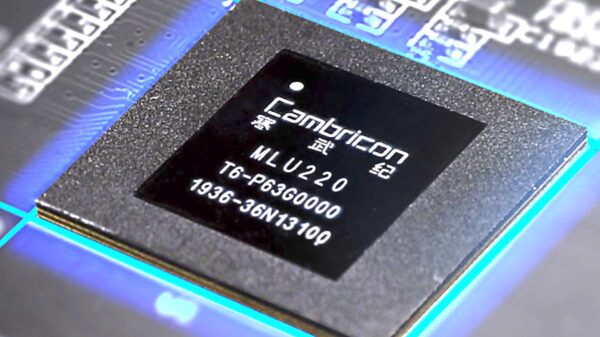
The broader context includes mounting concerns over semiconductor smuggling amid the escalating rivalry between the US and China for AI supremacy. Recently, the US Justice Department indicted Wally Liaw, a co-founder of Super Micro Computers, and two accomplices, alleging their involvement in attempts to divert US-made AI chips to China. According to the Justice Department, “The defendants’ scheme became more brazen over time and resulted in massive quantities of servers with controlled US artificial intelligence technology being sent to China.”
However, Michael Kratsios, director for the Trump administration’s Office of Science and Technology Policy, suggested that such illicit activities are more challenging to execute than commonly perceived. He emphasized the logistical difficulties of smuggling large, heavy equipment, stating that the notion of chip smuggling “probably gets more airtime than it should.”
As the geopolitical landscape continues to evolve, the US and UAE are poised to bolster their collaboration in AI and technology. With ongoing investments and strategic partnerships, the UAE’s aspirations to solidify its position as a global technology leader appear more attainable than ever.
See also AI Search Engineers Launches Answer Engine Optimization to Enhance Brand Visibility in AI Systems
 Anthropic Reveals Advanced Multi-Agent Architecture for Autonomous App Development
 Siemens CEO Warns EU: Restricting AI Could Stifle Innovation and Delay Progress
 Nvidia Accelerates AI Dominance, Partners with CoreWeave for Data Center Expansion
 Salesforce Reveals 83% of Marketers Seek Real-Time Engagement in Agentic Marketing Shift