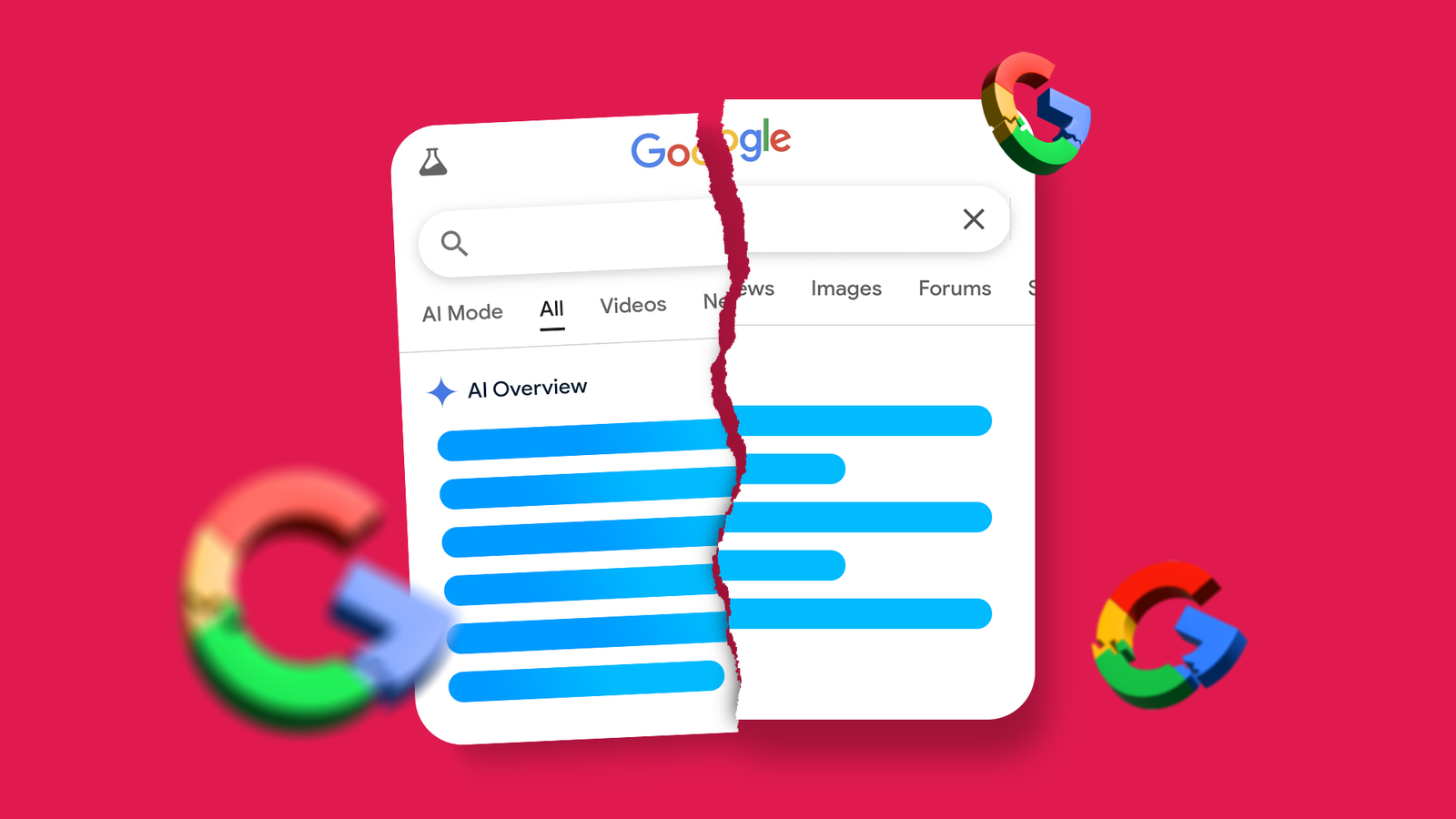
Google’s AI Overviews, which initially faced criticism, have become a staple of the Google Search experience. Despite their integration, users report significant issues, prompting many to disable the feature through web filters or extensions. The AI tool has been criticized for generating hallucinations, which pose risks by disseminating false and misleading health information. Additionally, it leads to confusion among businesses, resulting in misattributed negative reviews and complaints.
For those prioritizing accuracy in their searches, disabling the AI Overview is advisable. As Google continues to experiment with these features, some users are reconsidering their loyalty to the search engine altogether. Google’s foray into rewriting headlines further complicates the issue, as it introduces incorrect and misleading “blue links” without disclosing any alterations made to the original content.
An investigation by The Verge has unveiled that Google has been modifying headlines in its search results without the knowledge of content creators. While some changes involve minor truncations, others misrepresent the intent of the authors. For instance, The Verge’s original title, “I used the ‘cheat on everything’ AI tool and it didn’t help me cheat on anything,” was altered by Google to simply “Cheat on everything AI tool.” In response to these revelations, Google stated that a broader rollout of this practice had not been approved and that it would refrain from using generative AI for headline creation if such a rollout were to occur.
Google’s stated aim behind these modifications is to enhance the relevance and utility of headlines for users. However, changing an article’s headline without notifying either the reader or the writer is a significant breach of trust. This lack of transparency can lead to user frustration and misdirected criticism towards the publications whose content is altered. For instance, a revised headline in Google Discover changed an Ars Technica article’s title from “Valve’s Steam Machine looks like a console, but don’t expect it to be priced like one,” to “Steam Machine price revealed.” Users clicking on the latter would find that the article contained no price, likely leading to confusion and dissatisfaction.
The consequences of these headline changes can have far-reaching effects. Misleading information not only frustrates readers but also harms the reputations of websites when users mistakenly attribute negative experiences to the content providers. Moreover, the impact on traffic can be detrimental, especially if AI-generated modifications lead to decreased visibility for certain articles. A simple disclosure, such as “This headline was generated by Google AI,” could help mitigate some of these issues, fostering greater transparency.
With AI features becoming more pervasive, users seeking reliable search results are encouraged to consider alternatives to Google. Search engines like DuckDuckGo offer the option to disable AI features entirely, allowing for a more traditional search experience. Brave also provides similar functionality, enabling users to opt-out of AI tools while maintaining a robust search capability. However, Ecosia, despite its environmentally friendly mission, similarly includes AI overviews that can be easily disabled.
For those looking to avoid AI interference in their search queries, DuckDuckGo, Brave, and Ecosia serve as strong alternatives to Google’s AI-driven results. They offer comparable functionalities to Google Search and are available as apps for Android and iOS, making the transition seamless for mobile users. As the prevalence of AI in search engines increases, users may find that shifting to services that allow for greater control over AI features becomes necessary.
As Google continues to experiment with AI-driven features, it has prompted a re-evaluation of its search service among users who prioritize accuracy and reliability. While the potential for innovation exists, the integration of AI in a way that obscures the truth can lead to significant user dissatisfaction. For many, this prompts a critical decision: to tolerate these changes or to seek alternatives that maintain the integrity of information.
See also CrowdStrike Stock Dips 4% as Wedbush Predicts 2026 AI Inflection Year
 OpenAI Shuts Down Sora App After Months Amid Controversy Over Video Content
 Anthropic Reveals Claude Pro: A $20 AI for Complex Tasks and Enhanced Productivity
 Google DeepMind Launches AGI Benchmark Hackathon with $200K Prize Pool on Kaggle