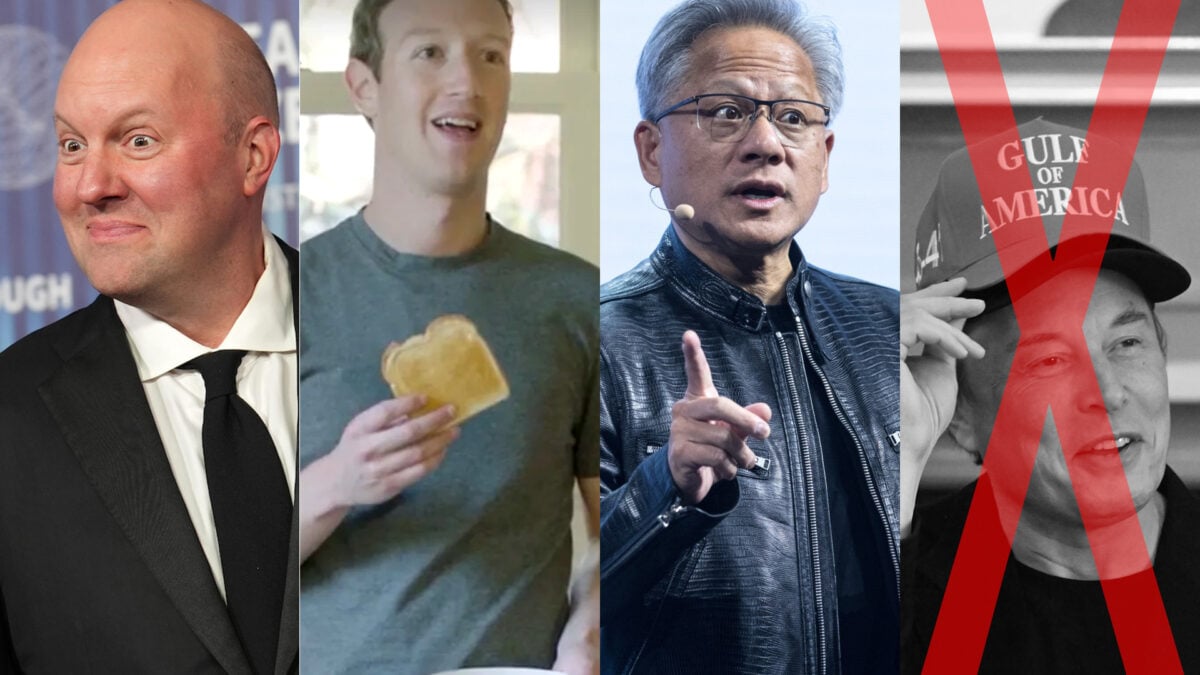
The White House on Wednesday announced the new members of the President’s Council of Advisors on Science and Technology (PCAST), a board originally established under President George W. Bush to “strengthen American leadership in science and technology.” This latest iteration includes prominent figures from the tech industry but notably lacks one major name: Elon Musk. The absence of the Tesla and SpaceX CEO raises questions about his relationship with the current administration, particularly following a public falling out with former President Donald Trump.
PCAST is co-chaired by David Sacks, Trump’s AI and cryptocurrency advisor, and Michael Kratsios, the chief technology officer of the White House Office of Science and Technology Policy. The newly appointed members include influential tech leaders such as Marc Andreessen of Andreessen Horowitz, Sergey Brin from Google, Safra Catz of Oracle, and Mark Zuckerberg from Meta, among others. The full roster features a mix of entrepreneurs, scientists, and industry veterans, indicating a shift towards more business-centric perspectives in tech advisory roles.
The absence of Musk, the world’s wealthiest individual, is striking. Reasons for his omission are not immediately clear; speculation includes his commitments to SpaceX, which is gearing up for an initial public offering, or a continued estrangement from Trump, exacerbated by past controversies. Musk’s previous comments implicating Trump in the Epstein files may have contributed to this rift, which raises concerns about how personal relationships among tech leaders influence their participation in influential government advisory boards.
The PCAST announcement specifies that the board may comprise up to 24 members, suggesting the possibility for Musk and potentially other high-profile figures from Silicon Valley to join in the future. However, the White House has not clarified what specific initiatives or objectives the board will focus on in the year ahead. According to the White House website, members will address topics related to the challenges and opportunities posed by emerging technologies to the American workforce, emphasizing a vision for all Americans to thrive in what it refers to as the “Golden Age of Innovation.” This broad framing leaves much to interpretation.
Critics suggest that the board’s agenda might align closely with the interests of favored tech firms that support the Trump administration’s policies. Under previous administrations, including those of Joe Biden and Barack Obama, PCAST featured a mix of industry leaders and academic experts, indicating a more balanced approach to technological and scientific advisement. In contrast, the current board appears to lean heavily towards business interests, which may signal a shift in how technology and science policy is shaped in the United States.
As the tech landscape continues to evolve, the role of PCAST could become increasingly significant, especially in light of recent developments such as the Pentagon’s designation of the artificial intelligence startup Anthropic as a supply chain risk. This highlights a growing trend where companies that are perceived as non-compliant with government expectations may face punitive measures. As a result, the dynamics of power and influence within the tech sector could play a pivotal role in determining which companies flourish or falter in the current political climate.
With the emergence of new technologies and the ongoing debate around regulation and innovation, the effectiveness and direction of PCAST will be closely monitored. The board’s future deliberations could have wide-ranging implications not only for the tech industry but also for the American workforce and broader societal implications as the nation navigates the challenges of rapid technological change.
See also Treasury Announces AI Innovation Series to Discuss Regulation Reductions for Banks
 Data and AI Governance Converge: New Frameworks Needed for Effective Oversight
 Australia’s Attorney-General Advocates Licensing Deals Between AI and Creative Industries
 India Strengthens AI Content Regulations, Mandates Clear Labeling and Swift Action Against Deepfakes