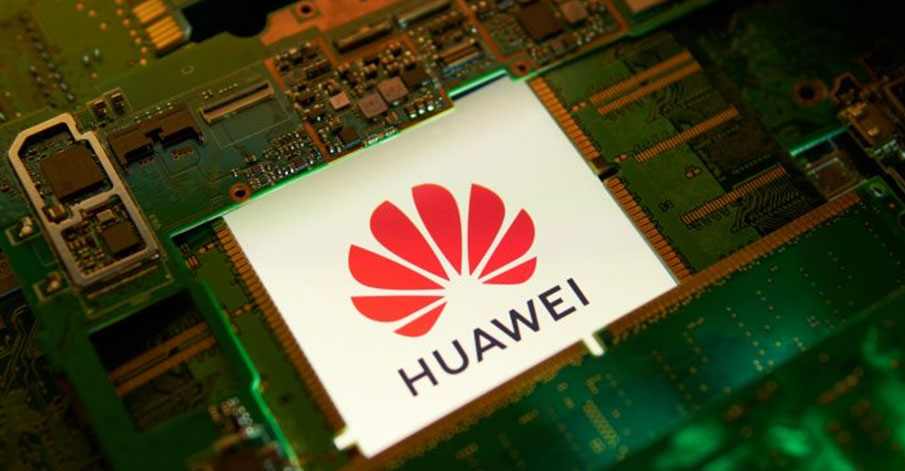
Huawei is experiencing a resurgence in the artificial intelligence hardware sector, with strong interest in its latest AI chip, the 950PR, from major Chinese technology firms such as ByteDance and Alibaba. Sources indicated that both companies are preparing to place orders following successful early testing of the chip. This development represents a pivotal moment for Huawei, which has faced challenges in achieving widespread adoption of its previous Ascend 910C chip among key players in the private sector.
The enhanced capabilities of the 950PR, especially its improved compatibility with Nvidia’s CUDA software ecosystem and accelerated response performance, have made it more attractive to developers and enterprises. In January, Huawei began distributing sample units of the chip to potential customers and plans to initiate mass production shortly. The company aims to ship approximately 750,000 units of the 950PR this year, with full-scale deliveries anticipated to increase in the latter half of 2026.
Priced at roughly 50,000 yuan ($6,900) per unit, the 950PR also has a higher-end variant featuring faster high-bandwidth memory (HBM), projected to cost around 70,000 yuan. Although the new chip offers only incremental improvements in raw computing power compared to its predecessor, it is specifically optimized for inference workloads. This focus aligns with the growing need as companies transition from training AI models to deploying them in practical applications.
The escalating interest in Huawei’s 950PR chip underscores broader trends within the global AI semiconductor market. Ongoing U.S. export restrictions on advanced chips from companies such as Nvidia have prompted Chinese firms to seek domestic alternatives, thereby accelerating the adoption of locally developed technologies. If confirmed, the anticipated orders from ByteDance and Alibaba could significantly bolster Huawei’s standing in the AI hardware ecosystem while signaling a growing confidence in China’s capability to develop competitive semiconductor solutions.
This situation also highlights how geopolitical factors and supply chain disruptions are reshaping technology decisions for prominent global companies. As firms increasingly turn to domestic resources in response to international restrictions, the competitive landscape for AI hardware appears poised for evolution. The growing appetite for Huawei’s offerings not only reflects the domestic market’s shifting dynamics but also emphasizes the resilience and innovation within China’s tech industry.
Looking ahead, Huawei’s success with the 950PR chip may have implications for the broader AI landscape, particularly in how companies approach deployment strategies amid evolving geopolitical pressures. The anticipated partnerships with ByteDance and Alibaba could set the stage for enhanced collaboration in AI advancements, further solidifying Huawei’s role as a key player in the semiconductor arena. As the demand for AI solutions continues to rise, the market’s response to Huawei’s latest offerings will be closely monitored, revealing insights into the future of AI technology development.
See also Samsung Launches Galaxy Book 6 Series in India with Intel Core Ultra Chips and AI Enhancements
 NeoCortec Launches NeoGW Software; Kontron Partners with SiMa.ai for Edge AI Solutions
 Sundance Launches SMT135-C FPGA Board for Low-Power Vision and Edge AI Applications
 Trump Appoints Big Tech Leaders to AI Council, Elizabeth Warren Critiques Corporate Influence