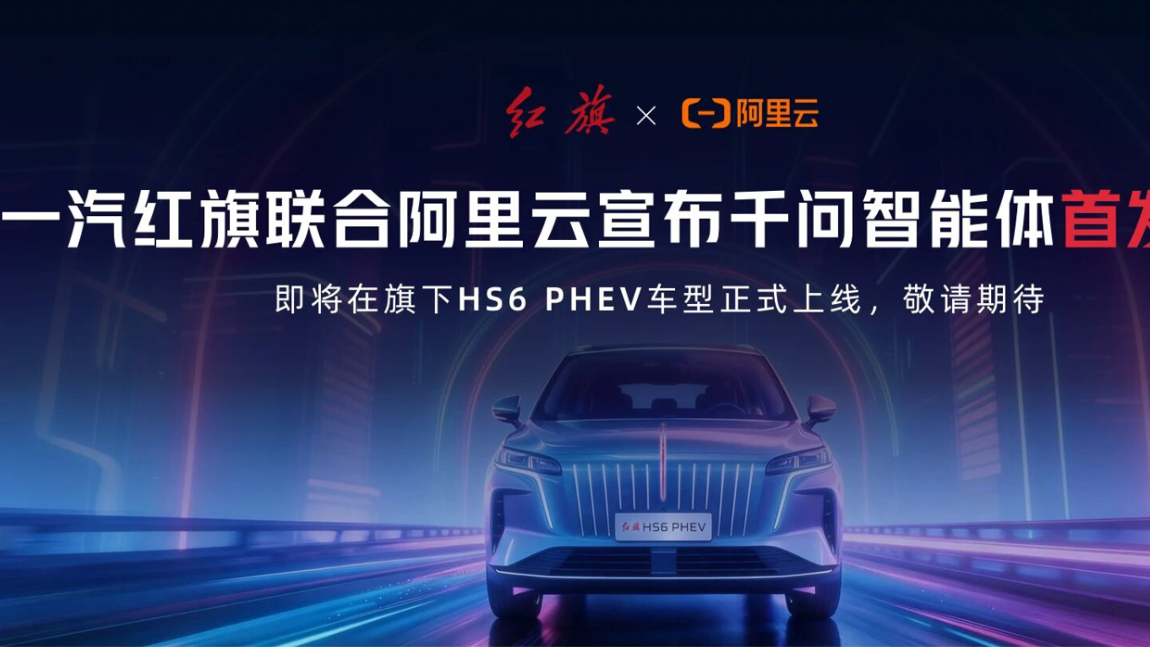
Gasgoo Munich – On March 26, FAW Hongqi announced a partnership with Alibaba Cloud, unveiling the integration of the Qwen intelligent agent into the Hongqi smart cockpit, beginning with the Hongqi HS6 PHEV. This development represents a significant milestone, marking the first instance where a general-purpose AI assistant has been fully deployed in a vehicle context.
This advancement distinguishes itself from earlier applications of AI. The Qwen agent’s capabilities extend beyond basic navigation commands to executing more complex itineraries. For instance, it can autonomously plan routes that include multiple stops, such as visiting Peking University and finding a restaurant for lunch, all while ensuring timely arrival at the airport. This evolution highlights the transformative intersection of automotive technology and generative AI, raising questions about the implications for the auto industry.
Over the past two years, generative AI has rapidly evolved from “large language models” to “multimodal models,” culminating in the emergence of “intelligent agents.” While the competition in 2023 focused on parameters like model size, the industry is now prioritizing capabilities that allow AI to autonomously understand, plan, and execute intricate tasks. The key metric of AI strength has shifted from generating text or images to completing comprehensive tasks akin to human capabilities.
The development trajectory of Qwen reflects this trend, as recent enhancements have included functionalities for food delivery, movie ticket purchases, flight and hotel bookings, and ride-hailing—ultimately building an ecosystem for “AI task execution.” Its deployment in vehicles is a natural progression into more complex physical environments where multitasking is essential.
Unlike mobile phones, the automotive environment imposes greater demands on AI systems. Drivers, with limited physical interaction options and focused attention, rely more heavily on voice commands. Yet, travel involves multifaceted decision-making—navigating, managing schedules, choosing dining options, and more—placing enhanced expectations on AI’s understanding and execution capabilities.
The technological advancement enabling this breakthrough is centered around “cloud multi-agent collaboration” and “edge-cloud collaborative execution.” In the case of the Hongqi Lingxi cockpit, Qwen serves as the cloud decision hub, adept at comprehending complex natural language and breaking down user intent into actionable tasks. When a user issues a command with multiple constraints, Qwen leverages the Amap Agent in the cloud as a specialized execution tool. By utilizing Amap’s real-time geographical data, spatiotemporal computing engine, and in-depth points of interest (POI) information, it combines various data sources to optimize decision-making, presenting tailored recommendations visually within the vehicle.
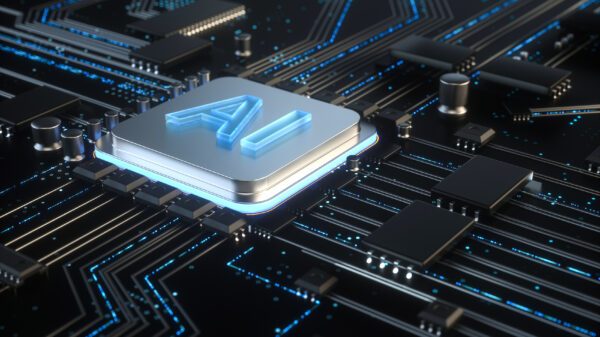
Central to the operation of this sophisticated system is a notable enhancement in computing power. The Lingxi cockpit has benefited from an upgrade based on the T-Head AI chip. This collaboration between T-Head’s self-developed AI chip and the Qwen model balances high-throughput inference with optimal energy efficiency, achieving millisecond-level response times. Without this foundational computing support, the seamless experience of cloud multi-agent collaboration and real-time edge-cloud interaction would not be feasible. This signifies that the deployment of AI assistants in vehicles is backed by advancements across three critical layers: model capability, agent architecture, and core computing power.
The comprehensive integration of AI assistants is poised to deliver transformative effects across the automotive industry. It challenges traditional notions of product definition, competitive dynamics, business models, and even raises ethical considerations. Notably, the core value of smart cockpits is shifting from “hardware stacking” to “service capability.” As hardware specifications become increasingly uniform—featuring similar screen sizes, resolutions, and chip capabilities—AI-driven software and service experience are emerging as the key differentiators.
Moreover, the partnership between automakers and technology firms is deepening. The collaboration between Hongqi and Alibaba Cloud illustrates a growing trend where automakers provide the vehicle platform, hardware, and manufacturing expertise while tech companies deliver AI models, cloud services, and ecosystem resources. The “Lingxi cockpit” represents this synergy, with Qwen managing task planning, the Amap Agent executing travel logistics, and the T-Head chip providing the essential computing foundation. Future integrations will include Alibaba’s ecosystem services such as Taobao Instant Shopping and Fliggy.
This alliance of “vehicle manufacturing + AI capability” is becoming mainstream. The automotive sector may soon emerge as a crucial entry point for AI ecosystems, following smartphones. Companies that can effectively integrate local living, mobility, and payment services into vehicles will likely gain a competitive advantage in the evolving market landscape.
As Qwen incorporates functionalities like instant retail and ticket booking, the automobile is transitioning from a mere transport medium to a “service delivery terminal.” This transformation activates the commercial potential of vehicle interiors, positioning cars as platforms for lifestyle services and high-frequency payments, much like smartphones have become.
However, this transformation also presents new challenges. Stability and safety concerns arise from complex system interactions; any failure in a connected component can jeopardize user experience and driving safety. The definition of liability becomes problematic when AI agents make decisions involving money and time on behalf of users, raising questions regarding accountability for errors in bookings or route planning. Furthermore, the importance of technological autonomy and controllability becomes paramount. The partnership between T-Head chips and the Qwen model exemplifies a path toward establishing an autonomous, controllable technology stack. Achieving complete autonomy across all levels—from underlying computing to application layers—is essential for ensuring both security and industrial competitiveness.
In conclusion, the formal introduction of AI assistants into vehicles signifies a pivotal shift in automotive intelligence, evolving from a focus on “function stacking” to “capability fusion.” This transformation is not merely about enhancing hardware but enabling vehicles to possess sophisticated capabilities for understanding, planning, and executing tasks. For the automotive industry, this shift presents both opportunities and challenges, redefining product value, reshaping competitive barriers, and transforming user expectations. Companies that successfully navigate this evolving landscape are poised to lead in the automotive market of the next decade.
See also NVIDIA Launches ProRL Agent to Enhance Multi-Turn LLM Training Efficiency at Scale
 Resemble AI Launches Deepfake Detector and Threat Report Amid Rising Media Concerns
 GPT-5.2 Pro Scores 93.2% in Reasoning, Claude Opus Leads Software Engineering at 80.9%
 Anthropic Launches Claude Cowork, Empowering Mac Users with 74 New Features in 52 Days
 2026’s Top Free Alternatives to Claude: Aider, Cline, and More for Developers