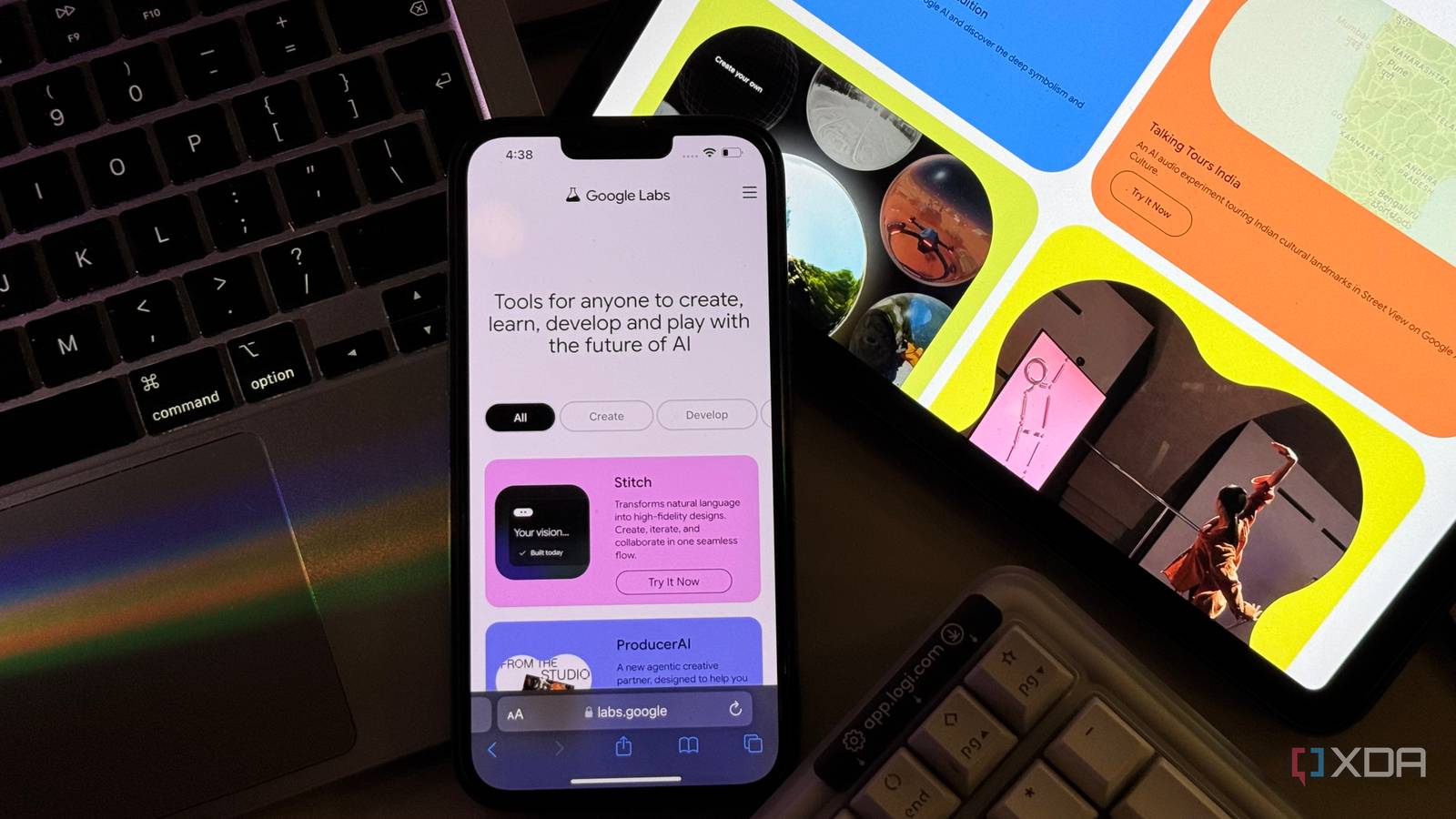
Google’s foray into artificial intelligence has been marked by a series of mixed results, particularly with its initial offering, Bard, which struggled to meet user expectations. While first impressions often linger, the tech giant may be an exception to that rule, especially as it continues to evolve its AI capabilities. Despite the flak Bard received, Google’s ongoing developments within its Google Labs suggest a promising future, albeit one that remains largely under the radar.
The focus for most users tends to be on Gemini, Google’s prominently marketed AI tool integrated across its services. However, a deeper exploration reveals that Google Labs serves as a crucial incubator for innovative features, many of which have the potential to redefine user experiences. This experimental space is where concepts are tested before they may eventually become mainstream, like the recently released AI Mode in Google Search, which initially resided in Labs before its public rollout.
Among the standout products emerging from this environment is NotebookLM, which has quickly gained traction. Initially launched as Project Tailwind in May 2023, NotebookLM allows users to interact with their own documents, streamlining the process of information retrieval. Its evolution is attributed to significant user feedback, prompting Google to rebrand it and incorporate additional features rapidly. The introduction of Audio Overviews transformed NotebookLM into not just a tool for document review but also a platform for creating engaging audio content based on user-uploaded materials.
This shift has resonated particularly with students and educators, leading to further enhancements such as Mind Maps, Video Overviews, and interactive study aids like flashcards and quizzes. The core philosophy underpinning NotebookLM remains intact: to facilitate user interaction with their personal information without straying into the realm of misinformation, a common pitfall for many AI tools.
Despite NotebookLM’s success, it is not the only noteworthy initiative in Google Labs. Other learning-focused experiments have emerged, although they have flown largely under the radar. Little Language Lessons, for instance, offers a fresh approach to language acquisition by providing contextual vocabulary based on real-life scenarios rather than textbook examples. Features include Tiny Lessons for immediate situational learning, Slang Hang for conversational fluency, and Word Cam, which visually labels objects in the target language.
Another intriguing experiment is Learn Your Way, which personalizes learning experiences by allowing users to upload static documents like PDFs. The tool adapts the material based on the user’s declared grade level and interests, creating tailored outputs such as slides and quizzes. This customization reflects a broader trend in educational technology that recognizes the varying learning preferences among users.
Illuminate offers a straightforward solution for those seeking concise information. Users can input a URL, and the tool generates an audio summary, presenting complex content in a digestible format. This function is particularly useful for busy professionals or students who prefer auditory learning without the commitment of extensive reading.
Lastly, Learn About stands out as an innovative learning companion that engages users through conversation. It adapts to individual understanding levels, structuring information with multimedia elements, making it suitable for users starting from scratch or looking to delve deeper into a topic.
The breadth of tools being developed in Google Labs extends beyond education. Recently, projects like Stitch, a design tool that allows users to describe interfaces in natural language, have garnered attention. Alongside this, Opal and Jules cater to app development and coding assistance respectively, showcasing Google’s commitment to facilitating creativity and productivity.
While Gemini continues to dominate discussions around Google’s AI strategies, the real innovation appears to be happening in Labs. The range of free tools available suggests that Google is not only cultivating a diverse portfolio of AI applications but also striving to make advanced technology accessible to a wider audience. As these experimental tools refine their capabilities, they may ultimately reshape how users interact with information in their daily lives.
See also OpenAI Abandons Controversial Adult Chatbot Amid Legal Concerns and Investor Pushback
 Hugging Face Launches Smolagents for Effortless Python AI Agent Development in 15 Minutes
 AGI’s Last Invention Claim Challenges: Human Expertise Remains Crucial, Says Expert
 Anthropic Wins Preliminary Injunction Against Pentagon, Legal Risks Remain Uncertain
 Crypto Faces 50% Drop from 2025 High as Liquidity Tightens Before Potential Recovery