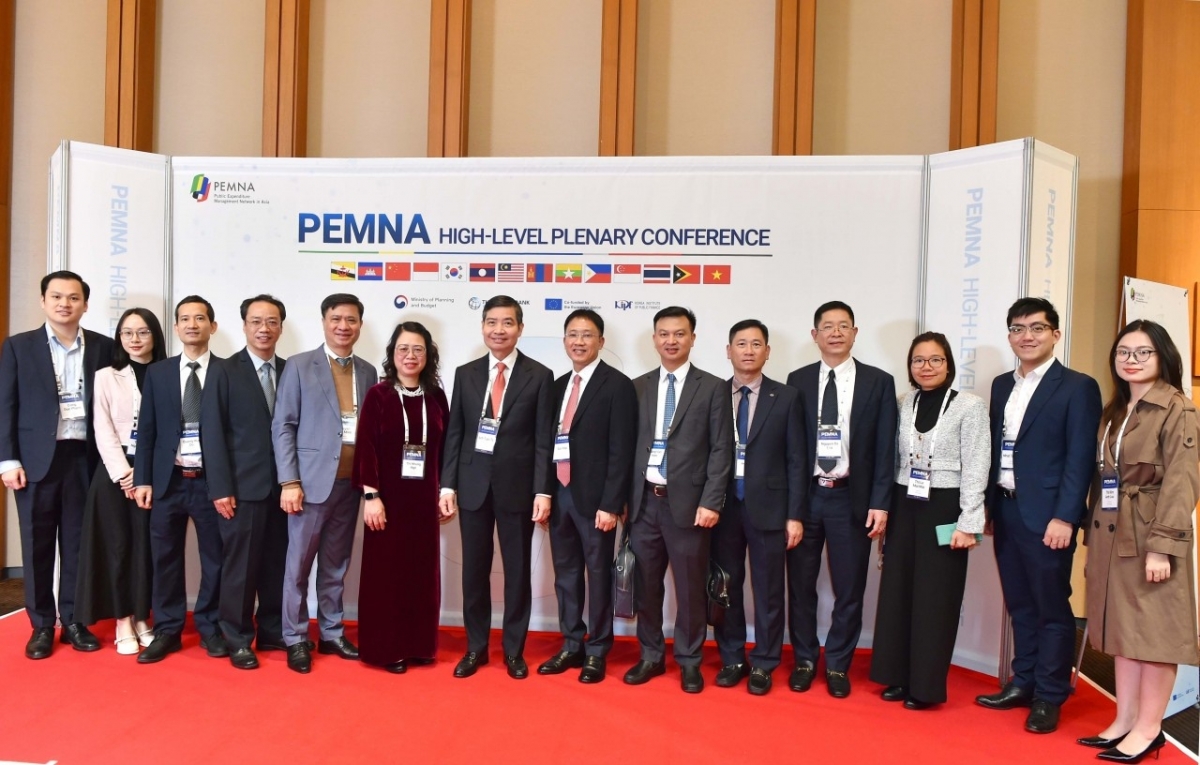
Asian public finance leaders convened in Seoul for the 2026 Public Expenditure Management Network in Asia (PEMNA) to discuss the integration of artificial intelligence (AI) into fiscal governance. The event, chaired by South Korea’s Minister of Economy and Finance, Hong Keun Park, attracted over 150 delegates from 12 countries, along with representatives from key international organizations such as the World Bank, the EU Delegation, and UNICEF.
In his opening remarks, Minister Park underscored the transformative potential of AI in public financial management. He highlighted that AI applications could significantly improve budgetary efficiency and enhance transparency, enabling citizens to access public financial information with greater ease. “It is not the strongest or the most intelligent that survives, but the one most adaptable to change,” he quoted Charles Darwin, emphasizing the pressing need for countries to embrace digital transformation and AI integration.
Minister Park noted that the current digital landscape facilitates more convenient collection and processing of fiscal data, but emphasized that no nation can thrive in isolation. He advocated for strengthened international cooperation, stating that the conference serves as a vital platform for sharing successes and lessons in adapting to technological changes, particularly as AI plays an increasingly critical role in sustainable development.
The Vietnamese delegation, led by Deputy Minister of Finance Ta Anh Tuan, participated actively in various parallel sessions focused on budget management, treasury, and revenue systems. The ongoing discussions are aimed at enhancing the capabilities of countries to adapt to rapid technological advancements.
Reflecting on the conference’s future trajectory, Minister Park remarked on PEMNA’s contributions to reforms and trust-building in public financial management since its inception in 2012. He expressed confidence that the conference would continue to solidify its role as a collaborative platform within the Asia-Pacific region and beyond.
Lalita M. Moorty from the World Bank warned that diminishing global fiscal space creates mounting pressure on governments to maintain budget discipline. In this context, she pointed out that building transparent public financial systems and effectively leveraging AI could improve financial control, optimize expenditures, and enhance revenue collection. The World Bank is committed to supporting regional countries in this transition.
Walter Van Hattum, head of the Trade and Economic Section at the EU Delegation, echoed these sentiments, noting that the EU is working to become more agile in today’s unpredictable global environment. He mentioned the EU’s intentions to foster cooperation with regional partners, particularly in modernizing public financial management through AI and cloud computing.
Both the World Bank and EU representatives emphasized the importance of ensuring that innovation is safe and inclusive, advocating for a model where no country or demographic is left behind. They acknowledged the conference’s pivotal role in facilitating dialogue and experience sharing among participating nations.
Yung Lee, president of the Korea Institute of Public Finance, described the conference as a milestone reflecting the commitment of countries to improve public financial governance. He asserted that digital transformation extends beyond technology, encompassing necessary institutional reforms and the development of human resources.
A dedicated discussion session titled “Leveraging digital transformation for smarter public finance: Opportunities, risks, and early lessons” highlighted real-world applications of AI in public financial management. Representatives from the Philippines, Cambodia, Timor-Leste, and South Korea shared their experiences in developing and governing big data systems.
The Philippines presented its innovative Budget and Treasury Management System, which allows for real-time financial management across various ministries. Cambodia is working towards a platform-based model to create a cohesive digital architecture, while Timor-Leste emphasizes four strategic pillars: legal framework, systems, human resources, and infrastructure, focusing on improving data connectivity from central to local levels.
The discussions at PEMNA 2026 reflect an urgent and ongoing commitment among Asian nations to embrace AI as a cornerstone of public financial management, ensuring that they are not only reactive to technological changes but also proactive in shaping a sustainable financial future.
See also Liventus Acquires Tamarack to Enhance AI-Driven Solutions for Equipment Finance
 South Korea and France Announce $10B Investment in AI and Nuclear Energy Collaboration
 Layoff Plans Rise to 60,620 in March as Employers Shift Budgets to AI Investments
 AI’s Role in Finance Evolves: New Risks Emerge as Systems Influence Decisions
 AI Banking Keynote Highlights: Scott Steinberg on Personalization, Automation, and Ethics