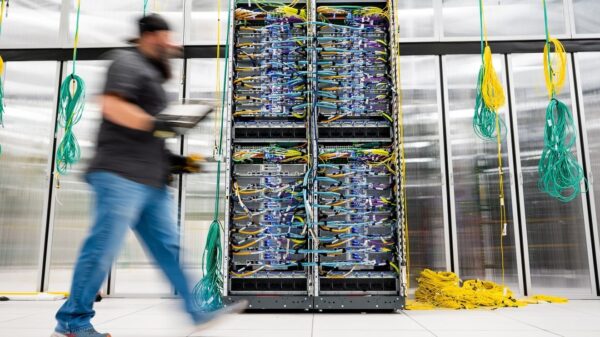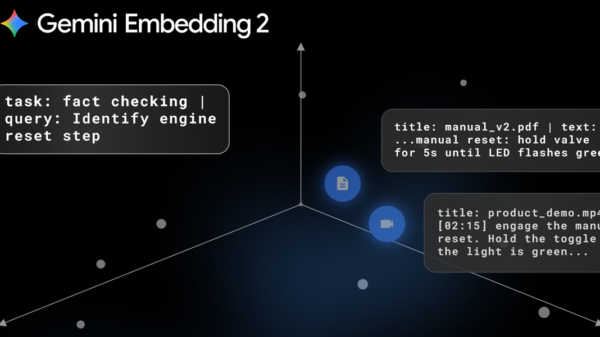
Google is set to reveal its latest research breakthrough, TurboQuant, at the International Conference on Learning Representations (ICLR) in Rio de Janeiro from April 23 to April 27. This new technology promises to enhance the performance of existing inference pipelines without the need for costly hardware upgrades or extensive architectural changes, a notable departure from previous solutions like China’s DeepSeek.
TurboQuant, according to its developers, can be integrated directly into current systems, theoretically offering data center operators significant performance improvements on pre-existing hardware. This obviates the need for operators to invest heavily in new equipment to tackle performance issues, allowing them to potentially optimize resources without additional costs.
However, experts are urging caution regarding the practical implications of TurboQuant’s claims. Alex Cordovil, research director for physical infrastructure at The Dell’Oro Group, emphasized that while the research represents a significant advancement, “this is a research breakthrough, not a shipping product.” He pointed out that there is often a substantial gap between what is proposed in research and what can be effectively implemented in real-world workloads.
Moreover, Cordovil highlighted a common phenomenon in the field of artificial intelligence known as the Jevons paradox, where improved efficiency in AI compute often leads to increased demand. “Any freed-up capacity would likely be absorbed by frontier models expanding their capabilities rather than reducing their hardware footprint,” he explained. This suggests that even if TurboQuant delivers on its promises, the gains may not result in reduced spending on hardware.
Jim Handy, president of Objective Analysis, echoed Cordovil’s sentiments, noting that hyperscale data centers are unlikely to reduce their budgets based on these advancements. “Hyperscalers won’t cut their spending – they’ll just spend the same amount and get more bang for their buck,” he said. “Data centers aren’t looking to reach a certain performance level and subsequently stop spending on AI. They’re looking to out-spend each other to gain market dominance. This won’t change that.”
As the tech industry continues to evolve at a rapid pace, the implications of TurboQuant could be significant, providing a glimpse into the future of AI infrastructure. Its performance enhancements could redefine how data centers operate, but whether these theoretical benefits translate into tangible outcomes remains uncertain.
With Google poised to make its announcement at ICLR, stakeholders across the tech landscape will be closely watching for details that could shape the future of AI efficiency and data center operations. The ongoing hunt for superior performance at lower costs will likely drive further innovation, making it crucial for operators to remain agile in adapting to advancements.
See also Brands Risk Reputation with Common AI Training Pitfalls, Warns Harvard Study
 AI’s Coding Agents Exhaust Engineers, Django Co-Creator Simon Willison Warns
 Lawyers Face $109K Fines for AI Errors as Sanctions Surge in U.S. Courts
 U.S. AI Chip Policy Uncertainty Disrupts Global Tech Landscape, Experts Warn of Investment Risks
 Mistral AI Secures $830M for Data Center, Targets 200MW Capacity by 2027