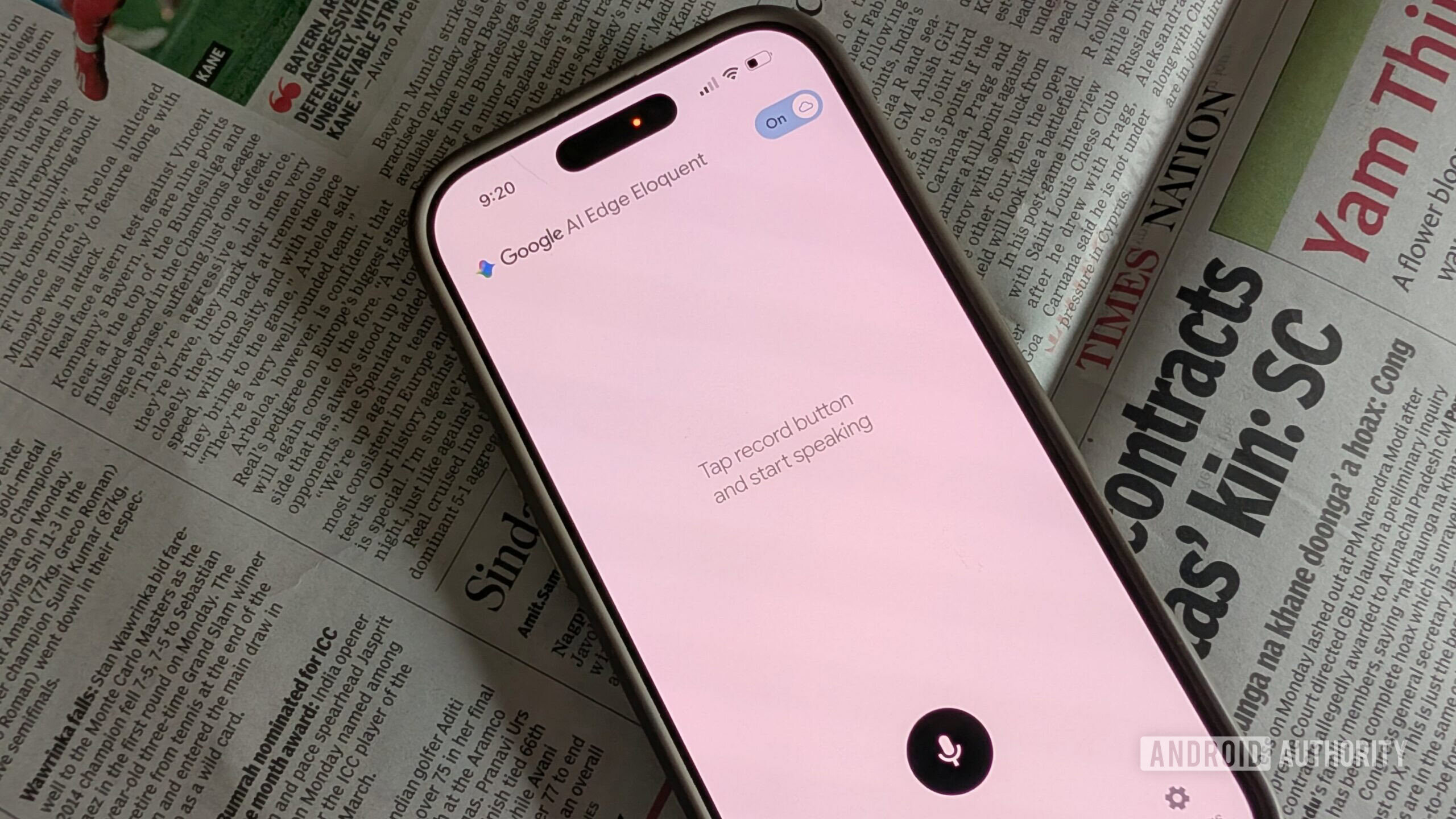
Google has introduced a new AI-driven dictation application named Google AI Edge Eloquent, which operates primarily offline by utilizing AI models stored directly on users’ devices. This application aims to streamline the transcription process by converting spoken language into organized text while eliminating filler words such as “um” and “uh.” Currently, the app is exclusive to iOS, though indications suggest that an Android version may be in development.
The launch of Google AI Edge Eloquent reflects a growing trend towards offline artificial intelligence solutions, allowing users to maintain privacy by avoiding cloud data transfer. The app’s design is intended for efficiency, capturing speech in real-time and correcting errors mid-sentence to produce polished text outputs. Users can select from different formatting options, including “Key points,” “Formal,” “Short,” and “Long,” which cater to various professional needs.
One notable feature of the app is its capability to create a custom dictionary. This allows users to manually input technical jargon or import specific terms through their Gmail accounts. The app’s machine learning functionality further enhances its usability; it can adapt to individual users’ vocabularies over time, improving the accuracy of transcriptions for names and frequently used phrases.
In addition to transcription, Google AI Edge Eloquent offers tracking capabilities for word count and speech speed, alongside a search function for previous recordings. Plans for upcoming keyboard integration on iOS could expand the app’s utility, making it a competitive player in the increasingly crowded dictation market. Competitors such as Wispr Flow and SuperWhisper are already established in this niche, indicating that Google is entering a significant battleground.
The decision to focus on offline processing aligns with broader industry trends emphasizing user privacy and control over personal data. As awareness of data privacy grows, applications that can operate without cloud dependence are becoming more appealing to users. Google AI Edge Eloquent represents a strategic move by the company to assert its presence in the AI dictation space while addressing privacy concerns.
While the app is currently limited to iOS users, its initial rollout hints at potential for future expansion. Earlier references to Android support in the app’s App Store description, despite being updated, suggest Google is preparing to broaden its reach. If the Android version materializes, it would likely enhance Google’s suite of voice typing tools, positioning the technology as one of the most advanced options available.
As Google continues to refine its capabilities in AI-driven applications, the implications of Google AI Edge Eloquent extend beyond mere transcription. The integration of AI technologies into everyday tasks signifies a shift in how users interact with mobile devices, enhancing productivity and offering personalized solutions. The ongoing evolution of AI tools will likely reshape not only individual workflows but also broader industry standards for dictation and voice recognition technologies.
See also Korea Proposes Employment Stability Fund to Retrain Workers for AI Transition
 HTAG Analytics Launches Australian Proptech’s First MCP Integrations with Claude and Perplexity AI
 Broadcom Secures Multi-Year AI Deal with Google, Boosting Stock by 3.58%
 Anthropic Secures Multi-Gigawatt AI Compute Deal with Google and Broadcom by 2027
 eGain Launches AI Connectors for Microsoft Copilot, Claude, Google Gemini, and Cursor