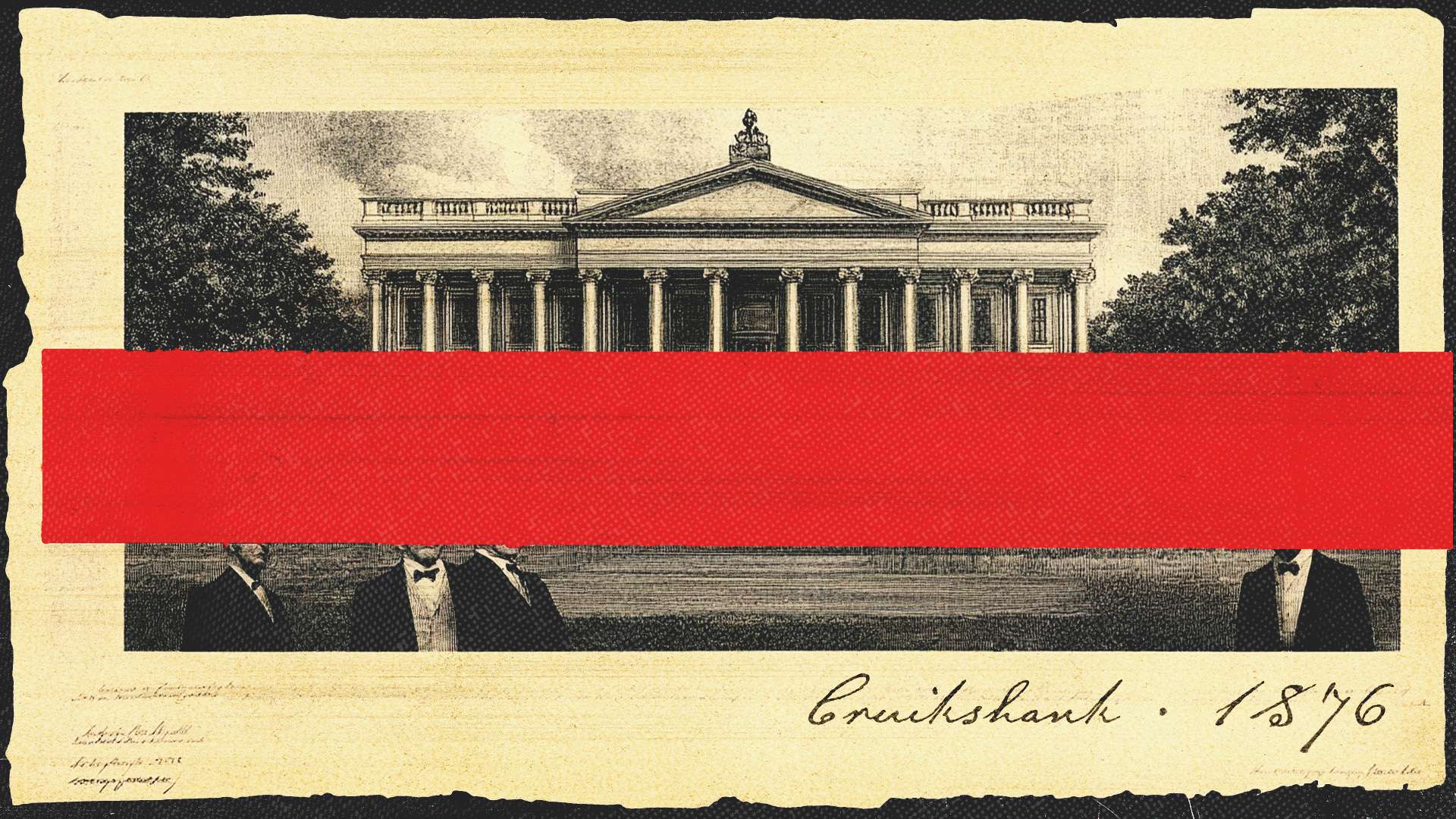
The U.S. Supreme Court has been responsible for some of the most notorious decisions in American history, with cases like Dred Scott v. Sandford (1857) and Korematsu v. United States (1944) epitomizing judicial failures that resonate to this day. Among the lesser-known yet similarly impactful cases is United States v. Cruikshank (1876), which emerged from a horrific event known as the Colfax massacre and continues to influence American legal standards more than a century later.
On April 13, 1873, a violent confrontation erupted in Colfax, Louisiana, following the contentious 1872 state elections, which left rival Democratic and Republican factions vying for local control. The situation escalated when an armed white mob, aligned with the Democrats, attacked the courthouse, where hundreds of black Republicans had gathered, including members of a local militia. After an initial failed assault, the mob returned with additional forces, resulting in what has been termed the “single bloodiest act of carnage in all of Reconstruction,” according to historian Eric Foner.
U.S. Attorney James R. Beckwith detailed the aftermath, stating, “Sixty-five negroes terribly mutilated were found near the ruins of the courthouse,” and noted that many prisoners were executed after surrendering. This brutal assault prompted federal prosecution against several perpetrators, including mob leader William Cruikshank, for violating a federal law aimed at protecting citizens from such violence.
Cruikshank’s defense argued that even if he was guilty, the federal government had no jurisdiction over the case, claiming that the right to bear arms was a matter for individual states to regulate. The Supreme Court ultimately sided with Cruikshank, effectively rendering the federal government powerless to intervene in cases of civil rights violations perpetrated by private individuals or state actors. This decision denied the applicability of the Bill of Rights against state governments, a position that would not be overturned until decades later.
At the time of the ruling, a majority of the Supreme Court rejected the notion that the protections outlined in the Bill of Rights applied to the states. It was not until 1925 in Gitlow v. New York that the Court began to shift its stance on the First Amendment. The recognition of the Second Amendment as a limit on state law would not occur until the 2010 case McDonald v. Chicago, which was influenced by the jurisprudential implications of Cruikshank.
Justice Antonin Scalia, in his 2008 opinion for District of Columbia v. Heller, noted that the Cruikshank case should be reconsidered, particularly in light of its outdated interpretation concerning the First Amendment. Scalia’s commentary suggested that the legal rationale of Cruikshank could also be rendered obsolete in Second Amendment discussions, paving the way for future litigation that culminated in McDonald.
The implications of Cruikshank extend beyond historical injustice; its decisions shaped the landscape of civil rights in America for generations. The case underscored the federal government’s impotence in protecting the rights of marginalized groups, cementing a legacy of discrimination that persisted until more recent judicial reforms finally began to rectify these long-standing inequities.
Meanwhile, speculation has arisen surrounding the future of the Supreme Court, particularly concerning Justice Samuel Alito, who is reportedly contemplating retirement at 76. The timing of any potential departure is crucial, with midterm elections approaching that may shift Senate control, thus affecting the ease of confirming a successor nominated by President Donald Trump. Alito’s acquaintances have indicated that he is mindful of the political landscape and would prefer a Republican president to appoint his replacement. While skepticism about these retirement rumors remains, the Court’s dynamics could significantly impact its future directions.
See also KAIST Researchers Unveil AI Model R-DM Achieving 20x Accuracy in Molecular Stability Prediction
 Mistral Launches Connectors in Studio for Seamless AI Application Development
 Rent the Runway Reveals AI-Driven Fashion Discovery Strategy to Boost Subscriber Engagement
 Google Launches Native Gemini App for Mac, Enhancing AI Access with Swift Integration
 GPT Proto Launches DeepSeek API Access, Delivering Affordable AI Solutions for Developers