China has launched an ambitious national strategy to integrate artificial intelligence into its education system by 2030, marking a significant shift in educational methodologies. The “AI+ Education” Action Plan, jointly issued by the Ministry of Education and four other government bodies on April 8, aims to revolutionize elements of learning ranging from personalized tutoring to teacher certification. This initiative is designed to leverage AI to not only enhance educational outcomes but also to anticipate demographic shifts and optimize the allocation of resources within the education sector.
The plan outlines a comprehensive framework aimed at embedding AI across all levels of education, from primary schools to lifelong learning programs. By 2030, the Chinese government envisions a fully integrated AI education system, characterized by both vertical and horizontal connectivity. The initiative underscores the importance of adapting the educational landscape to meet future challenges, particularly in a rapidly evolving technological environment.
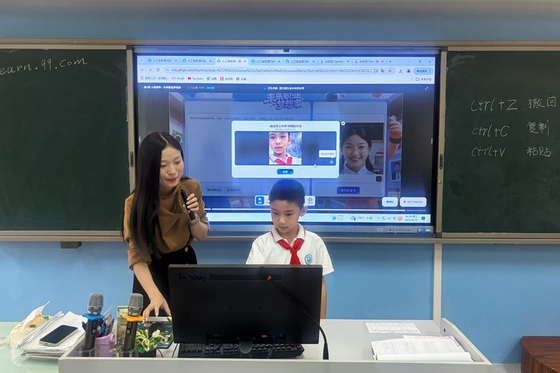
As part of this strategy, the government plans to implement various AI-driven tools and platforms that can provide personalized learning experiences tailored to individual student needs. This approach aims to foster engagement and improve academic performance, especially in primary education settings. The shift is expected to facilitate a more effective learning environment, helping students grasp complex concepts through adaptive learning technologies.
Moreover, the initiative will extend to teacher training and certification, utilizing AI to streamline and enhance these processes. By incorporating AI tools, the Ministry of Education seeks to ensure that educators are not only well-equipped to teach but are also capable of integrating technology effectively into their classrooms. This focus on teacher preparedness is crucial in maximizing the potential benefits of AI in educational settings.
In addition to these operational enhancements, the “AI+ Education” Action Plan emphasizes the need to predict demographic changes that may impact educational demand. By leveraging AI’s predictive analytics capabilities, the government aims to anticipate shifts in population patterns and adjust educational resources accordingly. This proactive approach could lead to a more equitable distribution of educational opportunities across various regions.
The broader implications of this initiative highlight China’s commitment to becoming a leader in AI technology, particularly in areas that directly affect societal development. As the global economy increasingly relies on digital capabilities, the fusion of AI within education presents a pathway for China to nurture a skilled workforce capable of thriving in a high-tech landscape.
As the “AI+ Education” Action Plan unfolds, stakeholders within the education sector, including educators, students, and technology providers, will be essential in shaping its success. The integration of AI is not merely about technology infusion; it also involves rethinking pedagogical strategies and fostering a culture of continuous learning and adaptation.
Looking ahead, the initiative could serve as a model for other countries seeking to modernize their education systems in response to technological advancements. As nations grapple with the challenges posed by rapid digitization, China’s comprehensive strategy may provide valuable insights into effectively harnessing AI to enhance educational outcomes on a global scale.
See also Egypt Integrates AI Across Key Sectors to Boost Economic Growth and Digital Transformation
 iDox.ai Launches Legal Service Edition for AI-Powered Redaction with Explainable Compliance
 Japan’s Justice Ministry Launches Study Panel on Generative AI Misuse Risks
 AMD Partners with French Government to Enhance National AI Infrastructure