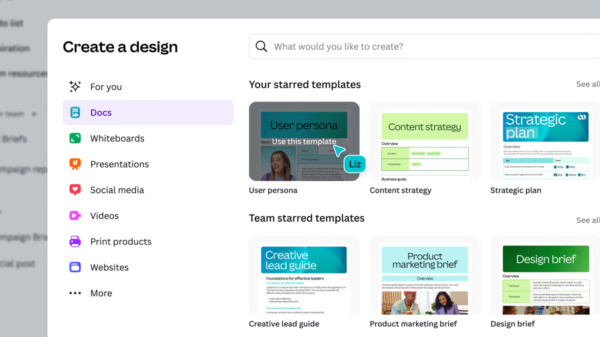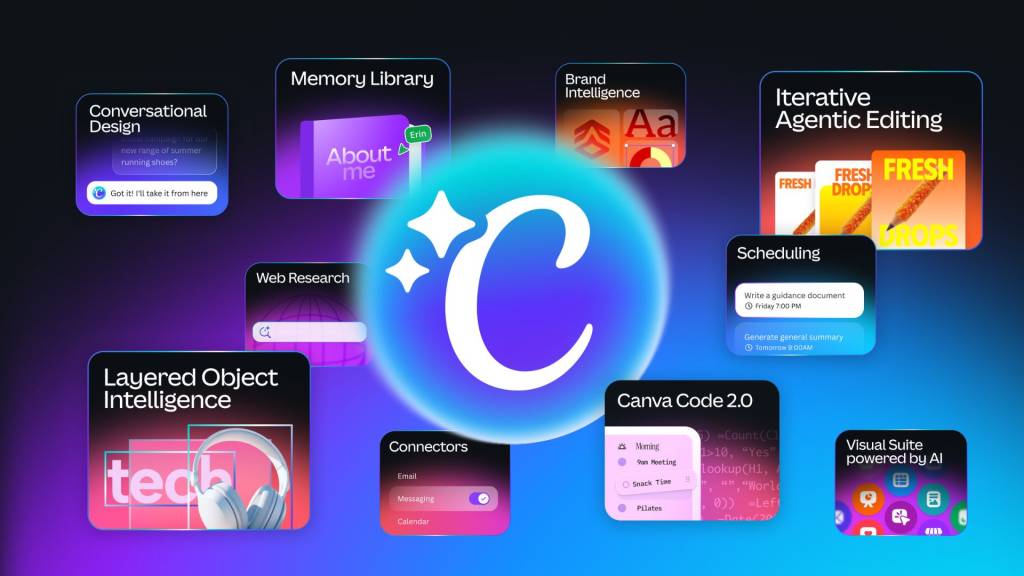
Canva unveiled its latest suite of product updates, introducing Canva AI 2.0, which aims to transform the platform into a comprehensive work environment, rather than merely a design tool. The updates, announced overnight, incorporate familiar AI features such as conversational design tools, automated workflows, and integrations with various workplace applications. However, the combination of these elements indicates a broader ambition as Canva seeks to enhance not just design, but also the surrounding workflows.
The platform will now have the capability to extract information from emails, meetings, and documents, converting that data into finished products. This functionality positions Canva in closer competition with established workflow and productivity tools that dominate daily work processes. With this trajectory, questions arise about whether Canva could evolve into something akin to a “Canva OS” within the next five years.
For those tracking Canva’s evolution, this push into software as a service (SaaS) should not come as a surprise. Last year’s Visual Suite 2.0 update marked a significant move into areas traditionally held by productivity platforms. During that rollout, Canva introduced its own versions of spreadsheets and documents, prompting even Google to acknowledge the overlap, framing Canva as a rising competitor in the workplace tool domain.
The key to this latest launch is a new “agentic” layer, allowing users to generate and refine work through a single prompt. The “conversational design” feature enables users to articulate an idea or goal and receive a structured, editable output. An orchestration layer manages various tools in the background, facilitating the execution of tasks. New integrations link Canva with platforms like Slack, Gmail, Google Drive, Notion, and HubSpot, allowing it to pull in conversations and documents to create presentations, campaign plans, or internal reports.
Additionally, tasks can be scheduled to run in the background, while built-in web research supplies external information directly into drafts. Features such as ‘brand intelligence’ and object-based editing enhance the user experience, simplifying the application of branding and adjustments without necessitating a complete restart. This amalgamation of capabilities suggests a strategic intention beyond mere user convenience, possibly indicating a competitive landscape reshaping.
Canva’s repositioning is reinforced by its recent acquisition strategy. The company has acquired multiple startups focused on AI generation, collaboration, and marketing automation, including Leonardo.ai, MagicBrief, Mango.AI, Cavalry, and Doohly. Recently, it expanded its portfolio further with the acquisitions of Simtheory and Ortto. Simtheory specializes in crafting custom AI agents for enterprise teams, while Ortto focuses on marketing automation and customer data. These acquisitions underscore Canva’s deliberate expansion into the broader marketing and content lifecycle, from idea generation to campaign execution and results tracking.
This strategic expansion places Canva in competition not only with smaller SaaS players but also with established giants firmly entrenched in workplace productivity. The implications of this shift extend beyond immediate competitors, as the company eyes market share in social scheduling, email marketing, internal reporting, and components of customer relationship management workflows.
At the core of this ambitious strategy is Canva’s significant investment in its AI infrastructure. The company has developed a proprietary “design model,” supported by a team of over 100 AI researchers, and is increasingly utilizing its own models in conjunction with third-party systems. The founders claim these models can operate at significantly lower costs than leading alternatives, a crucial factor given Canva’s user base of over 250 million monthly users and a substantial free tier. The platform sees more monthly visits than other major AI competitors such as Claude, Grok, and Deepseek.
As Canva expands into more workflows, it will need to manage increased tasks, data, and computational demands. Without control over these costs, its model risks becoming untenable. Canva appears to be adopting a hybrid strategy—leveraging its own models for efficiency and scalability while relying on external providers for more intricate tasks. The company has also indicated plans to run more AI operations on-device in the future.
The ultimate result is a platform that increasingly occupies the space between the tools people use and the work they produce. However, questions arise about user trust regarding the level of access Canva is seeking. The complexity of its expanding ecosystem may resemble the approaches taken by larger tech companies like Microsoft and Google, which have diversified into multiple areas of tech.
While the timeline for such an evolution remains uncertain, Canva’s ambition to push beyond design is unmistakable. It is positioning itself not just to compete with existing platforms but to potentially become one of them. Should it succeed, Canva will not only redefine its role in the market but also reshape the landscape of how work is accomplished.
See also AI Search Revolutionizes Retail: 64% of Australian Shoppers Embrace AI for Purchases, Warns Megantic
 Voice AI Adoption Surges: 70% of Enterprises Face Security Risks Amid Rapid Deployment
 Commvault Launches AI Protect and Data Activate to Secure Agentic AI Transformation
 OpenAI Shuts Down Sora, Loses Two Executives in Shift to Enterprise Focus
 GE HealthCare Integrates AI to Enhance Diagnostics, Boosting Growth Potential in MedTech