






















































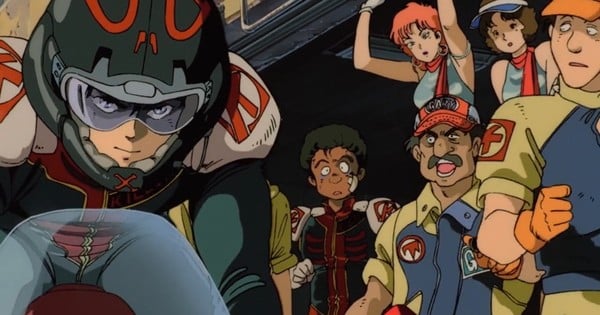
Yoshikazu Yasuhiko, the writer and director of the 1989 classic anime Venus Wars, recently spoke at the Tokyo Anime Award Festival 2026 following a theatrical screening of his film. The event highlighted not only Yasuhiko’s work on this project but also his contributions to the Gundam franchise and his perspective on the rise of AI in art and animation.
Despite Venus Wars having long been accessible in the West, Yasuhiko lamented its absence from the Japanese market, stating, “I sulked and said I had ‘sealed it away,’ refusing to release it.” His sentiments shifted upon witnessing the film again during its recent screening, where he remarked, “I felt it wasn’t so bad after all.” Acknowledging the film’s hand-drawn aesthetic, he noted, “Back then, there was no digital technology, so it was all hand-drawn. You can really appreciate the charm of hand-drawn animation when you watch it now.”
Yasuhiko shared insights into the production process, explaining that the film was created on a shoestring budget by his own small team—comprised of himself, his wife, his son, and a friend. “Even though it’s called a company, it was just me, my wife, my son, and a friend—four people in total,” he said. He underscored the advantage of this approach, stating that larger organizations often incur “production management fees” that do not contribute to the creative process. By working independently, he maximized the budget for production.
In discussing the film’s unique blend of hand-drawn and live-action elements, Yasuhiko recounted the challenges of shooting motorcycle scenes in the Arizona desert. “It was a U.S. location shoot, but we didn’t have much money, so we attached a video camera to a car and did it that way,” he explained. “I wanted something that would generate buzz.” His resourcefulness in production has been a hallmark of his career.
The conversation shifted to the subject of AI and its implications for animation. Yasuhiko expressed a fondness for traditional hand-drawing, stating, “I like drawing by hand. I draw manga by hand, too.” However, he acknowledged the conveniences of modern digital tools, saying, “Filming [animation digitally] has become convenient, and corrections can be made right up until the last minute. It’s like a dream.” He remained open to the potential advantages of AI in production, noting, “If AI can help with anime production, then we should use it. If it doesn’t work, we can always fix it by hand later.”
Although Yasuhiko received the 2026 Lifetime Achievement Award during the festival, he maintains a humble view of his position in the anime industry. “I’m not a person of the anime world. I’m a manga artist. So I feel like it’s not really appropriate,” he remarked to the audience. His recent focus has been on the Gundam franchise, particularly through his manga series Gundam: The Origin and its anime adaptations. “You could say I’ve come back to retrieve something I left behind with Gundam,” he said, reflecting on his desire to address past regrets in his work.
While he clarified that his involvement with Gundam does not signify a full return to anime filmmaking in his eyes, Yasuhiko expressed enthusiasm for future projects. “Even though I’m past my 77th birthday, my mind and hands are still working,” he said. He aims to explore new avenues beyond the Gundam framework within the next two to three years. “If I can do that, it might truly be a ‘return to the anime world.’ I have a feeling I might be given a chance to do something, so I need to stay healthy. I want to get it off the ground as soon as possible and show it to everyone.”
See also Over 81,200 Tech Layoffs in 2026 as Firms Shift Focus to AI Efficiency
 Too Good To Go Optimizes Partner Retention with Mistral AI, Achieves 90% Accuracy
 Tesla Earnings Guidance Up 32.9%, ServiceNow AI Sales to Rise 21.3%, AT&T Maintains Stability
 Nvidia Shares Dip to $200.08 as Google Eyes New AI Chips for Inference Market















