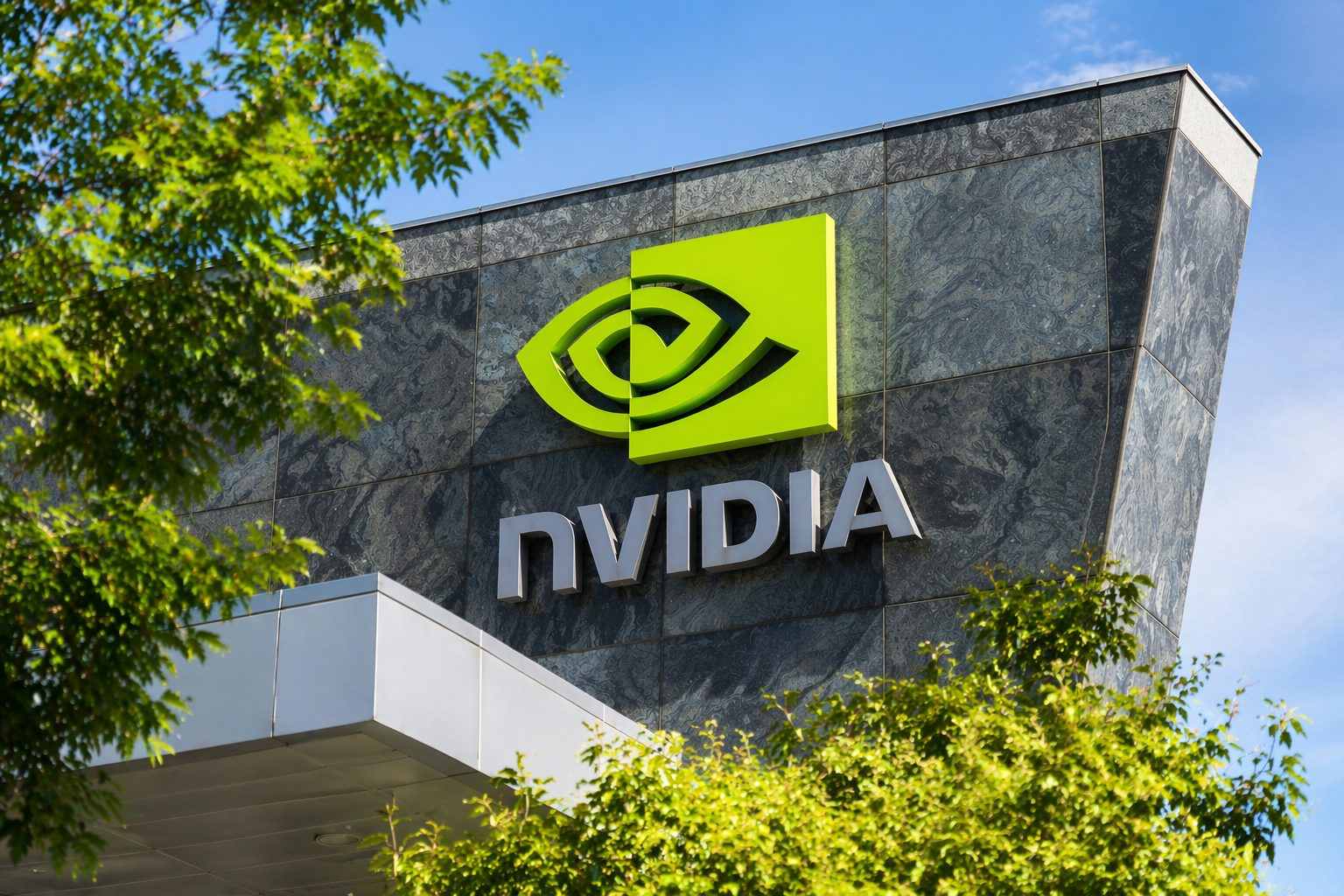
SAN FRANCISCO, April 21, 2026, 09:46 PDT — Nvidia shares fell $1.98 to $200.08 early Tuesday, following reports that Alphabet’s Google is negotiating with Marvell Technology for new AI chips. This development indicates that key clients are increasingly looking to diversify their reliance on Nvidia hardware, resulting in a market cap decline for Nvidia to approximately $4.53 trillion.
The timing of this news is particularly noteworthy as Google Cloud Next is set to begin in Las Vegas on April 22. Attention is expected to focus on Google’s tensor processing units, or TPUs, coinciding with a market shift toward inference—the phase where trained models begin delivering responses to users. Google’s Chief Scientist Jeff Dean has suggested that creating chips tailored for either training or inference tasks could offer substantial advantages. Chirag Dekate at Gartner emphasized that “the battleground is shifting towards inference,” underlining the growing importance of speed, power efficiency, and cost alongside raw computing power.
Google is reportedly exploring a memory processor intended to complement its TPUs, as well as a next-generation TPU designed for enhanced model efficiency, according to a report by The Information via Reuters. The tech giant also maintains a significant TPU supply agreement with Broadcom that extends through 2031, reflecting a broader trend among cloud providers to ramp up custom chip development as they move beyond Nvidia’s GPUs, which have been central to AI model training and inference. Both Google and Marvell declined to comment on the reported discussions.
Even minor indications of customer diversification merit close scrutiny, especially given Nvidia’s impressive growth driven by data center demand. In February, Nvidia reported a record $68.1 billion in revenue for the fourth quarter, with $62.3 billion stemming from data center operations. Looking ahead, Nvidia anticipates $78 billion in revenue for the current quarter, explicitly noting that it does not expect any data center compute revenue from China.
This does not imply a dip in demand. Recent projections from TSMC and ASML have been optimistic, with TSMC CEO C.C. Wei indicating that cloud clients are signaling strong commitments to AI investments. Morgan Stanley noted this past Sunday that the emergence of agentic AI—systems that execute planning and actions with minimal human oversight—could drive chip spending beyond GPUs to include CPUs and memory, even as the demand for graphics chips remains robust. Intel, which provides server processors that work in conjunction with Nvidia’s GPUs, had previously warned that the most significant supply constraints occurred in the first quarter.
While Nvidia does not currently face a sharp decline in orders, the real concern may lie in its capacity to maintain its market share in inference as major clients increasingly develop their own custom silicon. Investment director Russ Mould from AJ Bell remarked, “Rivals … will want to grab a piece of the market,” pointing to a growing trend among customers to broaden their supplier base.
Despite this competitive landscape, Google is not poised to displace Nvidia in the near term. Company executives have stated that Google operates a hybrid system of both TPUs and GPUs, while Meta is only just beginning to test TPUs for specific applications. Additionally, Google faces its own supply constraints as demand for these chips continues to rise.
In a bid to retain its relevance amid the push for custom silicon, Nvidia has announced plans to expand its partnership with Marvell through NVLink Fusion—a system designed to integrate custom chips directly into Nvidia’s servers and networking hardware. Reports indicate that Nvidia has invested $2 billion into Marvell to facilitate this integration for its customers, underscoring the company’s commitment to remaining a key player in the evolving AI chip landscape.
See also Nvidia Projects $1 Trillion AI Demand by 2027, Accelerates Inference Strategy with Vera Rubin
 Google Launches Lyria 3 Music Generator, Enhancing AI Creativity with Multimodal Inputs
 Too Good To Go Achieves 90% Accuracy in Retention Insights Using Mistral AI
 AI Video Landscape Shifts as Grok, Kling, and Runway Redefine Industry Dynamics
 Apple Names John Ternus CEO, Faces Pressure on Delayed AI Initiatives