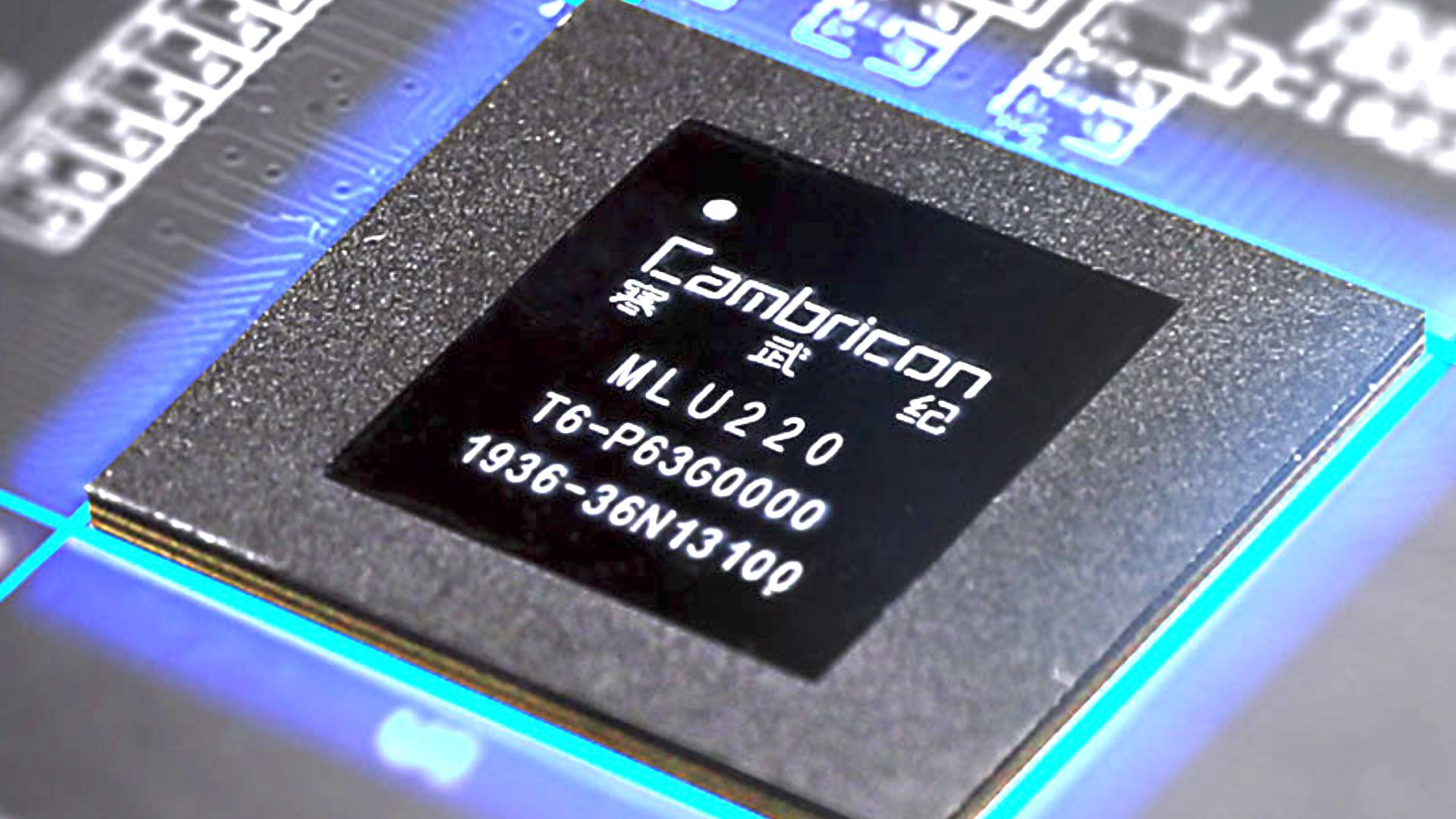
Two of China’s leading domestic GPU designers, Cambricon Technologies and MetaX Integrated Circuits, have reported strong earnings for the first quarter of 2026, signaling a notable shift in the competitive landscape of the semiconductor industry. Cambricon announced revenue of 2.89 billion yuan (approximately $423 million), marking a remarkable 160% increase year-over-year, while MetaX reported revenue of 561.9 million yuan, reflecting a 75% growth compared to the same period last year, according to filings cited by the South China Morning Post.
The financial results come amid a broader trend where Chinese chipmakers are capturing an increasing share of the market previously dominated by Nvidia. The U.S. company’s market share in China has reportedly dropped from a peak of 95% prior to sanctions to less than 60% today.
Cambricon’s significant revenue growth is noteworthy given its tumultuous recent history. The company, which was loss-making as recently as early 2024 and had lost Huawei as a major customer, has rebounded with a net profit of 1 billion yuan for the quarter, an increase of 185%. In 2025, the company’s full-year revenue reached 6.5 billion yuan and it recorded its first annual profit since its inception in 2016.
Despite this success, Cambricon faces challenges related to customer concentration, with its top five clients accounting for an astounding 94% of its revenue in the first half of 2025. The largest customer is reportedly ByteDance, which pre-ordered around 200,000 Siyuan 590 chips. As the company aims to diversify its customer base, Alibaba is expected to emerge as a significant buyer as it expands its AI infrastructure.
Cambricon’s position is strengthened by its inclusion on China’s government-approved AI hardware procurement list, alongside Huawei, while Nvidia remains excluded despite recent easing of U.S. restrictions. The company aims to ship 500,000 AI accelerators in 2026, a significant increase from an estimated 116,000 units in 2025, contingent on the production capabilities of SMIC, particularly its 7nm-class node technology.
On the other hand, MetaX, which went public on the Shanghai Stock Exchange in December, continues to grapple with profitability, reporting a net loss of 98.8 million yuan for the quarter. The company, founded in 2020 by former AMD engineers, attributed its revenue growth to an uptick in GPU shipments but remains considerably smaller than Cambricon.
Both companies are emblematic of a broader evolution within China’s AI hardware supply chain. In 2025, domestic chipmakers delivered about 1.65 million AI GPUs, capturing 41% of the domestic AI server market, according to IDC figures reported by Reuters in early April. Huawei led the market with approximately 812,000 units shipped, while analysts from Bernstein project that Nvidia’s share in China could plummet to around 8% in the coming years as local alternatives gain traction, even though these domestically produced processors lag behind Nvidia’s latest Blackwell architecture in terms of performance.
The developments at Cambricon and MetaX highlight the intensifying competition in the semiconductor industry, particularly in the AI sector, where domestic players are rapidly advancing despite the challenges posed by international sanctions and technological gaps. As Chinese companies continue to innovate and expand, the future landscape of AI hardware is poised for significant transformation.
See also Elon Musk Reveals Grok 5 Roadmap Aiming for 10 Trillion Parameters in AGI Development
 Meta’s Ad Revenue Soars 33% to $55B, Google Grows 15% to $77B Amid AI Investments
 AI Insights on Bitcoin: ChatGPT, Grok, Claude, Perplexity, and Gemini Assess Price Trends
 Amazon Faces Earnings Pressure Despite Strong Revenue and AI Investments
 Omnea Launches MCP Server, Integrating Procurement Data with Claude, ChatGPT, and More