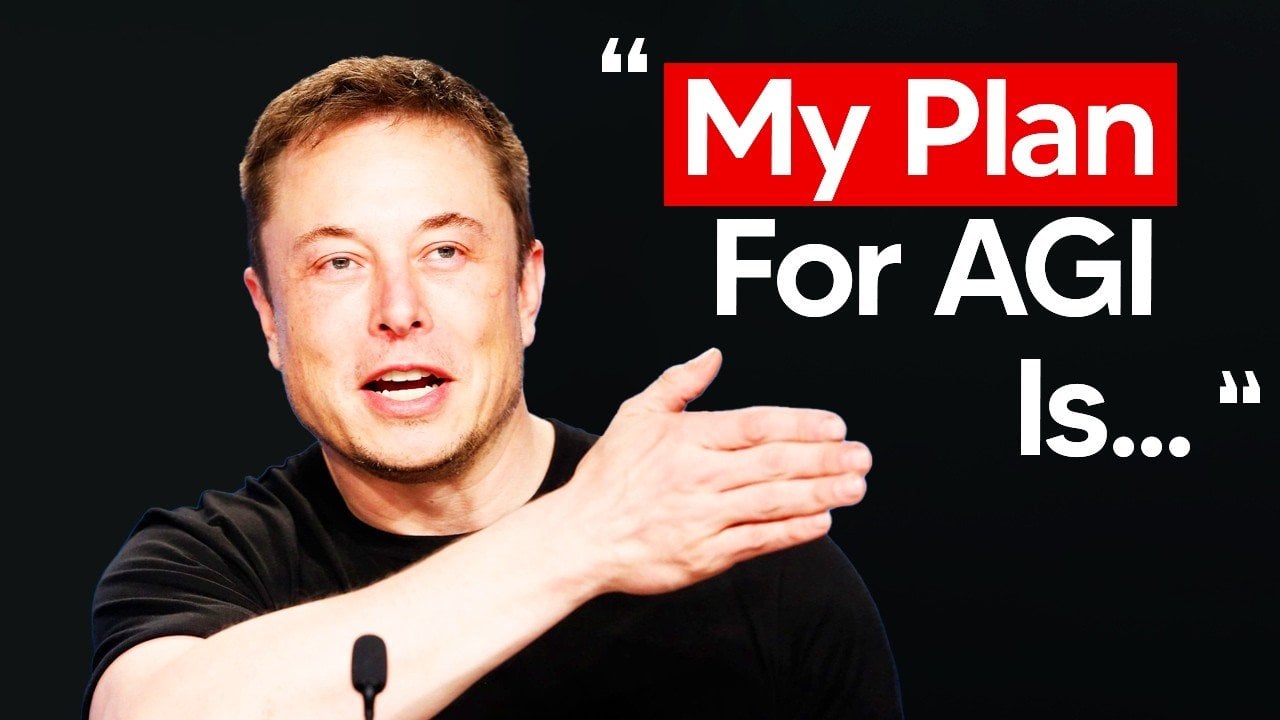
Elon Musk has announced xAI’s ambitious plans for Grok 5, an advanced AI model designed to push the limits of Artificial General Intelligence (AGI). This initiative builds on the Grok 4 series, with Grok 5 targeting a remarkable scale of 10 trillion parameters. Leveraging Tesla’s GPU clusters and SpaceX’s engineering expertise, xAI aims to enhance training speed and model performance significantly. Musk has emphasized that the development of Grok 5 is not solely about increasing parameters but also about achieving crucial adaptability and reasoning capabilities necessary for AGI.
The transition from Grok 4 to Grok 5 involves a comprehensive strategy that employs supplemental training techniques to refine model performance based on real-world applications. By addressing limitations identified during beta testing, xAI is working to ensure that Grok 5 offers a more scalable and adaptable AI solution. This iterative approach not only builds upon the Grok 4 series but also positions xAI to compete effectively in an increasingly crowded AI landscape.
The Grok 4 series, which currently includes operational models like Grok 4.3, lays the groundwork for Grok 5. Subsequent iterations, Grok 4.4 and Grok 4.5, are expected to feature 1 trillion and 1.5 trillion parameters, respectively, as part of xAI’s ongoing enhancements. These models incorporate feedback from beta testing to establish a robust foundation for the forthcoming Grok 5.
Grok 5 represents a significant leap in AI model capabilities, with plans for versions featuring 6 trillion and 10 trillion parameters. Musk indicated that the pre-training phase for the 10 trillion parameter model could be completed in just two months due to the efficiency of xAI’s advanced compute infrastructure. This rapid development timeline underscores xAI’s commitment to accelerating progress in AI research while balancing the need for intelligent design alongside computational power.
To achieve its ambitious goals, xAI has adopted a multifaceted development strategy. This approach prioritizes speed, scale, and innovation through the utilization of Tesla’s GPU clusters for necessary computational power, alongside SpaceX’s engineering expertise to optimize hardware and software integration. The use of the Colossus training cluster, designed for parallel training across multiple models, further enhances rapid iteration and model deployment, positioning xAI to maintain a competitive edge in the AI sector.
Musk has positioned Grok 5 as a potential AGI-level model, although he remains cautious about making definitive claims. Achieving AGI entails not just technical advancements but also breakthroughs in reasoning, learning, and generalizing knowledge across diverse tasks. If successful, Grok 5 could redefine xAI’s standing in the AI industry, establishing new benchmarks for what advanced AI systems can accomplish.
However, challenges loom on the horizon. The development of Grok 5 will necessitate rigorous post-training alignment and safety evaluations to ensure ethical operation. Furthermore, the high expectations tied to AGI introduce additional pressure on xAI to meet both technical and ethical standards. The company faces stiff competition from established players like OpenAI, Google, and Anthropic, each pushing for their advancements in this rapidly evolving field.
As Musk’s announcement outlines, xAI’s roadmap for Grok 5 marks a significant milestone in the pursuit of AGI. By aiming for a scale of 10 trillion parameters and leveraging cutting-edge infrastructure, xAI seeks to redefine the boundaries of artificial intelligence. Yet, the journey toward AGI is fraught with obstacles, including technical challenges, ethical dilemmas, and fierce competition.
As Grok 5 approaches its anticipated launch, the global AI community will closely monitor xAI’s ability to deliver on these ambitious promises. Whether Grok 5 achieves AGI or not, its development marks a pivotal moment in AI technology, potentially paving the way for a new era of innovation and discovery.
See also Meta’s Ad Revenue Soars 33% to $55B, Google Grows 15% to $77B Amid AI Investments
 AI Insights on Bitcoin: ChatGPT, Grok, Claude, Perplexity, and Gemini Assess Price Trends
 Amazon Faces Earnings Pressure Despite Strong Revenue and AI Investments
 Omnea Launches MCP Server, Integrating Procurement Data with Claude, ChatGPT, and More
 Mistral AI Launches 128B-Parameter Model but Faces Mixed Online Reception