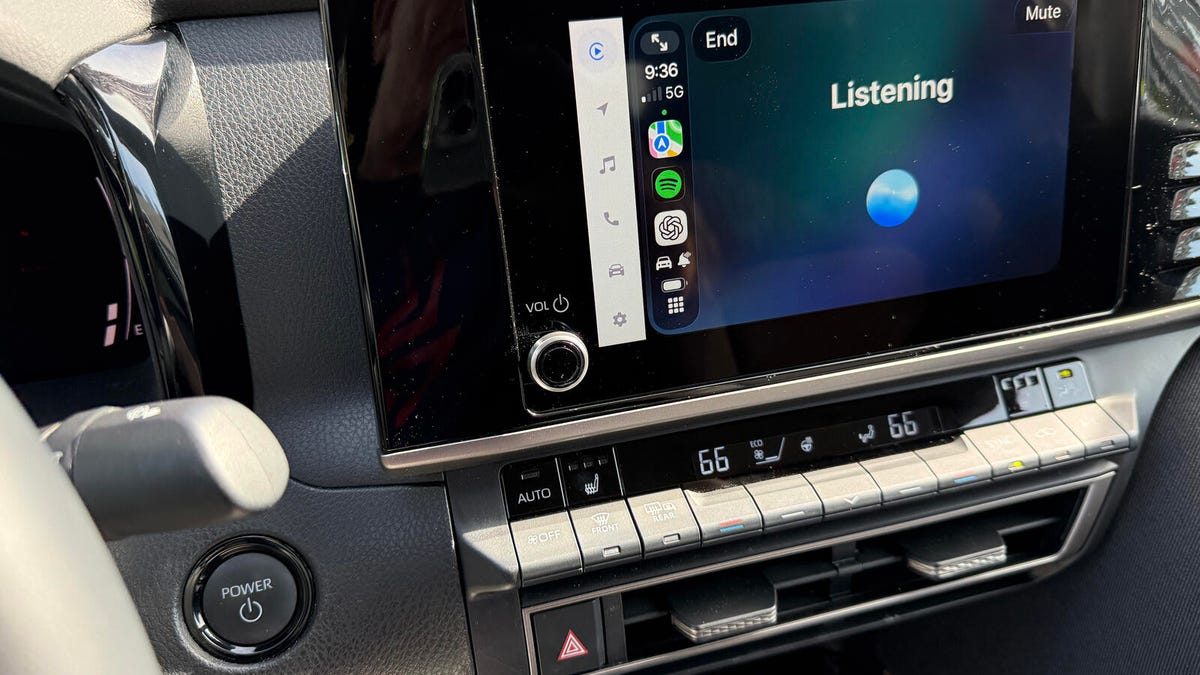
Apple’s CarPlay has evolved to support third-party voice assistants, allowing users to engage in hands-free conversations with popular AI applications such as ChatGPT and Perplexity AI. This integration offers an alternative to Siri, which, while capable of handling basic tasks like playing music and providing driving directions, often struggles with more complex inquiries.
Both ChatGPT and Perplexity can be utilized in vehicles equipped with CarPlay, provided users have an iPhone running iOS 26.4 or later and the latest versions of the respective apps. While ChatGPT can be accessed regardless of account type, Perplexity requires a Pro subscription, typically priced at $20 per month. However, some users may find ways to obtain a free year of Perplexity Pro through promotional offers.
For those interested in leveraging these AI systems while driving, the setup process is straightforward. Users must connect their iPhones to their vehicles, either wirelessly or via Bluetooth, and ensure the CarPlay dashboard displays the icons for ChatGPT and Perplexity. Once activated, users can initiate voice chats with both applications, allowing for a range of inquiries and tasks.
In a hands-on comparison of the two AIs, it became apparent that Perplexity outperformed ChatGPT in providing driving directions, thanks to its ability to access the user’s location and integrate with Apple Maps. When asked for directions to Faneuil Hall in Boston, Perplexity successfully navigated to the precise location, while ChatGPT was limited by its lack of location awareness.
Similarly, when seeking recommendations for local dining options, Perplexity proved superior by identifying nearby Mexican restaurants and offering navigational guidance, a task that ChatGPT could not perform effectively due to its restrictions. Both applications, however, fell short when it came to music requests, with Perplexity failing to play songs through CarPlay and requiring manual input from the user.
In terms of communication, both AIs were unable to place calls or send messages, leaving those functions to Siri. Yet, Perplexity distinguished itself by effectively accessing the user’s calendar and setting reminders, a capability ChatGPT lacked.
In general knowledge queries, both AI systems provided satisfactory responses, answering questions about the American Civil War with clear and concise explanations. In a further test of creativity, when prompted to suggest science-fiction novels from the 1960s, ChatGPT showcased its strength by adding colorful descriptions to its recommendations, whereas Perplexity merely listed the titles and authors.
When tasked with crafting imaginative stories, ChatGPT once again emerged as the winner, spinning a whimsical tale about a cat’s lunar adventure, while Perplexity’s more literal approach failed to engage. Moreover, both AIs effectively challenged the user with trivia questions, maintaining an interactive experience.
Ultimately, the choice between ChatGPT and Perplexity hinges largely on individual needs. Perplexity excels in practical tasks like navigation and calendar management, making it a useful complement to Siri for drivers. Meanwhile, ChatGPT offers a richer conversational experience, ideal for users desiring engaging dialogues and creative storytelling. As the technology continues to evolve, the potential for AI in automotive settings appears promising, suggesting a future where conversations with intelligent systems enhance the driving experience even further.
See also DeepMind Alumni Launch 38 Startups in Europe, Led by $1.1B Funded Ineffable Intelligence
 Meta Achieves 10% Reels Growth and 8% Video Lift with Enhanced AI Recommendations
 Google DeepMind’s AI Co-Clinician Surpasses GPT-5.4 in Blind Doctor Tests
 Anthropic Plans Japan Expansion for Claude Mythos AI Amid U.S. Opposition