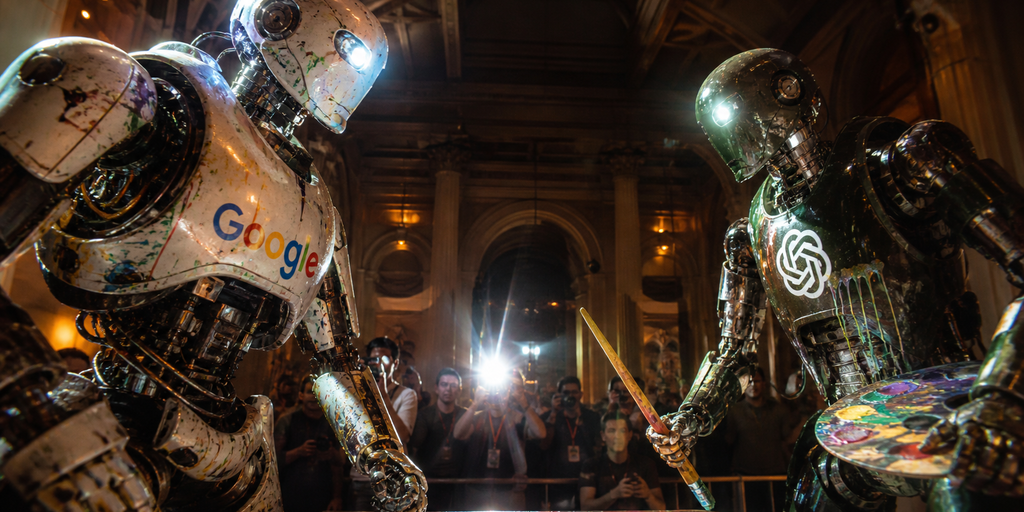
OpenAI has launched its latest image generation model, GPT Image 2, which claims to offer significant improvements in text accuracy and native reasoning capabilities compared to its predecessors. The model, identified as gpt-image-2 and built on the GPT-5.4 backbone, was introduced without fanfare in late April, showcasing results that outpace existing competitors by a wide margin. According to initial evaluations, it achieved a score that places it 242 points ahead of any other model on the current leaderboard, marking the largest lead ever recorded.
The launch comes at a critical moment in the AI image generation space, following Google’s Nano Banana 2 securing the top position just prior. In head-to-head evaluations, Nano Banana 2 showed strengths in speed and text rendering, particularly in the realm of anime illustration, while other models, including ByteDance’s Seedream 5 Lite, also demonstrated competitive performance in pricing and spatial fidelity.
GPT Image 2 distinguishes itself by being OpenAI’s first model to incorporate native reasoning directly into its architecture, allowing it to research, plan, and reason through image structures before generating any output. This advancement is expected to enhance the coherence and utility of its generated images, particularly in professional settings such as children’s book publishing and multi-format marketing campaigns. While the previous models DALL-E 3 and GPT Image 1.5 are set to be discontinued by May 12, GPT Image 2 is viewed as a complete replacement rather than an incremental update.
Testing the capabilities of GPT Image 2 against Nano Banana 2 in various categories revealed notable strengths and weaknesses for both models. In realism, a prompt for a portrait of a 32-year-old female architect at sunset highlighted GPT Image 2‘s ability to deliver a more accurate representation of fabric textures and lighting, despite some issues with the subject’s expression. Conversely, Nano Banana 2‘s output, while competent, lacked the creative flair and specificity required, resulting in a slightly less engaging image.
In artistic rendering, GPT Image 2 excelled in simulating light physics for a Renaissance-style prompt, producing an image that felt authentic to oil painting, despite some oversharpening artifacts appearing in complex scenes. Meanwhile, Nano Banana 2‘s output, while visually appealing, strayed into fantasy illustration territory rather than achieving the classical style requested.
When it came to anime illustration, however, Nano Banana 2 reclaimed its competitive edge. A prompt requiring a highly specific anime visual resulted in what was described as one of the best outputs of the evaluation process, featuring accurate cel shading, appropriate character designs, and a painterly background. In contrast, GPT Image 2‘s attempt fell short, producing an image that felt more like a pastiche than a true representation of the requested style.
In tests focused on lettering and signature design, GPT Image 2 produced fluid and legible cursive renderings, closely emulating the provided reference. Nano Banana 2, however, struggled with legibility, creating an illegible scrawl that lacked the required intricacy.
In concluding the evaluations, it became evident that GPT Image 2 outperformed in several critical categories, including realism, classical art, signature calligraphy, and image editing. Meanwhile, Nano Banana 2 demonstrated superior performance in anime illustration, spatial composition, and structured information design. Overall, GPT Image 2 emerged as the more consistent model across longer prompts, while Nano Banana 2 showcased the potential for outstanding results when prompted correctly.
This competitive landscape suggests a dynamic progression in AI-generated imagery, where the differences in model capabilities may greatly influence user output depending on the application and prompting strategy. As both models continue to evolve, the emphasis will likely remain on refining their respective strengths to cater to diverse creative needs.
See also Google Prepares Omni Model for Gemini Video Generation Ahead of I/O 2026
 Nvidia Expands Partnerships with Asian Firms, Boosting AI Chip Demand by 90%
 AI Achieves 85% Accuracy in Predicting Mental Health Treatment Success, Paving Way for Precision Psychiatry
 Sam Altman Praises ChatGPT for Improved Em Dash Handling
 AI Country Song Fails to Top Billboard Chart Amid Viral Buzz